REVIEW · SHIMLA
Guided Heritage Walk Tour in Shimla
Book on Viator →Operated by Himachal Bylocals · Bookable on Viator
One of Shimla’s best ways to get oriented. This guided heritage walk connects major landmarks in the foothills of the Himalayas, with stops that cover British-era architecture, old-school institutions, and a final glimpse into modern Indian academia. You’ll meet your guide near Christ Church, move along the iconic Mall area, and then finish at the Indian Institute of Advanced Study (IIAS).
I especially like the focus on street-level landmarks like the General Post Office and Gaiety Theater, plus the way the guide ties them to what Shimla used to be. I also like the small group size, with a maximum of 15 people, which keeps the pace human and makes it easier to ask questions. Guides associated with this tour, such as Sanjay and Raju, are repeatedly praised for being organized, careful with the group, and good at slowing down when someone needs it.
One consideration: this is a walking tour, and it can feel a bit strenuous at times. Also, the big entrance costs are not included for the IIAS area (and the Gaiety Heritage Cultural Complex for foreign tourists), so your final cost depends on who you are and what tickets you need.
In This Review
- Key things to know before you walk
- Shimla in 3 hours: what this walk is really good for
- The route begins at Christ Church and the Mall
- Stop 1: Christ Church (around 10 minutes)
- Stop 2: The Mall (around 15 minutes)
- The heart of the day: the heritage walk through Shimla
- Stop 3: The Shimla Heritage Walk (the bulk of the walking time)
- A quick note on pace and effort
- Finishing at the Indian Institute of Advanced Study (IIAS)
- Stop 4: IIAS (around 25 minutes)
- Price and value: what you’re paying for (and what you aren’t)
- Logistics that actually affect your day
- Meeting point and navigation
- Group size and what that means for you
- Weather and the uphill reality
- What kinds of travelers should book this
- Should you book the Shimla Heritage Walk to IIAS?
- FAQ
- What does this tour include?
- How long is the guided walk in total?
- Where do I meet the guide?
- How does the tour end, and is transport back included?
- Are entrance tickets included?
- What if the weather is bad?
Key things to know before you walk
- Small group size (max 15) helps you keep pace and get real answers
- Christ Church to IIAS is one continuous direction, so plan your return to your hotel
- Landmarks along the Mall and Heritage Walk include British-era sites plus modern institutions
- Bottled water is included, which matters in Shimla’s changing weather
- IIAS and Gaiety Heritage Cultural Complex have foreign tourist entrance fees that aren’t bundled in your ticket
- Good weather is required, so if conditions are poor you may be offered another date or a refund
Shimla in 3 hours: what this walk is really good for
Shimla can feel like a place you need to decode. This tour works because it doesn’t try to cover everything in the city. Instead, it picks a logical spine: you start with a landmark tied to the colonial-era cityscape, then walk along the Mall area, then move through the heritage streets where the architecture style shifts and stories stack up, and you end at IIAS, a major research institution.
For me, the real value is how it helps you get bearings fast. Within a few hours, you’re no longer just seeing buildings. You understand why they’re there, how Shimla grew as a hub, and how the city’s research and education role fits into the larger picture.
And the tour doesn’t drown you in museum rules. Most of the time is outside, moving between points of interest, with a live guide to connect the dots.
You can also read our reviews of more tours and experiences in Shimla.



The route begins at Christ Church and the Mall
Stop 1: Christ Church (around 10 minutes)
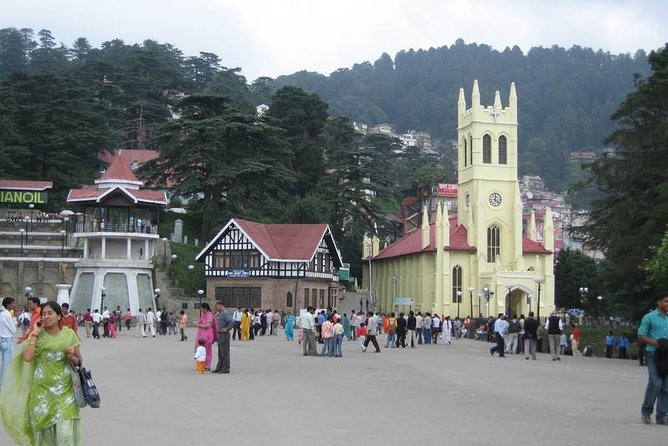
You’ll meet your guide at the main entry gate of Christ Church. This is one of those starting points that makes sense: it gives you an immediate anchor in Shimla’s historical built environment.
The good news here is that the stop itself is quick and the admission ticket is free. That means you can spend more energy later on the actual walking and the more time-consuming parts of the route.
Tip: Arrive a little early and stay close to your guide near the main entrance so the group doesn’t split up before you start moving.
Stop 2: The Mall (around 15 minutes)
Next comes the Mall road, Shimla’s main street. The tour frames it as a British colonial-era corridor, which is helpful because you’ll start noticing the city’s design languages as you walk. This stretch is also the easiest place to feel Shimla’s rhythm—people, traffic, views, and that classic hill-station atmosphere.
The Mall time is short, but it’s meant to set the tone. You’ll begin connecting what you see—street layout, landmark presence, architectural cues—to the way Shimla functioned historically.
The heart of the day: the heritage walk through Shimla




Stop 3: The Shimla Heritage Walk (the bulk of the walking time)
This is where you’ll spend most of your time. The route is designed around heritage and institution-heavy landmarks—places that show you how Shimla grew into a tourism and administrative hub, and why the city has such a strong mix of old architecture and educational institutions.
You’ll be directed past (or made aware of) major points such as:
- Gaiety Theater, often associated with cultural life in the colonial-era city
- General Post Office, a practical landmark that also signals how the city connected to the wider world
- Betink’s Castle, a heritage stop built into the story of Shimla’s past
- Imperial Bank and the Railway Board Building, both tied to the systems that supported Shimla’s importance
- Plus other landmarks and architectural styles, including references to Tudor-Bethan and neo-era influences you’ll notice as you look at façades and building shapes
This part is the reason the tour works. You’re not only learning names—you’re learning why those buildings matter in Shimla’s identity.
What I’d tell you to do on this stretch: keep your camera ready, but also look up. The most interesting details tend to be in the building silhouettes and windows, not just on the street level.
A quick note on pace and effort
One practical caution: this can feel strenuous at times. That doesn’t mean it’s a technical hike—just that Shimla’s hills and walking rhythm can add up. The good side is that the group is small, and guides are willing to adjust pace for the group. If you need slower moments, speak up early rather than waiting.
Finishing at the Indian Institute of Advanced Study (IIAS)
Stop 4: IIAS (around 25 minutes)
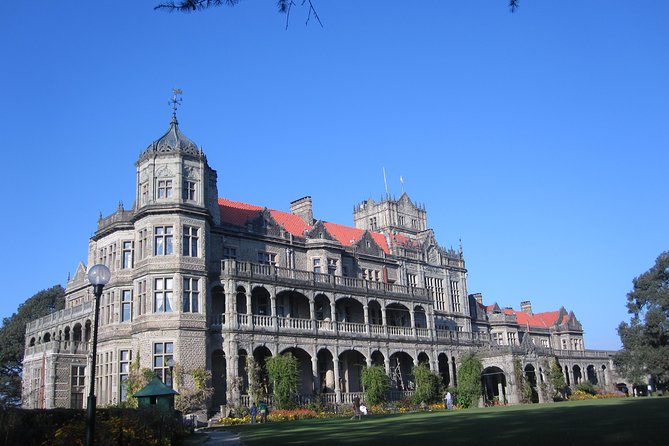
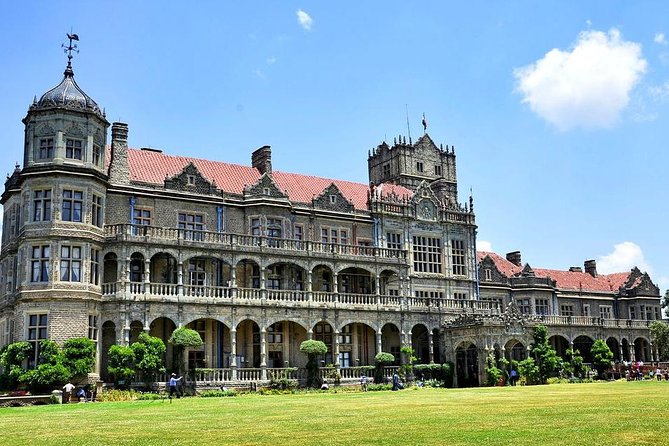
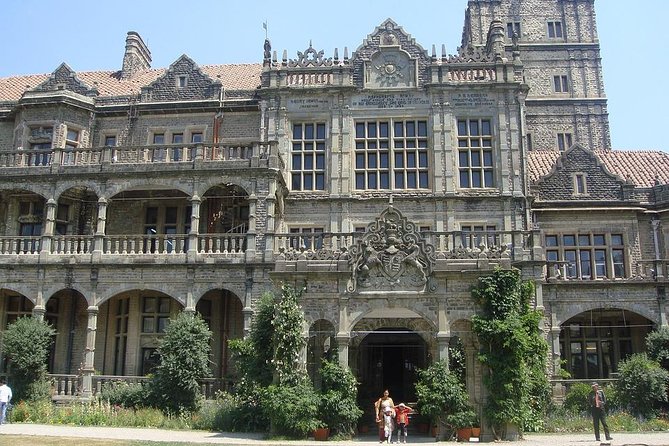
The tour ends at the Indian Institute of Advanced Study. It’s a strong closing stop because it shifts you from heritage buildings to Shimla’s modern role as a research and academic center.
This is also where entrance fees can matter. The tour description says entrance tickets are not included, and it specifically notes a foreign tourist entrance fee of ₹700 per person for Gaiety Heritage Cultural Complex + IIAS. If you’re eligible for those tickets, you’ll want to budget for it rather than assuming your $31 covers everything.
Why this stop is worth your time: IIAS helps you understand that Shimla isn’t just a preserved-looking hill town. It still functions as a place of study and scholarship, and the city’s setting supports that work.
Important logistics reality: the route is described as one way from Christ Church to IIAS, and there’s no transport included from IIAS back to your hotel or back to the start. So have a plan for your return before the tour ends—figure out your transport option ahead of time so you’re not scrambling at the finish.
Price and value: what you’re paying for (and what you aren’t)
The listed price is $31.00 per person, and it’s typically booked about 10 days in advance. For a guided, live-walk experience, that’s a solid value—especially because bottled water and a local English-speaking guide are included.
Here’s the part to think through: the tour price isn’t where all the costs live. The tour explicitly flags entrance fees for foreign tourists at ₹700 per person for Gaiety Heritage Cultural Complex + IIAS, plus meals are not included. So your total expense depends on:
- Whether you need the foreign tourist entrance tickets
- Whether you want to stop for snacks or lunch after the tour
Still, I think the overall setup is good value because you’re paying for guidance, timing, and a structured route. You’re not paying for long van rides or a big multi-part schedule. This is the kind of tour where your money goes into human interpretation and route planning.
Logistics that actually affect your day
Meeting point and navigation
The meeting point is around Viceregal Lodge / Rashtrapati Nivas on Chaura Maidan Road near Observatory Hill in Boileauganj. From there, the tour leads into the first stop at Christ Church’s main entry gate.
Because Shimla is walkable in sections but not always flat, staying organized matters. Use your map app to get yourself to the meeting area, then rely on your guide and group once the walk begins.
Group size and what that means for you
With a maximum of 15 travelers, you should expect the tour to feel manageable. That smaller number makes it easier for the guide to keep the group together and for people to ask questions without waiting for a long pause in the action.
If you’re sensitive to walking pace, this is a good sign. You’re not stuck with a huge group moving at one speed.
Weather and the uphill reality
This experience requires good weather. If conditions are poor, you’ll be offered another date or a full refund. Also, since at least part of the walk can feel strenuous, bring footwear that handles uneven surfaces and plan to take short breaks if needed.
What kinds of travelers should book this
This guided heritage walk is a strong match if:
- You want a guided orientation to Shimla in a short time
- You like heritage details tied to real buildings, not just broad facts
- You prefer walking with a small group over large bus tours
- You’re curious about how Shimla mixes colonial-era architecture with institutions like IIAS
It may be less ideal if:
- You don’t want any walking at all (this is one-way and you need a return plan)
- You’re strictly budgeting for an all-in price with no entrance fees (IIAS and Gaiety have separate foreign tourist ticket costs)
- You’re traveling at a time when weather is unstable (the tour depends on it)
Should you book the Shimla Heritage Walk to IIAS?
If you’re spending only part of a day in Shimla and you want the city explained in a way that sticks, I’d book it. The guide-led focus on real landmarks like the General Post Office and Gaiety Theater, plus the heritage streets and the ending at IIAS, gives you a clear story arc from old administration and culture to research and learning.
But choose your timing and your footwear carefully. This isn’t a sit-and-spectacle tour. It’s a walking tour with hills, and entrance costs may add a bit depending on your ticket eligibility. If you’re good with that—and you want the city to make sense quickly—this is a worthwhile way to spend your morning or afternoon in Shimla.
FAQ
What does this tour include?
It includes a local English-speaking guide, a walking tour, and bottled water. The route is described as a one-way walk from Christ Church to the Indian Institute of Advanced Study.
How long is the guided walk in total?
The duration is listed as approximately 3 hours.
Where do I meet the guide?
The meeting point is near Viceregal Lodge (Rashtrapati Nivas) on Chaura Maidan Road, close to Observatory Hill in Boileauganj, Shimla.
How does the tour end, and is transport back included?
The tour ends at the Indian Institute of Advanced Study. No transport is included from IIAS back to your hotel or back to Christ Church, so you’ll need to arrange your own return.
Are entrance tickets included?
Not for the main paid sites. Entrance fees for foreign tourists are noted as ₹700 per person for Gaiety Heritage Cultural Complex plus the Indian Institute of Advanced Study (IIAS). Other admissions mentioned as free include Christ Church.
What if the weather is bad?
The experience requires good weather. If it’s canceled due to poor weather, you’ll be offered a different date or a full refund.