REVIEW · SHIMLA
Shimla Private Guided Walk Tour exploring the colonial trails
Book on Viator →Operated by Wonders of Himalaya · Bookable on Viator
Follow Shimla’s colonial leftovers on foot. This private guided walk in Shimla links major colonial landmarks from Christ Church to the Indian Institute of Advanced Study (IIAS), with a local expert explaining how the city’s power, religion, and rail-era plans all fit together. It’s short enough to do on arrival, but detailed enough that you leave with a real sense of what shaped Shimla.
What I like most is the combination of stories and sightseeing that never feels like a textbook. Guides like Preeti and Pawan brought the buildings to life with clear English plus local language flavor (Hindi and Pahari too), and the walk stays slow and scenic so you can actually stop for views and photos.
One thing to consider: this is mostly an exterior walk. You won’t enter sites for tickets (and any admission is not included), so if you’re hoping for lots of indoor time at major attractions, you may feel a bit limited.
In This Review
- Key highlights that make this walk worth your time
- Why a private walking route works so well in Shimla
- Starting at Christ Church: your calm entry to colonial Shimla
- Ridge and Scandal Point: where Shimla’s central spine clicks into place
- BSNL Office on the Mall Road: Scottish design meets old communications
- Bantony Castle and Kali Bari: colonial summer space and living worship
- Railway Board Building: engineering ambition from 1896
- CPWD Office, Vidhan Sabha Chowk, and the political shift over time
- The Cecil and the All India Radio Centre: modern icons with old roots
- Finishing at IIAS: the walk’s end point and why it matters
- Pace, comfort, and the smartest way to do this in 2 hours
- Value for money: what $16.67 gets you (and what it doesn’t)
- Who this colonial trails walk suits best
- Should you book this colonial trails walk?
- FAQ
- How long is the Shimla colonial trails private guided walk?
- What is included in the tour price?
- Are admission tickets included?
- Where does the tour start and where does it end?
- Is this tour private?
- What languages will the guide speak?
- When should I book?
Key highlights that make this walk worth your time
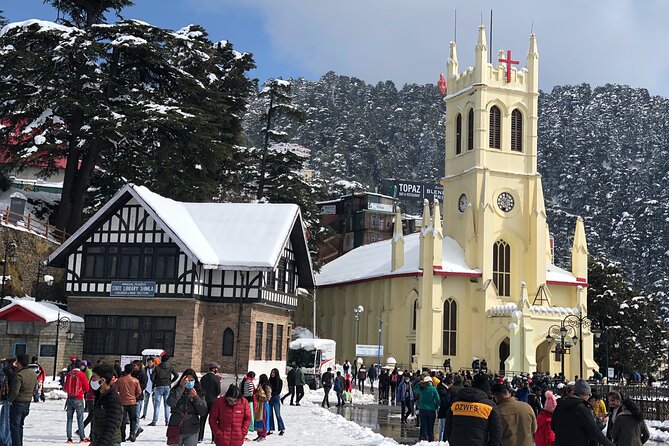
- Christ Church orientation point: start at one of the oldest churches in North India.
- Ridge + Scandal Point: quick stops that give you the lay of Shimla’s central spine.
- Red brick telegraph history: the BSNL office ties Shimla to Scottish design from 1922.
- Railway-era architecture: the Railway Board building traces engineering priorities from 1896.
- Bantony Castle and Kali Bari: colonial summer residence meets local religious meaning tied to the city’s name.
- Ends at IIAS: you finish at a research institute created by India’s Ministry of Education in the 1960s.
Why a private walking route works so well in Shimla
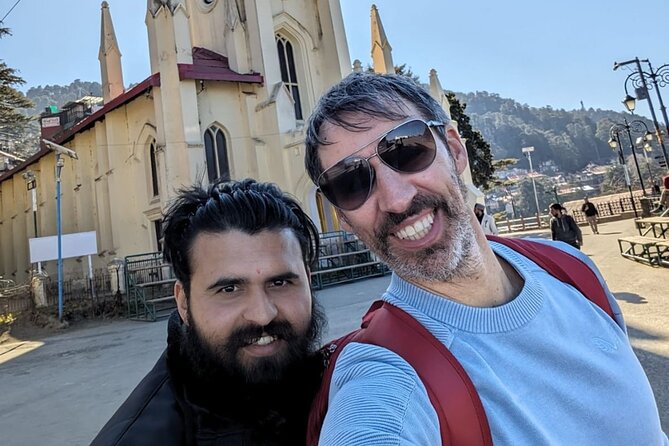
Shimla can feel big if you arrive with a list of places, but this tour is the opposite of chaotic. You’re on a private schedule, walking from one end of the colonial corridor to another, with a guide who can adjust the pace around questions and photo stops. That matters on a hill station where weather, crowds, and steep streets can otherwise turn plans into stress.
The duration is also a good fit: about 2 hours. You get an overview without committing your whole morning or afternoon, which is ideal if you’re doing other Shimla sights the same day. Plus, because it’s a one-way walk, you don’t waste time backtracking just to “finish the route.”
You’ll also benefit from the guide approach. This isn’t only facts and dates. The tour includes local gossips and context meant to help you connect the dots across buildings that look European, Victorian, or institutional, but sit inside a Himachali living city.
You can also read our reviews of more tours and experiences in Shimla.
Starting at Christ Church: your calm entry to colonial Shimla
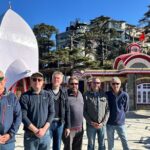
The tour begins outside Christ Church, a major orientation point on Shimla’s Ridge side. It’s described as the second oldest church in North India after St John’s Church in Meerut, and worship here is conducted in Hindi and English. That bilingual detail is a good clue that Shimla’s colonial story didn’t erase local life—it blended with it.
You’re not going inside on this tour, but starting at a church still sets the tone. Churches, clocks, and civic buildings are often where colonial planners put their most visible signals of order. From here, you move into the open space of the city’s core.
If you’re the type who likes to understand what you’re seeing before you see it, you’ll probably appreciate how the guide frames Shimla early. In past walks with Pawan, people noted he gave a brief history before the start, which helps you follow the rest of the route without getting lost.
Ridge and Scandal Point: where Shimla’s central spine clicks into place
Next up is The Ridge, a large open space located in the center of Shimla. This is one of those places where even a short stop feels meaningful because it shows you how the city breathes. Then you shift to Scandal Point, where Mall Road joins Ridge Road on the west side.
These two stops are quick, but they do a lot of work. They help you map the city in your mind so later landmarks don’t feel randomly scattered. You’ll likely notice how the terrain and road geometry guide people—today as well as during Shimla’s colonial boom.
This is also a practical photo and orientation break. If you’re carrying a camera or just your phone, this is the point where you can check your angles for the rest of the walk.
BSNL Office on the Mall Road: Scottish design meets old communications
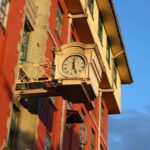
The walk then passes the BSNL office Shimla, described as a pleasing red brick Telegraph Office on the Mall Road. The design is credited to the Scottish architect Scott Begg in 1922. For a city that’s famous for its British-era look, it’s the smaller details—like where communications infrastructure sat—that make Shimla feel real rather than postcard-only.
This stop is short, but it’s a good example of how the colonial era in Shimla wasn’t only about palaces and parades. It was also about getting messages, administration, and logistics working in a remote hill setting.
One practical note: because admission isn’t included, you’ll want to treat this as an exterior look at the building’s shape and style. Spend your time on what you can actually see: materials, façade, and how it sits along the Mall Road corridor.
Bantony Castle and Kali Bari: colonial summer space and living worship
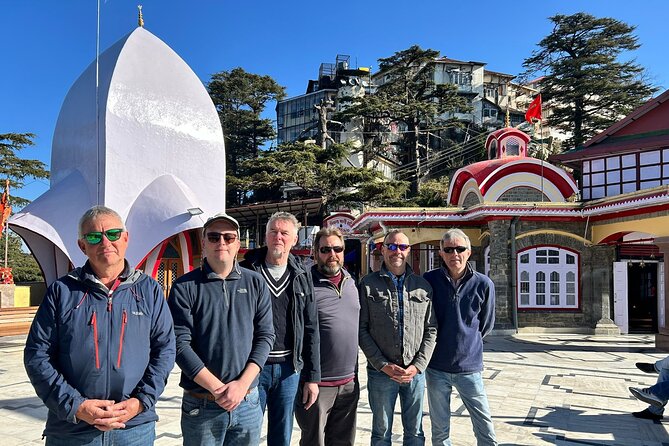
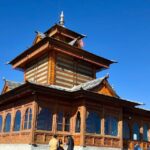
A few steps away is Bantony Castle, located on Kalibari Road near Scandal Point. It was the summer palace of the Maharaja of Sirmaur and was built in the 19th century. Whether you’re into architecture or just curious about power, that detail matters. In Shimla, “summer palace” is basically a map to who had access, comfort, and decision-making influence.
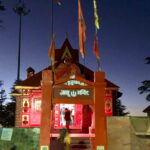
Then you move to Kali Bari Temple, dedicated to Shyamala, the reincarnation of Goddess Kali. The tour information also ties this to the city name, noting that Shimla is named after Shyamala. This isn’t a random side stop. It’s one of the clearest moments where Shimla’s identity shows up outside the British timeline.
If you like tours that connect cultures instead of treating them like separate chapters, this pairing does it well. You get palace-era planning and, right after, religious meaning that predates modern tourism framing.

Railway Board Building: engineering ambition from 1896
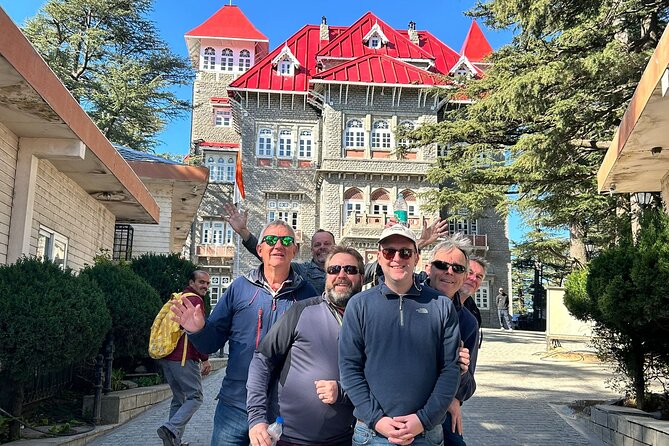
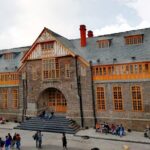
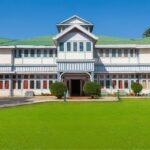
The Railway Board Building is one of the most interesting stops on the route because it’s explicitly about function. Built in 1896, it’s described as the first of its kind in India, constructed predominantly from cast iron and steel. The key design goal was fire resistance, and the materials were imported from Glasgow, as noted in the description.
Even if you’re not an architecture nerd, this stop rewards you. You can look at the building and understand why industrial materials mattered so much in that era. This was the practical backbone of empire and administration, and in Shimla it’s right in the middle of the story.
Then the tour continues briefly to Gorton Castle, described as a heritage monument with a blending of innovative minds and intelligent craftsmanship. The description doesn’t give more technical detail here, so treat this as a visual stop: look at how it reads as a heritage structure and how it fits the colonial-era pattern.
CPWD Office, Vidhan Sabha Chowk, and the political shift over time
As you keep moving, you’ll pass CPWD Office, tied to early administrative housing in 1819. Lieutenant Ross, the Assistant Political Agent in the Hill States, set up a wood cottage in Shimla. Three years later, his successor and Scottish civil servant Charles Pratt Kennedy built the first pucca structure.
That story is useful because it shows a step-by-step transition: from temporary to permanent, from wood to more durable construction. You can see why the city’s built environment grew the way it did.
A little later you reach Vidhan Sabha Chowk, connected to the Himachal Pradesh Legislative Assembly. The assembly is described as the unicameral legislature of the state. Even on a short walk, that’s a strong reminder that Shimla’s political role didn’t end with colonial rule. It changed form, but the idea of governance remained part of the city’s identity.
The Cecil and the All India Radio Centre: modern icons with old roots
The tour passes The Oberoi Cecil, described as a historic luxury hotel in Shimla. This kind of building matters in a walking tour because it reflects how old colonial spaces became part of a newer tourism economy, often keeping the façade style while shifting the purpose.
Then there’s a stop tied to the All India Radio Centre, set up in Shimla in 1955. That date is a helpful anchor in time. It turns Shimla from only a colonial-era visual into a post-independence cultural hub too.
If you’re doing Shimla for the first time, these stops can feel like little time jumps. That’s good. The tour’s goal is an overview, and these markers help you see how Shimla kept moving forward without losing its recognizable architectural face.
Finishing at IIAS: the walk’s end point and why it matters
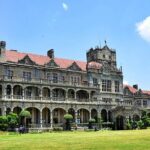
The walk ends at the Indian Institute of Advanced Study (IIAS), Shimla. The institute is described as a research institute set up by India’s Ministry of Education in 1964, and it started functioning on 20 October 1965. Your guide will drop you outside the main entrance.
This ending location is thoughtful. Many Shimla walks finish at malls, viewpoints, or hotels. Ending at a research institute subtly changes the theme from “colonial buildings as decoration” to “institutions as legacy.” It’s a finish that feels contemporary but still tied to national planning and education.
Also, because you’re not required to enter anything with admission tickets here, it keeps the tour smooth and time-friendly.
Pace, comfort, and the smartest way to do this in 2 hours
The route is built from short stops, often 1 to 5 minutes each, with more time at the end. That can sound rushed on paper, but the real-world experience is designed for a steady walk, not a sprint.
From the way guides were described in previous walks, you can expect a calm pace with room for small breaks. One helpful detail: when someone wanted coffee, the guide waited patiently. So if you want to grab a drink near the route, it’s reasonable to ask for a quick pause.
A practical tip: wear shoes you’re comfortable in for a city walk on uneven streets. Shimla is a hill station, so even a short distance can involve slopes and stairs. If you’re traveling with limited mobility, you might want to ask your operator if the route includes steps you should plan around, since the tour data only says “most travelers can participate.”
Value for money: what $16.67 gets you (and what it doesn’t)
At about $16.67 per person, this tour is strong value if you want an organized overview without paying for multiple entrances. You’re getting a private guided walk, plus a local English, Hindi, and Pahari speaking guide. The tour also includes a one-way route from Christ Church to IIAS and includes local gossips, which is where many history walks fall flat.
The main limitation is straightforward: admission tickets are not included and the tour is designed around stops you view rather than ticketed entry sites. That doesn’t make it bad. It just means you should match your expectations: think “guided street-level history,” not “museum tour.”
Where the price becomes a bargain is when you’re on a tight schedule. Two hours is enough to understand the city’s main axes, and then you can spend the rest of your time at the viewpoints and cafés you personally care about.
Who this colonial trails walk suits best
This is a great fit for you if:
- You’re visiting Shimla for the first time and want a clear overview fast.
- You like heritage buildings but don’t want to pay for or manage separate tickets all day.
- You prefer a private guide who can answer questions in English and also bring in local language context.
- You’re traveling solo and want an easy way to get grounded in a new city. Solo travelers have especially enjoyed guides like Pawan for first-time orientation.
It may be less ideal if:
- You’re expecting long entry time into specific attractions.
- You want a deep museum-style history with extended indoor viewing rather than a walk-by storytelling route.
Should you book this colonial trails walk?
I’d book it if your goal is a smart first pass through Shimla’s colonial and institutional story, with enough stops to remember what you saw but not so many that you feel exhausted. It’s short, private, and guided by someone who brings real local context in addition to historical framing.
I would skip or choose a different option if you mainly want paid entry experiences inside major attractions. Since admission isn’t included, your time is best spent using the guide to interpret what you see from outside.
If you want an easy win on day one, this is one of the more practical ways to do it.
FAQ
How long is the Shimla colonial trails private guided walk?
It’s about 2 hours.
What is included in the tour price?
A local guide who speaks English, Hindi, and Pahari, a walking tour, and the one-way walk from Christ Church to the Indian Institute of Advanced Study (IIAS).
Are admission tickets included?
No. The tour notes that admission tickets are not included and you will not enter attractions where admission is required.
Where does the tour start and where does it end?
It starts outside Christ Church, Shimla, at the Ridge To US Club, The Mall area. It ends at the Indian Institute of Advanced Study (IIAS), where the guide drops you outside the main entrance.
Is this tour private?
Yes. It’s a private tour/activity with only your group participating.
What languages will the guide speak?
The guide speaks English, Hindi, and Pahari.
When should I book?
On average, it’s booked around 30 days in advance.