Shimla moves fast when you’re walking it. This 2-hour guided stroll strings together colonial buildings, quick photo stops, and story-led context that helps you read the city instead of just passing it by.
I like that the guide (a Storyteller who speaks English & Hindi) keeps things moving from place to place, with heart-warming stories tied to what you’re seeing. I also appreciate the practical touch: you get photography tips plus one hot beverage to keep energy up.
The main drawback to weigh is consistency. The tour information says entry is free at the stops, but at least one booking reported being asked to pay at places where free admission was stated, and that the route didn’t fully match what was expected.
In This Review
- Key things to know before you go
- A quick two-hour loop that helps you read Shimla
- Getting oriented: the walk starts at Viceregal Lodge
- Stop 2: Himalayan Bird Park for easy, colorful photo practice
- Stop 3: Himachal State Museum and Pahari-influenced art
- Stop 4: Vidhan Sabha area and an old library
- Stop 5: Gorton Castle for neo-Gothic details
- Stop 6: through the Shimla–Kalka railway area toward Kali Bari Temple
- What the guide actually adds (and what can vary)
- Value for money: $11.97 for a guided colonial sampler
- Logistics that matter in Shimla (without making this a headache)
- Who this tour suits best
- Should you book Colonial Trails of Shimla?
- FAQ
- How long is the Colonial Trails of Shimla guided walking tour?
- What is the price per person?
- Where does the tour start and end?
- Is a guide included, and what languages do they speak?
- Are entry fees included for the stops?
- What’s included in the tour besides the walk?
- Is bottled water included?
Key things to know before you go
- Viceregal Lodge (Rashtrapati Niwas) starts the walk with big colonial-era presence on Observatory Hill
- Photo-focused stops include a bird park and a state museum designed for viewing and snapping
- English & Hindi Storyteller keeps the stories understandable and the pace group-friendly
- Neo-Gothic Gorton Castle and heritage landmarks sit on the route, but timing matters in a 2-hour window
- End at Kali Bari Temple on Jakhoo Hill to close with a strong local religious anchor
A quick two-hour loop that helps you read Shimla
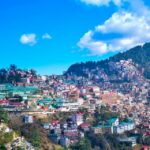
Shimla is all slopes, viewpoints, and sudden architectural surprises. This walking tour is designed for a short window, so you don’t need a full day to get a sense of the colonial footprint and how it connects to daily life.
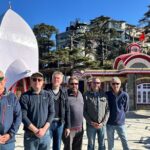
You’ll be with a small group—maximum 15 travelers—so questions land, and you’re not just herded down a sidewalk. The pace is built for photos and quick explanations, which is ideal if you want the highlights without turning it into a long endurance mission.
The big value is the way stories “attach” to buildings. Instead of treating every stop like a postcard, you learn what things were used for and why locals care about them now. That makes your next walk in Shimla feel easier, like you’re finally seeing the city’s logic.
You can also read our reviews of more tours and experiences in Shimla.
Getting oriented: the walk starts at Viceregal Lodge
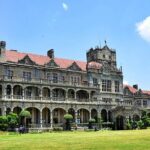
Your tour begins at Viceregal Lodge (Rashtrapati Niwas), Observatory Hill. This is one of those places that immediately signals Shimla’s colonial-era status—massive scale, prominent position, and an atmosphere that makes you want to look up before you look around.
On paper, admission is free, and the start time is set so you can arrive before the “rush mood” builds. Even if you just spend a few minutes studying the building’s exterior details, it sets the tone for everything else on the route.
Practical tip: take a few minutes at the start to orient yourself—Shimla’s hills can trick your sense of direction. Once you can picture where Observatory Hill sits, the rest of the walk feels less random.
Stop 2: Himalayan Bird Park for easy, colorful photo practice
After the lodge, you move into Himalayan Bird Park, where the focus is on Himachal state birds. This stop is short—about 20 minutes—but it’s a smart inclusion because it breaks the architecture-heavy flow.
If you like photographing animals, this is a lower-stress segment than chasing street corners. You can work on composition and light—without needing to sprint between locations.
One consideration: because it’s a brief stop, you’ll get the best value if you already have your camera settings sorted. Bring a charged phone or camera, and don’t wait until the last minute to decide how you want to shoot.
Stop 3: Himachal State Museum and Pahari-influenced art
Next up is the Himachal State Museum, where you’ll look at collectibles like ancient coins, paintings, and handicraft items shaped by Pahari art influences.
This is the stop that helps shift your understanding from “colonial buildings” to “local culture.” Even with only about 20 minutes, it’s enough time to grasp the museum’s theme: art and objects that reflect regional identity rather than imported style alone.
The museum visit is also useful if you’re traveling with people who aren’t purely into buildings. It adds variety, and it gives you something concrete to talk about later—like what you saw in the coin or painting displays.
Stop 4: Vidhan Sabha area and an old library
The route then passes through the heritage-heavy Vidhan Sabha area. You’ll also pass an old library, and you’ll go by colonial buildings along the way.
This segment is “moving through” rather than a long deep sit-down. That’s fine for a two-hour tour, but it means you’ll get the most from it if you ask your guide one or two targeted questions while you’re there.
Keep an eye on time here. In at least one case tied to a booking experience, guests reported not seeing this stop as expected. If you care about these specific landmarks, it’s worth checking in with your guide if the route starts feeling rushed.

Stop 5: Gorton Castle for neo-Gothic details
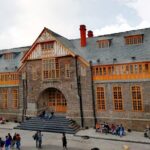
Then comes Gorton Castle, a 19th-century structure with neo-Gothic architecture. This is the kind of building where small exterior details matter—window shapes, arches, and the overall “story” the design tells.
In a short walking tour, your main advantage is that you’re not doing this cold. You’re hearing the context as you look, which helps the architecture register quickly.
Again, because the tour is only about 2 hours, timing is everything. If Gorton Castle is a “must-see” for you, make sure your group arrives at the right pace and stays together. (One reported issue was that Gorton Castle wasn’t seen on the tour as listed.)
Stop 6: through the Shimla–Kalka railway area toward Kali Bari Temple
As you head toward the finish, you pass the Shimla–Kalka Railway track, described as a witness of British craftsmanship. You also pass St. Michael’s Cathedral, noted for its French-Gothic style architecture.
These “pass-by” moments are useful because they connect separate sights into one story: infrastructure, architecture, and the way British-era planning left physical landmarks across Shimla.
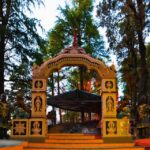
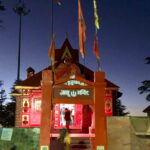
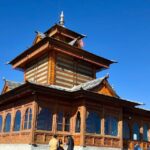
Finally, the tour ends at Kali Bari Temple on Jakhoo Hill, an ancient worship site dedicated to Goddess Kali, built in 1845. This is a major closing note because it grounds the walking route in current local religious importance, not just past colonial design.
If you want a practical photo tip: temples can have rules about where you stand and how you photograph. Stay attentive to local guidance and keep your pace respectful.
What the guide actually adds (and what can vary)
The biggest difference between a good walking tour and a mediocre one is the human factor. Here, the plan centers on a Storyteller/guide who speaks English & Hindi, and you’re promised “heart-warming stories” tied to culture and beliefs.
In a best-case run, this turns architecture into meaning. You start noticing how people interpret a building, what landmarks symbolize, and why a place like Kali Bari Temple continues to matter.
That said, the potential downside is communication and route accuracy. One booking experience reported that the guide’s English wasn’t enough to be useful and that key stops (like Vidhan Sabha Canteen and Gorton Castle) weren’t included during the walk. If English clarity and strict adherence to the posted route matter a lot to you, plan to confirm route expectations early—ask what stops are guaranteed today.
Value for money: $11.97 for a guided colonial sampler
At $11.97 per person, this tour is priced like a budget-friendly way to get structure to your Shimla sightseeing. You’re paying for a guide, a small-group walk, and the time-saving of having a planned set of stops.
What makes the value stronger on paper is the combination of inclusions:
- a highly trained and friendly guide who can speak English & Hindi
- entry to photographic destinations (each stop lists admission as free)
- photography tips
- one hot beverage
- group discounts (when available)
The reality check: if someone is asked to pay entry fees at the “free” stops, the true value drops for that day. Still, even if you factor in the cost of occasional admissions, the tour remains time-efficient because it compresses multiple key sites into about two hours.
My practical recommendation: keep a small amount of cash or a spare card reserved for last-minute entrance questions. That way, you’re not stuck if something differs from the stated “free admission” wording.
Logistics that matter in Shimla (without making this a headache)
This is a walking tour, so wear shoes you can trust. Shimla’s hills and the fact that you’re visiting Observatory Hill and Jakhoo Hill practically guarantee some uphill segments and uneven ground.
The route also starts and ends at different points:
- Start: Viceregal Lodge / Rashtrapati Niwas, Chaura Maidan Road near Observatory Hill, Boileauganj
- End: Kali Bari Temple, Mall Rd, Kali Bari, Shimla
So you’ll want to plan what you do next at the end of the tour. Jakhoo Hill can be a good place to continue exploring, but it also means you may need to arrange onward transport without rushing.
Good news: it’s listed as near public transportation, and you won’t need a hotel pickup. Bring a bottle of water since bottled water isn’t included.
Who this tour suits best
This is a great match if you:
- have only a short amount of time in Shimla
- like walking tours that include photo guidance and short stops
- want a guided explanation of how colonial sites connect to local beliefs
- prefer small groups (up to 15) over big coach-style tours
It’s less ideal if you need a rigid, timed route with long stays at each stop, or if you expect every single entrance to work exactly as written with no questions asked.
If you’re traveling with kids, it can still work because the stops are short, but you’ll want to manage pacing and make sure everyone stays close—especially near temple areas.
Should you book Colonial Trails of Shimla?
I’d book it if you want a short, structured walk that connects Shimla’s colonial architecture to cultural meaning—then ends at a religious anchor on Jakhoo Hill. The guide-led storytelling, photo tips, and the low price make it a smart use of limited time.
But book with eyes open. The biggest risk is that entry fees or route timing might not match what you expected at the gates, and at least one booking experience reported stops being missed. If that kind of mismatch would ruin your day, consider checking whether today’s guide confirms every listed stop before you start.
If you want my “friend test,” do this: if Viceregal Lodge, the bird park, the state museum, and a finish at Kali Bari Temple are all on your must-see list, this tour can deliver real value fast.
FAQ
How long is the Colonial Trails of Shimla guided walking tour?
The tour lasts about 2 hours.
What is the price per person?
The price is $11.97 per person.
Where does the tour start and end?
It starts at Viceregal Lodge (Rashtrapati Niwas), Observatory Hill and ends at Kali Bari Temple, Jakhoo Hill.
Is a guide included, and what languages do they speak?
Yes. The tour includes a Storyteller/guide who can speak English & Hindi.
Are entry fees included for the stops?
The tour information says there is entry to all the photographic destinations, and each stop lists admission ticket free.
What’s included in the tour besides the walk?
You get photography tips, one hot beverage, and guided conversation related to religion, beliefs, and local importance.
Is bottled water included?
No. Bottled water is not included, so plan to bring your own.