REVIEW · AMRITSAR
Amritsar Heritage Walk
Book on Viator →Operated by Discover Punjab Tours · Bookable on Viator
Old Amritsar lanes have their own speed. This guided heritage walk threads you through the narrow lanes and by-lanes of the city’s old quarter, and I especially like how it connects everyday places to big stories at the Town Hall (1866) and the Saragarhi Memorial Gurudwara. One consideration: you’re on foot for about three hours, so plan for plenty of walking on tight lanes.
I also like the small-group feel—there’s a maximum of 10—so the guide can keep the pace human and answer your questions. Guides such as Gurinder Singh Johal and Ajay are praised for clear, courteous explanations and small historical anecdotes that make the places easier to picture.
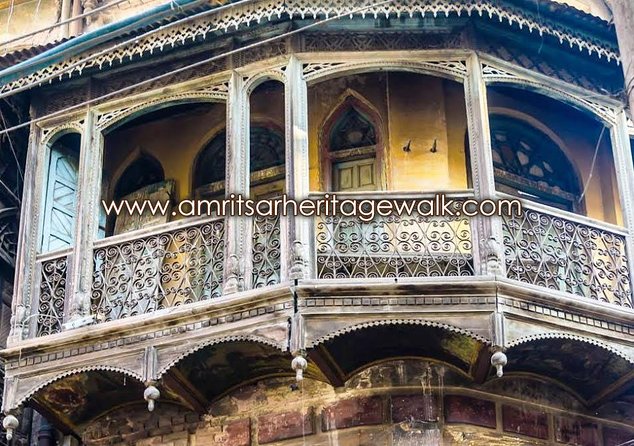
And this tour isn’t just about seeing landmarks. You’ll pass katras, akharas, bungas, havelis, and hatties, watching how traditional town planning and craft/trade patterns still show up in the layout around you.
In This Review
- Key highlights you’ll care about
- What a heritage walk means in Amritsar (and why it’s worth it)
- Entering the old city near Town Hall Road
- Town Hall: British-built administration in an older city core
- Saragarhi Memorial Gurudwara and the 36th Sikh Battalion
- Katra Ahluwalia and Qila Ahluwalia: power, defense, and the Ahluwalia Misl
- Hall Bazaar: the passageway that explains old-city movement
- The flow of a 3-hour tour: short visits, longer understanding
- Price and value: what $35 really buys you
- Who should book this walk (and who should reconsider)
- A few practical tips to make the most of it
- Should you book the Amritsar Heritage Walk?
- FAQ
- How long is the Amritsar Heritage Walk?
- How much does the tour cost?
- What time does the tour start?
- How many people are in the group?
- Is it a mobile-ticket experience?
- What stops are included on the route?
- Are admission tickets included?
- What is the cancellation policy?
Key highlights you’ll care about
- A true old-city route through narrow lanes and by-lanes, not a bus-stop checklist
- Stop-by-stop meaning tying sites to Sikh history, local administration, and the Ahluwalia legacy
- Well-paced time (about 3 hours) with short visits that still give context
- Admission tickets included for the main stops on the itinerary
- Small group size (max 10) for a more personal experience
- Mobile ticket that makes day-of entry easier
What a heritage walk means in Amritsar (and why it’s worth it)
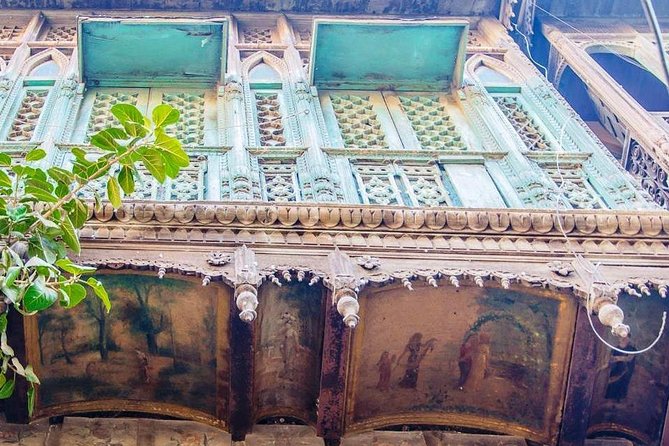
A lot of Amritsar sightseeing centers on the big, famous sights. This walk takes the opposite approach. You spend your time in the working bones of the city—where katras (old market-and-home clusters), by-lanes, and passageways shape how people moved, traded, and gathered for centuries.
I like tours like this because you don’t just get facts. You get spatial understanding. When you’re walking between old passageways and forts, it becomes easier to see why defense, commerce, and community life were tied together. Even if you’ve visited the major religious sites, this style of route can help you understand what life looked like around them.
Also, the tour is built around multiple types of old structures—havelis, akharas, and those covered trading corridors. That means you’re not only looking at monuments; you’re seeing the city’s practical design. You’ll get a better sense of how the old city functioned, not just how it looked.
You can also read our reviews of more tours and experiences in Amritsar.



Entering the old city near Town Hall Road
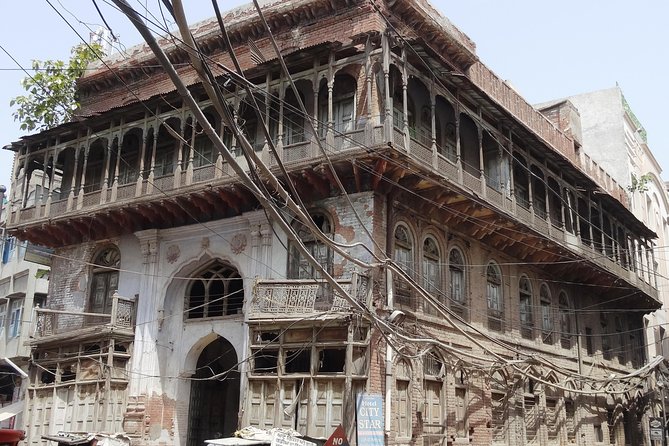
Most people start thinking about logistics last. But here, start location matters, because the walk is inside the older core. The meet point is listed near the Town Hall area, off Golden Temple Road, in the Katra Ahluwalia part of Amritsar. The tour ends back in the Katra Ahluwalia area (in Amritsar Cantt.), so you’re not finishing across town.
The timing—9:00 am—is smart for two reasons. First, you’ll be out earlier in the day, when the streets are easier to manage on foot. Second, the light helps when you’re trying to read details on older facades and arches.
You’ll also notice the route is short-stop and walk-heavy. That’s by design. The guide uses the movement between places to connect the dots—town planning, crafts, and community spaces—so you’re not stuck listening in one spot for long.
Town Hall: British-built administration in an older city core
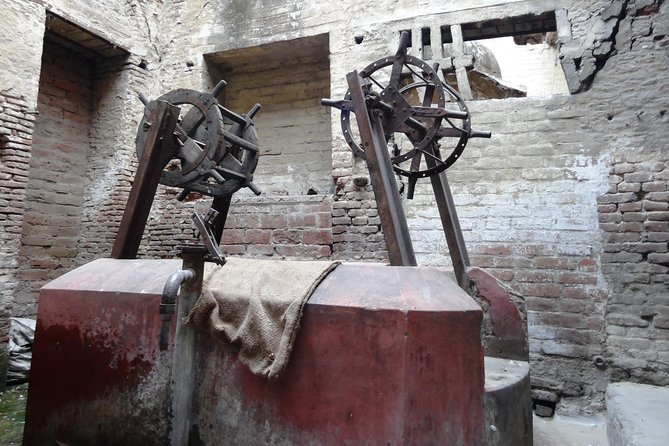
Stop 1 is Town Hall, built by the British in 1866. Even if you’re not a “colonial architecture” person, this stop works because it anchors you in the idea of governance and civic life. Town Hall isn’t presented as a random building. It’s described as the center of local administration for Amritsar.
What I like about starting here is that you get a framework before you go deeper. Once you understand that this part of the city acted as an administrative heart, the later stops—like memorial spaces, forts, and passage markets—make more sense as parts of one city system.
The visit is scheduled for about 15 minutes, which is enough time for orientation and context without turning the tour into a museum session. If you’re the type who likes photos, this is also a good place to reset—get a few clear shots early before you’re navigating narrower lanes.
One small practical note: since this is an early stop, make sure you’re ready to walk right away. Comfortable shoes matter more than you think on routes that compress into older lanes.
Saragarhi Memorial Gurudwara and the 36th Sikh Battalion
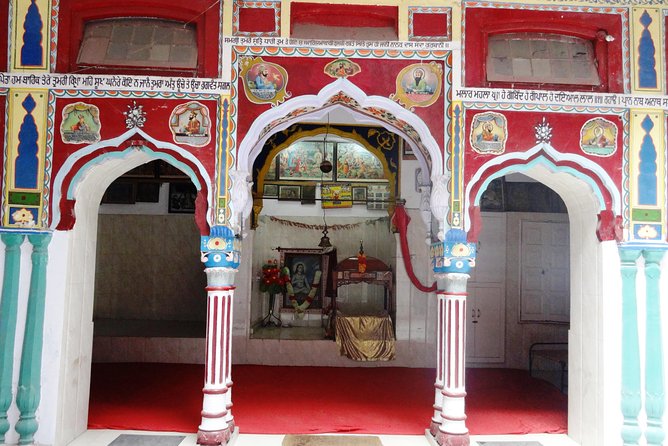
Stop 2 is Saragarhi Memorial Gurudwara, a tribute to the 21 soldiers of the 36 Sikh Battalion who lost their lives defending their posts on September 12, 1897.
This stop is scheduled for about 5 minutes, so the guide’s role becomes extra important. In a short time, you’re not just asked to accept a plaque—you’re given a human-scale story about courage and sacrifice, and then you’re moved on. If you want to linger, you’ll need to balance that with the rest of the route.
What makes this location valuable on a heritage walk is how it changes your listening. Instead of reading history like a separate topic, you hear it while you’re still in the old city’s lived-in spaces. The memorial becomes one more piece of the city’s identity.
Also, since admission is included for this stop, you can treat it as a real part of the itinerary rather than a quick external glance. That helps you keep momentum and still cover key sites.
Katra Ahluwalia and Qila Ahluwalia: power, defense, and the Ahluwalia Misl
Stop 3 is Katra Ahluwalia, centered on Qila Ahluwalia. This fort once belonged to the Ahluwalia Misl, and the guide ties it to Jassa Singh Ahluwalia—a major figure known for repelling foreign invasions during the 18th century.
I like this stop because it doesn’t stay vague. It gives you names and a time frame, which turns the fort from a background structure into a strategic place in a chain of events. When you’re walking through the old city, forts and memorial sites can feel similar at first glance—big built forms. Here, the story makes clear why this particular place mattered.
The scheduled time is about 15 minutes, which is a good length for understanding ownership (Ahluwalia Misl), leadership (Jassa Singh Ahluwalia), and the theme of defense. Then you move on to a passage that represents trade and connection—so the day naturally shifts from authority and protection to everyday movement.
If you’re curious about Sikh history, this is one of the most satisfying stops because it gives you a concrete link between a structure and a historical role.





Hall Bazaar: the passageway that explains old-city movement
Stop 4 is Hall Bazaar, described as an ancient passage—an archway connecting various mohallas and katras of old Amritsar. The story here is that it was established by Sikh Misls, and it functions like a city shortcut: a place where people and goods could flow between neighborhood clusters.
This is the stop that helps you see the city as a network. After the fort stop, Hall Bazaar brings you back to daily logistics: where movement happened, how neighborhoods related, and how built structures supported commerce.
The visit is about 20 minutes, which is longer than the Saragarhi stop and fits the topic. Passageways and markets are best understood by moving through them while the guide explains how the spaces link together.
If you like to take in atmosphere, this is a good time to slow down a bit. Look at how the archway frames the corridor and how lanes branch off. Even if you don’t do a shopping spree, you’ll understand why these corridors mattered.
The flow of a 3-hour tour: short visits, longer understanding
On paper, the listed stops add up to under an hour, but the tour runs about 3 hours (approx.). That extra time is the walk itself: the narrow lanes and by-lanes between places, plus the guiding context.
The format is ideal if you want substance without turning your day into a long commitment. You’ll get multiple anchor points—administration, memorial sacrifice, fort legacy, and market passage—so by the end you can connect the city’s religious and civic identity with its defensive and commercial structures.
A typical rhythm looks like this: meet near Town Hall area, start with an administrative anchor, shift quickly to a memorial story, then move to Ahluwalia fort territory, and finish with the corridor that shows how people moved between neighborhood clusters.
If you hate rushing, take this tour with realistic expectations. The stops are short by design, but the pacing should feel efficient rather than frantic. The key is that the guide uses those quick visits to build a coherent route, not just to check boxes.
Price and value: what $35 really buys you
The price is $35 for about three hours, and admission tickets are included for the main stops on the itinerary. For many heritage walks, you can end up paying for a guide while still having to pay entry fees separately. Here, the structure is more straightforward: the tour package covers the entry parts that matter.
The other part of value isn’t money; it’s time. For first-time visitors, the old city can feel confusing. You may see lanes, arches, and forts, but you might not know how they connect. This tour is designed to give you that connective tissue—names like Ahluwalia Misl and Jassa Singh Ahluwalia, plus a clear memorial reference to September 12, 1897.
With a maximum group size of 10, you’re not stuck in a crowd where the guide has to talk over everyone. That smaller setting tends to improve how much you actually remember after the walk ends.
Who should book this walk (and who should reconsider)
This experience is a strong fit if you want more than postcards. It’s for you if you like old-city design, want to understand how katras and passageways functioned, and appreciate short, story-driven stops.
It’s also a good match if you’re traveling with people who like variety. You get civic administration (Town Hall), sacred remembrance (Saragarhi Memorial Gurudwara), fort/leadership context (Qila Ahluwalia), and a practical corridor lesson (Hall Bazaar).
Who might reconsider? If you dislike walking for most of a half-day or you prefer big, single-site time blocks where you can linger without moving between locations, this route may feel like too much motion. The walk is designed for movement through tight lanes, so plan your energy accordingly.
A few practical tips to make the most of it
You’re heading into narrow lanes and by-lanes, so keep your day simple. Wear shoes you can trust, and carry only what you need. A mobile ticket is part of the experience, so have your phone ready with the confirmation accessible.
Since stops include interiors and memorial spaces, it also helps to dress respectfully. You don’t need to overthink it, but you should be prepared for the tone of religious sites.
Finally, this walk works best when you engage with the guide. The descriptions of guides like Gurinder Singh Johal and Ajay highlight how they share small historical anecdotes. If you ask questions, you’ll likely get sharper explanations tied to what you’re seeing right then.
Should you book the Amritsar Heritage Walk?
I think this is a smart booking if you want a grounded view of old Amritsar that goes beyond major attractions. For $35, you get a focused route through the older city layout, built around meaningful stops and included admissions, and you’ll likely leave with a better sense of how katras, forts, and passage markets connect.
Book it if you enjoy walking, story-based context, and the kind of history you can see in the street plan. Skip it (or pair it differently) if you want long time in one place, or if walking tight lanes for about three hours doesn’t sound fun.
If you’re aiming to understand Amritsar as a living old city—not just a set of landmarks—this heritage walk is an efficient, worthwhile way to do it.
FAQ
How long is the Amritsar Heritage Walk?
It runs for about 3 hours (approx.).
How much does the tour cost?
The price is $35.
What time does the tour start?
The start time is 9:00 am.
How many people are in the group?
The tour has a maximum of 10 travelers.
Is it a mobile-ticket experience?
Yes, it uses a mobile ticket.
What stops are included on the route?
The tour includes Town Hall, Saragarhi Memorial Gurudwara, Katra Ahluwalia (Qila Ahluwalia), and Hall Bazaar.
Are admission tickets included?
Admission ticket(s) are included for the stops listed in the itinerary.
What is the cancellation policy?
You can cancel for a full refund up to 24 hours in advance of the experience’s start time. If there is a minimum traveler requirement and it isn’t met, you’ll be offered a different date or a full refund.