REVIEW · AMRITSAR
Amritsar Heritage Walking Tour of Old City & Golden Temple Area
Book on Viator →Operated by Vivamos India · Bookable on Viator
Golden Temple vibes start in the lanes. This is an Old City heritage walking tour built to explain Amritsar’s layered story—Sikh faith, Mughal-era conflicts, and British-era traces—using real street corners instead of big museums. I like that it’s guided in a way that makes the places feel connected, and I especially like how people highlight the care and personalization from guide Paramjeet (Vivamos India) to match your pace and curiosity.
The main thing to know upfront is the time-and-walking reality: you’re on foot for about 2 to 3 hours through compact lanes and market areas, with several short stops. If you prefer slow museum-style visits or you dislike moving from place to place, this format may feel a bit fast—though it’s a private experience, so your group sets the tone.
In This Review
- Key highlights on this Amritsar Old City and Golden Temple–area route
- The real goal: understanding Amritsar beyond the Golden Temple photo stop
- Town Hall to Saragarhi Memorial Gurudwara: where the timeline starts moving
- Qila Ahluwalia: a fort story inside a city that keeps changing
- Jalebian Wala Chowk and the Old City bazaar rhythm
- Udasin Akhara Sangal Wala Road and Chitta Akhara: how learning and meditation fit the city
- Darshani Deori and Churasti Attari: gateways, viewing traditions, and trade at the same time
- Baba Bohar Shivala at Bartan Bazaar: myth, banyan trees, and the utensil market endgame
- Guide factor: English/Spanish narration that actually stitches the story together
- Price and value: why $17 can feel like a bargain
- Timing, route shape, and how to plan your morning
- Where this walk fits best in your Amritsar itinerary
- Should you add the optional Partition Museum?
- Should you book this Old City heritage walking tour?
- FAQ
- How long is the Amritsar Heritage Walking Tour?
- How much does it cost?
- Where does the tour start and when?
- What’s included in the tour price?
- Is the Partition Museum included?
- Is it a private tour?
Key highlights on this Amritsar Old City and Golden Temple–area route
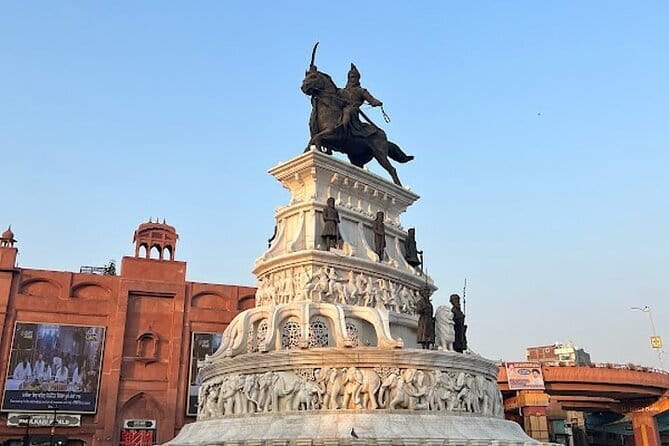
- Town Hall (1866) as your British-era starting point, so you understand the city’s modern edges early
- Saragarhi Memorial Gurudwara, focused on 21 Sikh soldiers and the 1897 Battle of Saragarhi
- Qila Ahluwalia, a Sikh-era fort story tied to resistance during foreign invasions
- Jalebian Wala Chowk, where you get the sweet-shop angle and the bazaar feel (with a jalebi history going back to 1956)
- Udasi akharas like Chitta Akhara, linking religious learning to daily life in the Old City
- Darshani Deori and Churasti Attari, gateways and trading traditions connected to how Harmandir Sahib is viewed
The real goal: understanding Amritsar beyond the Golden Temple photo stop
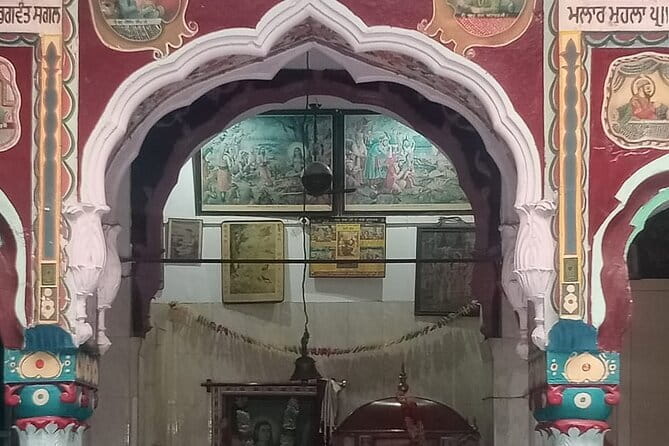
The Golden Temple area pulls huge crowds for good reason. But this walk is about the part right outside the postcard frame: the neighborhoods, religious sites, and trade lanes that explain how the city actually functions.
You start in the Old City zone, then move stop by stop into stories that overlap. The tour keeps returning to one idea: Amritsar isn’t just one era or one religion’s architecture—it’s Sikh devotion layered over earlier empires, and over time, woven together with marketplaces. That’s why you’ll see everything from British-era public buildings to Sikh memorial gurudwaras to Hindu myth symbols connected to an ancient banyan tree.
You can also read our reviews of more tours and experiences in Amritsar.



Town Hall to Saragarhi Memorial Gurudwara: where the timeline starts moving
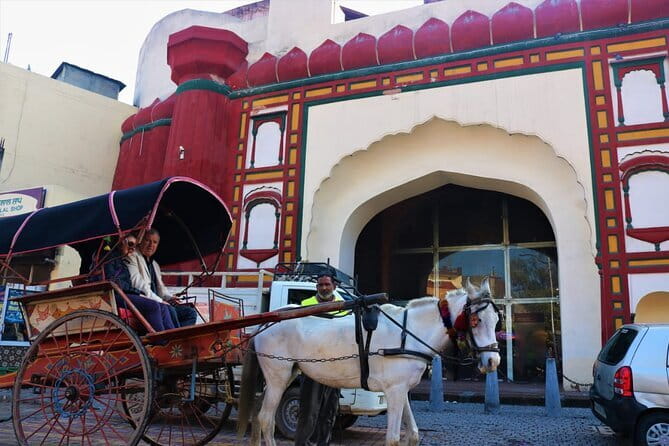
You begin at Town Hall in Katra Ahluwalia, a British-era building from 1866. Since it once served as the administrative center during British rule, it’s a smart way to orient yourself. Before you hit the sacred spaces, you get a sense of how colonial governance shaped city life and public spaces.
Then you head to the Saragarhi Memorial Gurudwara, linked to a specific moment in Sikh military history: the Battle of Saragarhi (1897). The memorial focuses on the bravery of 21 Sikh soldiers from the 36th Sikh Regiment. Even if you don’t know the battle details ahead of time, the stop is structured so the story lands. Expect a clear explanation of sacrifice and courage, and then you’re back on the move.
Practical note: this part of the tour works well if you like history that comes with a clear human story, not just dates. The drawback is the emotional intensity—this isn’t a casual “look and move on” stop for everyone.
Qila Ahluwalia: a fort story inside a city that keeps changing
Next comes Qila Ahluwalia, right in the heart of the Old City. This one isn’t a big, isolated monument you only see from far away. It’s a fort linked to Sardar Jassa Singh Ahluwalia, a prominent Sikh leader of the 18th century.
The tour frames Qila Ahluwalia as part of the period when the region faced repeated pressure from foreign invasions and when Sikh resistance mattered on the ground. The value here is that you’re not only learning about battles. You’re seeing how power and protection shaped where people lived, how they organized, and how leaders built for survival and influence.
Jalebian Wala Chowk and the Old City bazaar rhythm
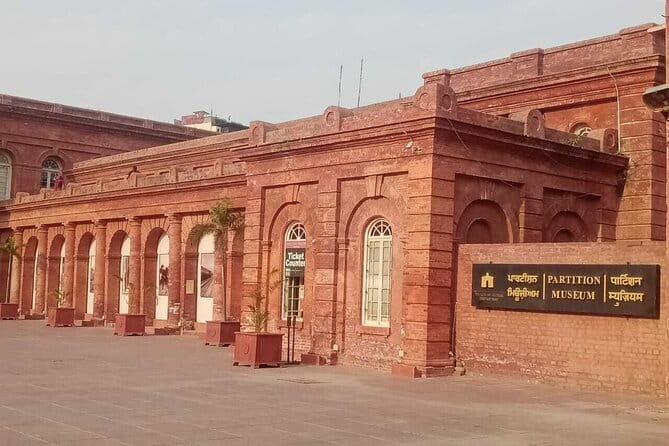
You shift from forts and memorials into street life with Jalebian Wala Chowk, named after a famous sweet shop that’s been operating since 1956. This stop is short, but it’s a good reminder that heritage is also food, routines, and local identity.
You’ll hear about jalebi preparation and what makes it a Punjab favorite, then you’re thrown right into the bazaar atmosphere around you. If you’ve got a sweet tooth, this is the part where the walk feels most immediately fun.
Consideration: if you’re sensitive to crowds or street-level noise, bazaar areas can feel busy. Keep that in mind if you want a quieter pace.
Udasin Akhara Sangal Wala Road and Chitta Akhara: how learning and meditation fit the city
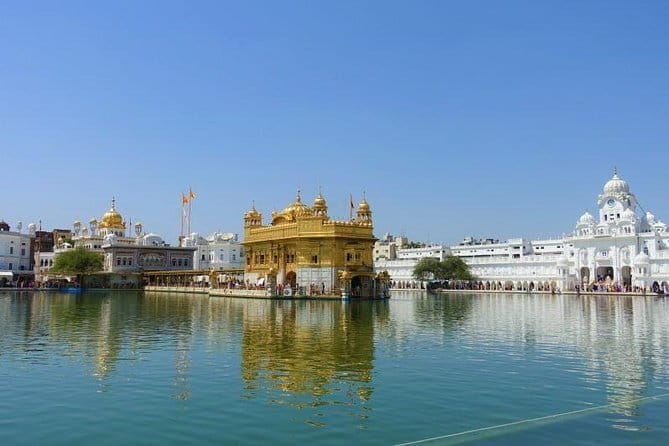
Halfway through, the walk turns spiritual in a different way—not Golden Temple devotional tourism, but the world of Udasi akharas, centers connected to ascetic practice, education, and meditation.
You visit Udasin Akhara Sangal Wala, founded in 1771 by Nirvan Priyatam Dass. The emphasis here is on the role of sacred learning—education, meditation, and spiritual training for holy men. This is one of those stops that helps you understand why Amritsar has always been more than a single religious landmark.
Then you move to Chitta Akhara, associated with Baba Shri Chand Ji, the elder son of Guru Nanak Dev Ji. Again, the tour keeps the focus on meditation and spiritual learning, showing how those traditions lived in the Old City.
Why I think these stops work: they connect faith to everyday infrastructure. It’s easier to grasp a city when you see where people studied, prayed, and trained—not only where they worshipped.
Possible drawback: if you’re expecting purely architectural highlights, these akharas may feel quieter than you anticipated. But if you like meaning and context, this is a standout section.





Darshani Deori and Churasti Attari: gateways, viewing traditions, and trade at the same time
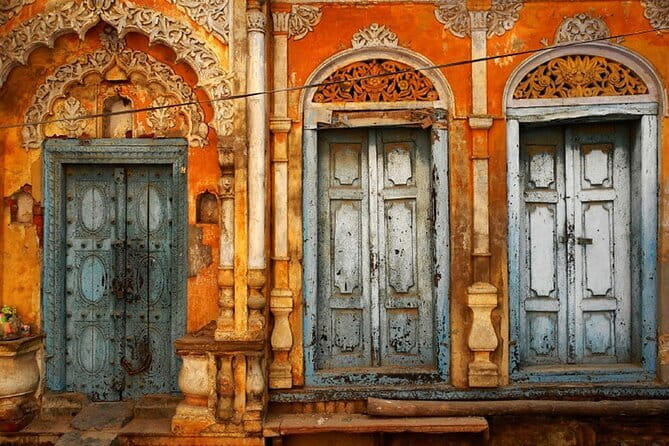
Now you’re close to what most visitors associate with Amritsar, and the tour uses two key stops to explain the connection.
At Darshani Deori, you stop at a historically important gateway where Sri Guru Arjan Dev Ji and Sri Guru Hargobind Ji would view Harmandir Sahib (Golden Temple). This is one of those “wait, that changes how I think about it” locations. Instead of treating the Golden Temple as a distant destination, the tour explains it as something seen through real gateways—built into how movement and devotion connect.
Then you end up at Gurudwara Churasti Attari, established by Sri Guru Hargobind Ji in the early 1600s. Here the tour links a sacred site to daily commerce through the origin story of Batti Hatta Market. The idea is that the Guru encouraged traders to set up shop—32 shops—blending spirituality with the practical rhythm of market life.
This is where the tour’s biggest strength shows: it doesn’t treat trade as separate from faith. In Amritsar, they’re braided together.
Baba Bohar Shivala at Bartan Bazaar: myth, banyan trees, and the utensil market endgame
You finish with Baba Bohar Shivala at the end of Bartan Bazaar, the utensil market. The focal point is an ancient banyan tree called a Bohar tree.
The tour explains the religious significance in Hindu mythology and links it to the Trimurti—Brahma, Vishnu, and Mahesh. This stop is a thoughtful reminder that Old City heritage isn’t only Sikh landmarks. It’s a place where different traditions shaped how people mark sacred meaning in ordinary city spaces.
If you’re a buyer, this is also the part where the utensil market context makes the area feel real, not staged. If you’re not shopping, it still works as a symbolic close: the walk ends where practical life and sacred meaning share the same streets.
Guide factor: English/Spanish narration that actually stitches the story together
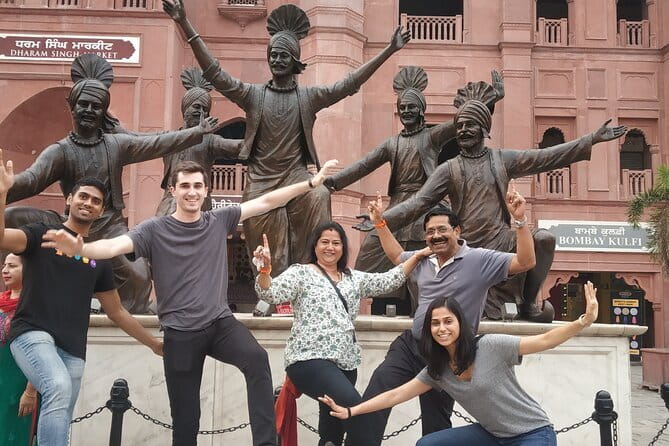
Your experience depends heavily on the guide, and the standout theme in the feedback is storytelling quality and personalization. People specifically call out Paramjeet (Vivamos India) for weaving cultural and historical elements into one clear narrative, rather than rattling facts at you.
In plain terms: good guides help you notice what you’d miss. This tour’s guide is described as professional and passionate, with a tailoring approach that can adjust pacing and emphasis. That matters because you’re moving through nine stops in a short window—so you want the story to stay understandable, not rushed or confusing.
If you want a walk that feels like it’s being explained by someone who knows the city’s logic, not just its landmarks, this is the right format.
Price and value: why $17 can feel like a bargain
For $17, you’re getting a professional local guide (English or Spanish speaking), plus bottled drinking water. Several stops also have admission included, while others are free—so you’re not constantly paying small extra costs as you go.
You should also factor in time: a 2 to 3 hour walking tour is usually the kind of slot that slips into your day without demanding a full half-day. That makes it easier to pair with Golden Temple time, markets, or optional extras.
Important extra: the Partition Museum is optional and costs ₹250 per person if you choose it (and it depends on time availability). If you don’t care about Partition history, you can keep this walk focused on the Old City stories instead.
Timing, route shape, and how to plan your morning
The tour starts at 8:00 am at Town Hall, Katra Ahluwalia and finishes back at the meeting point. That early start helps you get moving before the hottest or busiest hours hit—though your exact comfort level still depends on the day.
It also says the experience requires good weather. So check the forecast. If rain is likely, you might want to pack a small layer and be ready for schedule changes.
Because it’s a private tour, only your group participates. That’s a real quality-of-life upgrade in market-heavy areas. It also means your guide can usually adjust for questions and the pace you want.
Where this walk fits best in your Amritsar itinerary
This is ideal when:
- you want to understand the city’s layers quickly, before you sink deeper into any one landmark
- you like religion and history explained through real neighborhoods
- you want a route that includes memorials, forts, spiritual learning spaces, and market culture
It may be less ideal if:
- you only want one big famous monument (you could spend all your time around the Golden Temple itself)
- you struggle with walking for 2 to 3 hours on compact lanes
Should you add the optional Partition Museum?
There’s an optional Partition Museum visit available for ₹250 per person, depending on guest interest and time. If Partition history matters to you, adding it can deepen the modern story that surrounds Amritsar.
If it doesn’t matter much, you don’t have to choose it. The rest of the walk already covers Sikh military remembrance, Sikh-era resistance narratives, spiritual learning sites, and market traditions—so the core experience still stands on its own.
Should you book this Old City heritage walking tour?
Book it if you want a guided walk that helps you understand what you’re seeing in the Old City, not just where to stand for photos. The strongest selling point is the guide-driven narrative—people highlight how Paramjeet connects history and culture into a coherent story and personalizes the experience so it doesn’t feel one-size-fits-all.
Skip or rethink if you’re short on time or you want a lighter stroll focused on one area only. This route moves with purpose.
If you do book, I’d go in with one simple mindset: treat each stop as part of a larger Amritsar story, not separate sights. That’s how the walk pays off most.
FAQ
How long is the Amritsar Heritage Walking Tour?
It runs about 2 to 3 hours.
How much does it cost?
The price is $17.
Where does the tour start and when?
You meet at Town Hall, Katra Ahluwalia, Amritsar, Punjab 143006, and the start time is 8:00 am.
What’s included in the tour price?
You get a professional local guide (English or Spanish speaking) and bottled drinking water. Admission is included for some stops, while others are free.
Is the Partition Museum included?
No. The Partition Museum visit is optional and costs ₹250 per person, depending on interest and time.
Is it a private tour?
Yes. It’s a private activity, meaning only your group participates.