REVIEW · AMRITSAR
Amritsar: Small Group 3 hour Guided Heritage Walk
Book on GetYourGuide →Operated by Go City Adventures · Bookable on GetYourGuide
Three hours, and Amritsar starts making sense. This guided walk strings together power, faith, and memory across the old city, with key stops like the Town Hall and a calm finish at the Golden Temple. I love how the route turns landmarks into a timeline, from the British-era administrative center to Sikh governance and defense stories. I also like that you get specific, human details, not just names on a map, including the 1897 defense and the way the city remembers 1919.
One thing to consider: you’re on your feet for the full 3 hours through older lanes and busy areas, and many stops are places of worship where you’ll need to remove your shoes. If you’re not comfortable with that, plan for patience and quick transitions.
In This Review
- Key points to know before you go
- Town Hall: Your 1866 starting line
- Gurdwara Saragarahi: The 1897 defense story in stone and prayer
- Ahluwalia Misl Fort: Defense history you can almost feel
- Jalebiwala Chowk: Where history meets food and everyday life
- Udasin Ashram Akhara Sangalwala (1771) and Chitta Akhara (1781)
- Darshani Deori and the Golden Temple viewpoints
- Baba Bohar: A big banyan tree with big presence
- Thakurdwara Dariana Mal: Colonial-style architecture in the old core
- Chowrasti Atari: Commerce shaped into a complex
- Taksal (mint) in Katra Hari Singh: Coins, power, and governance
- Thakurdwara Raja Tej Singh (1851) and Crawling Street’s hard memory
- Ancient Passage: The old archway that linked neighborhoods
- Finishing at the Golden Temple: Quiet, devotion, and a final reset
- Price and value: Is $44 for 3 hours worth it?
- Who this walk suits best
- Should you book this Amritsar heritage walk?
- FAQ
- What time does the walk start?
- Where do I meet the guide?
- How long is the experience?
- What’s included in the price?
- What should I wear and know about shoes?
- Is hotel pick-up and drop-off included?
Key points to know before you go
- Town Hall (1866) sets a clear starting point for Amritsar’s colonial-era administration
- Gurdwara Saragarahi honors the twenty-one Sikh Battalion troops from Sept 12, 1897
- Ahluwalia Misl Fort connects you to the 18th-century defense story in a very physical way
- Akharas from 1771 and 1781 show spiritual training spaces, not just temples and forts
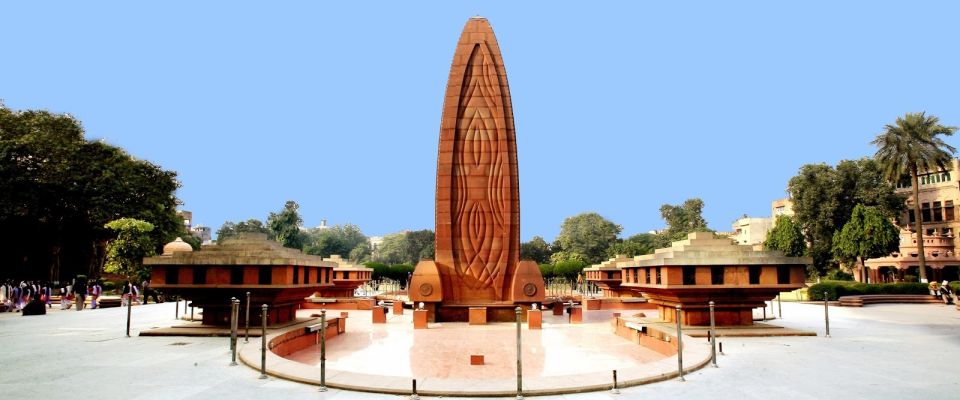
- Crawling Street adds a somber 1919 context to the walk right in the city grid
- Golden Temple finish gives you time to shift from history to quiet, devotion, and atmosphere
Town Hall: Your 1866 starting line
The tour begins outside the Town Hall in Amritsar, a British-built administrative hub from 1866. It’s a smart opener because it frames what you’re about to see: a city where rulers, institutions, and faith all left strong marks on the streets.
From here, your guide’s job is to help you read the city. Instead of treating the old lanes as just scenery, you’ll connect them to decision-making, defense, and communal life. That makes the walk feel like a guided storyline, not a checklist.
You can also read our reviews of more tours and experiences in Amritsar.



Gurdwara Saragarahi: The 1897 defense story in stone and prayer
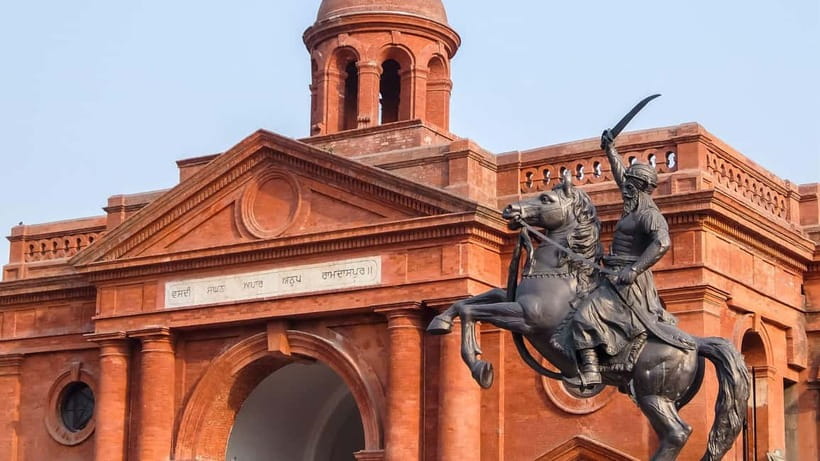
Next comes Gurdwara Saragarahi, tied to a moving moment from Sept 12, 1897. The site honors the twenty-one Sikh Battalion troops who protected their positions, and it gives the walk a clear emotional focus.
This stop is valuable because it explains why gurdwaras are more than religious buildings. They also function as memory anchors, where the community keeps specific acts of courage from fading away. You’ll likely notice how the mood changes here, and that shift helps the later stops land harder.
Tip for your own visit: keep your pace steady and let the guide’s details slow you down. These sites reward calm attention.
Ahluwalia Misl Fort: Defense history you can almost feel
Then you’ll look at Qila Ahluwalia, a fort connected with the Ahluwalia Misl. The key point is Jassa Singh Ahluwalia’s role in thwarting foreign incursions in the 18th century.
I like this stop because it turns a broad historical theme into a specific place. You’re not asked to memorize dates with no context. You see the physical idea of a stronghold and understand why communities invested in them.
One consideration: forts and historic structures can look similar at a glance. The guide’s narration is what makes the difference, so it helps to stay close and listen instead of drifting for photos.
Jalebiwala Chowk: Where history meets food and everyday life
At Jalebiwala Chowk, you shift gears toward Amritsar’s business district. This is where the walk gives you room to savor regional cuisine, and it’s more than a break. It’s a reminder that heritage sites don’t live in a museum bubble.
Food stops are also practical: they help you keep energy up before the next stretch of worship sites and architectural points. If you eat, do it with quick practicality. Bring cash if you use small stalls, and keep your belongings secure while you queue.
Udasin Ashram Akhara Sangalwala (1771) and Chitta Akhara (1781)
After the Chowk energy, the route goes into spiritual-training spaces. You’ll visit Udasin Ashram Akhara Sangalwala, established in 1771, once called Nirban Akhara. Nearby is Chitta Akhara (also known as Ganga Raam Akhara), founded by Mahant Ganga Raam in 1781.
These stops matter because they broaden what you might think of as Amritsar heritage. You’re not only chasing forts and colonial-era buildings. You’re seeing the kinds of institutions people relied on for discipline, community, and spiritual practice.
Also, expect the atmosphere to feel more grounded and less tour-bus paced. That quiet change is one of the best reasons to do a guided walk instead of self-routing.





Darshani Deori and the Golden Temple viewpoints
Next is Darshani Deori, the place from which you can observe the Golden Temple from standing points associated with Sri Guru Arjun and Sri Guru Hargobind. It’s a significant transition in the itinerary: you move from explanation to observation.
I like that this stop prepares you for the end. It reduces the shock-factor you might otherwise feel when you finally reach the main complex. Instead of rushing into the most iconic view, you get a guided sense of where the sightlines matter.
Small practical reminder: places of worship require shoes off. Keep your footwear easy to manage, and you’ll thank yourself later.
Baba Bohar: A big banyan tree with big presence
On the walk toward the later section of Bartan Bazaar, you’ll come across Baba Bohar, a revered banyan tree. A tree sounds small compared to forts and memorials, but it’s exactly the point. In old cities, landmarks that last for centuries often become part of people’s daily rhythm.
This stop also helps you slow down. You’re between major sites here, and the tree gives you a natural pause without turning the tour into dead time.
Thakurdwara Dariana Mal: Colonial-style architecture in the old core
Then you enter the courtyard of Thakurdwara Dariana Mal, known for colonial-style architecture that influenced much of downtown Amritsar. This is a great place to pay attention to what you would otherwise miss.
Amritsar’s story is not only “traditional vs. modern.” It’s also how different eras blended in stone and design. The guide’s explanation helps you see how architecture becomes an archive of contact, power, and taste.
If you love photographing details, focus on doorway shapes, courtyard rhythms, and how the building frames the street beyond.
Chowrasti Atari: Commerce shaped into a complex
The tour continues to Chowrasti Atari, a complex with 32 stores and four passageways, built in the 1600s by Sri Guru Hargobind Sahib. This is one of those stops where the history becomes surprisingly practical.
A marketplace isn’t only about buying and selling. It’s a way to organize foot traffic, control space, and sustain a community. The guide’s context should help you understand why rulers would invest in a structured commercial layout.
This is also a good reminder that heritage often lives at eye level. If you watch people moving through the passageways, you’ll feel how the city still functions around older plans.
Taksal (mint) in Katra Hari Singh: Coins, power, and governance
In Katra Hari Singh, you’ll visit Taksal, the mint. It was the first mint in Amritsar and produced coins during the Sikh regime.
I like this stop because it tackles a less obvious question: how did authority show up in daily life? Coinage is one of the cleanest answers. It connects policy to the physical reality of trade.
As you stand there, think less about numismatics and more about how governance turns into something you can hold. That’s the kind of context that makes a guided heritage walk worth paying for.
Thakurdwara Raja Tej Singh (1851) and Crawling Street’s hard memory
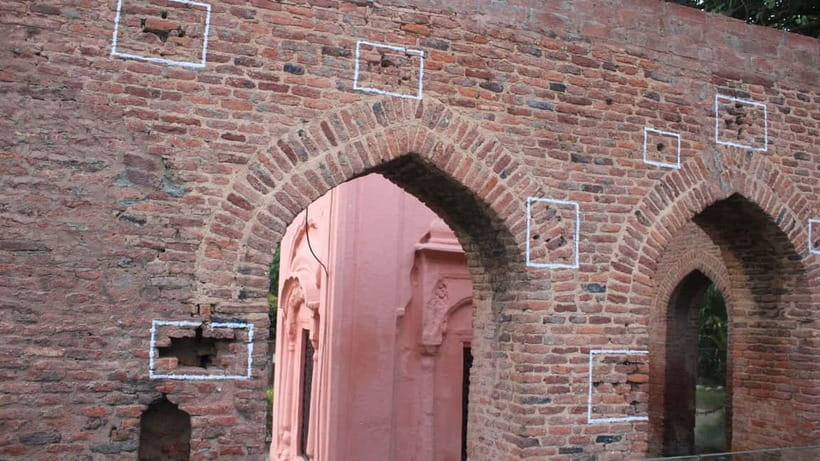
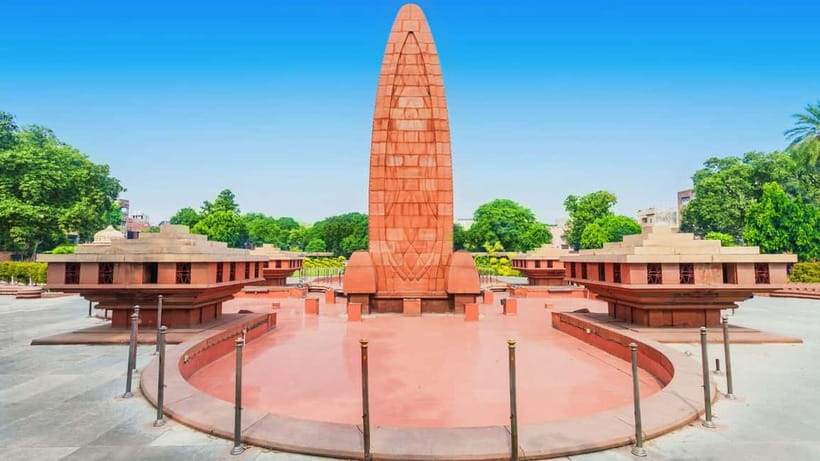
Near Katra Jamadar, you’ll see Thakurdwara Raja Tej Singh, constructed in 1851 by Raja Tej Singh. The tour then moves to Crawling Street, a somber reminder of the 1919 Jallianwala Bagh shooting, when General Dyer ordered the deaths of hundreds of Sikhs.
This pair of stops is emotionally honest: one reflects community structure and leadership; the other reflects trauma that still sits inside the city’s layout. I appreciate that the walk doesn’t treat difficult history as a footnote. You’re given context and then you experience the city itself as the vessel for remembrance.
A tip: give yourself a moment to absorb Crawling Street. Don’t let the next photo opportunity steal your focus.
Ancient Passage: The old archway that linked neighborhoods
Toward the end, you’ll walk through the Ancient Passage, a traditional archway built by Sikh Misls to connect several mohallas and katras of ancient Amritsar. This is a quieter historical point, but it’s one of the most useful for understanding how people moved.
Passages like this explain the city’s logic. They show that Amritsar’s heritage isn’t only about famous monuments. It’s also about how communities were stitched together block by block.
If you want to keep the whole walk cohesive, this is the stop that ties it together. You’ll likely feel that the route you just followed has a reason beyond convenience.
Finishing at the Golden Temple: Quiet, devotion, and a final reset
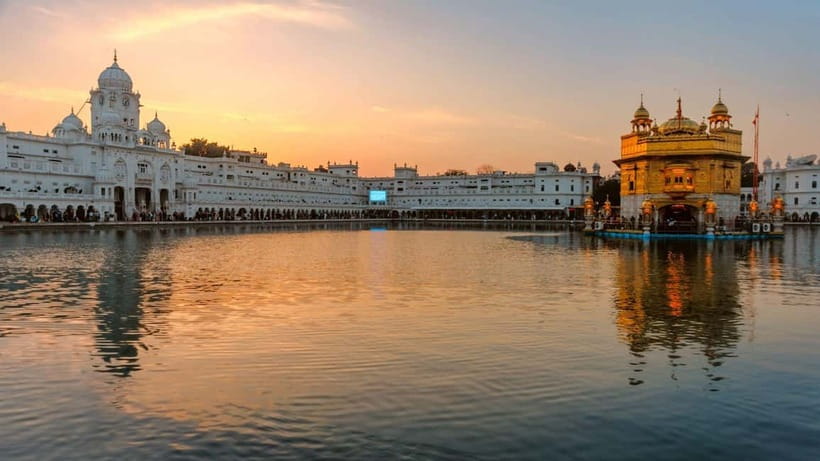
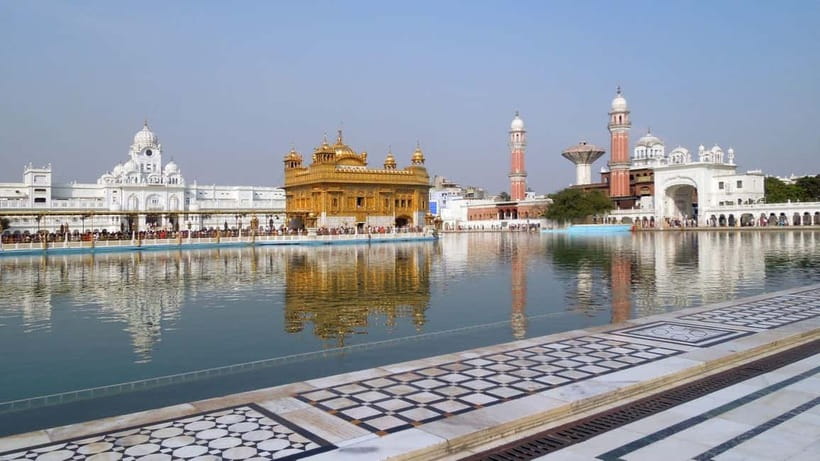
The tour ends at the Golden Temple, the spiritual and architectural focus that represents devotion and serenity. You’ll likely feel the atmosphere shift the moment you arrive. The earlier stops supply the why; the final space gives you the how it feels to be there.
Even if you know the Golden Temple from photos, the guided context changes your experience. It’s not just a landmark. It’s a culmination of stories you heard along the way: Sikh leadership, community memory, and the city’s long relationship with faith.
If you want to make this last leg count, take your time. Sit, look, and let the space work on you. No rush is part of the deal.
Price and value: Is $44 for 3 hours worth it?
At about $44 per person for a 3-hour guided heritage walk, you’re paying for two things: an English-speaking local guide and a route designed to connect sites into meaning.
If you were to do this alone, you could still visit the major landmarks. The problem is context. Stops like Gurdwara Saragarahi’s 1897 defense story, the Ahluwalia Misl background, and the governance angle of the mint (Taksal) aren’t the kind of information you naturally pick up from street signs.
So the value is in the narrative glue. For many people, that makes the price feel fair, especially if you care about understanding what you’re seeing instead of just passing through it.
Who this walk suits best
This tour fits you if you want a guided “story walk” through Amritsar’s core without spending your day organizing multiple separate tickets or figuring out the meaning behind each stop.
You’ll also get along well with this style if you’re the type who likes turning history into real places: forts, training spaces, markets, civic buildings, and memorial streets.
If you prefer minimal walking or you find shoe removal at worship sites stressful, you might want to consider a shorter or less step-heavy option. This route is built for steady walking and steady attention.
Should you book this Amritsar heritage walk?
I think you should book it if you want the Golden Temple area with context, not just a photo stop. The itinerary is packed, but it’s not random. It links administration, defense, commerce, spirituality, and difficult memory into one coherent arc, ending exactly where the city’s spirit is strongest.
I’d skip it or rethink it only if the idea of removing shoes inside multiple worship spaces and walking for 3 hours through older streets sounds like a chore. If that’s you, find a version with more flexibility.
Otherwise, this is a solid way to get oriented fast and leave with a better sense of why Amritsar’s streets feel the way they do.
FAQ
What time does the walk start?
The tour begins at 8:00 AM.
Where do I meet the guide?
Meet outside the Town Hall, Amritsar.
How long is the experience?
It lasts 3 hours.
What’s included in the price?
An English-speaking local guide and sightseeing according to the itinerary.
What should I wear and know about shoes?
Dress in smart casual. At places of worship, you’ll need to remove your shoes.
Is hotel pick-up and drop-off included?
No. Hotel pick-up and drop-off are not included.