REVIEW · ISLAMABAD
Islamabad Offbeat, Private City Tour Islamabad
Book on Viator →Operated by Travelwithmaqsood · Bookable on Viator
Islamabad can feel calm, even when it’s fascinating. This private, offbeat city tour threads together the kind of stops you don’t always get on a standard loop, with an English-speaking guide Maqsood Murtaza and a full day’s worth of local texture. You’ll move from ancient cave shelter to landmark architecture, then end with gardens and culture spots around town.
I like two things most. First, the comfort is real: an air-conditioned vehicle, bottled water, and coffee or tea make a big difference when your day stretches to 5 to 9 hours. Second, the guidance is practical and personal—he explains what you’re seeing in a way that helps you connect it to daily life in Islamabad, and the pace stays relaxed rather than rushed.
One consideration: there’s no lunch included, so you’ll want to plan for food breaks (and you may do some walking at viewpoints and caves). If you’re expecting a full-day meal plan, you’ll need to bring snacks or plan a purchase stop on your own.
In This Review
- Key highlights worth your time
- A private, offbeat route that actually makes sense
- Getting comfortable: the 7:00 am start, private pace, and AC transport
- Stop 1: Shah Allah Ditta Caves and the older shelter story
- Stop 2: Aabpara market for real shopping energy (and cheaper basics)
- Stop 3: Faisal Mosque—1969 architecture with a clear first impression
- Stop 4: Daman-e-Koh for a 270-degree capital view
- Stops 5 and 6: Islamabad Museum, then the Pakistan Monument story
- Islamabad Museum (about 1 hour)
- Pakistan Monument Museum (about 30 minutes)
- Stop 7: The Centaurus Mall for a modern pause
- Stops 8 and 9: Lake View Park and Shakarparian Hill friendship gardens
- Lake View Park (about 30 minutes)
- Shakarparian Hill (about 30 minutes)
- Stop 10: Saidpur Village for old streets and mountain backdrops
- Stops 11 and 12: Pak-China Friendship Center and Lok Virsa Museum
- Pak China Friendship Center (about 5 minutes)
- Lok Virsa Museum (about 1 hour)
- Stop 13: Rose and Jasmine Garden for a quick spring-like calm
- Price and value: what $129.99 really buys you
- Who should book this private Islamabad tour
- Should you book this one
- FAQ
- FAQ
- How long is the Islamabad Offbeat private city tour?
- What time does the tour start?
- Is pickup included, and does it include airport transfers?
- Is this tour private?
- What does the tour cost?
- What’s included in the price?
- Is lunch included?
- Are admission tickets included?
- What’s the meeting point and where does the tour end?
- What if I need to cancel?
- Does the tour accommodate people with health concerns?
Key highlights worth your time
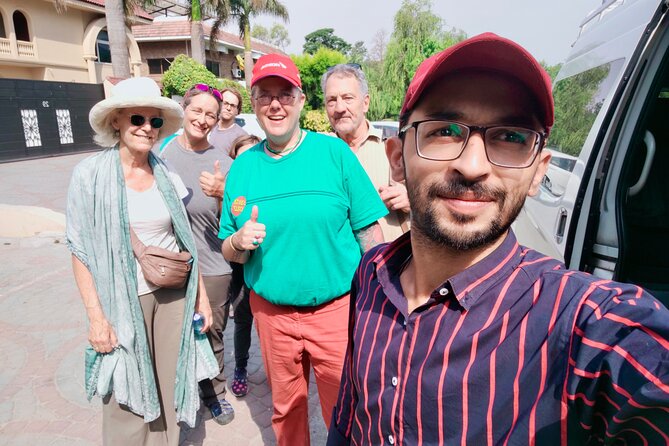
- Maqsood Murtaza’s calm, flexible guiding style that keeps the tour feeling personal
- Air-conditioned transport plus bottled water and coffee/tea to make the long day easier
- Admission fees handled for many key stops, so you spend less time figuring out tickets
- Big-view moments like Daman-e-Koh with a sweeping 270-degree outlook
- A smart mix of old and new: Aabpara market, modern malls, museums, and gardens
- Cultural depth without heavy logistics: Lok Virsa Museum and friendship sites are built in
A private, offbeat route that actually makes sense
This isn’t only about famous icons. It’s about how Islamabad works as a city—green hills nearby, monuments that tell national stories, and neighborhoods where local life shows up fast. Because it’s private, you’re not stuck waiting for a group pace or forced to sprint to the next photo point.
You also get a route that balances heavy sights with slower moments. You’ll do caves and mosque time, but you’ll also get viewpoints, museums, gardens, and a village with older-style streets. That pacing matters. It turns a checklist day into something that feels like a real day out in Islamabad.
You can also read our reviews of more tours and experiences in Islamabad.
Getting comfortable: the 7:00 am start, private pace, and AC transport
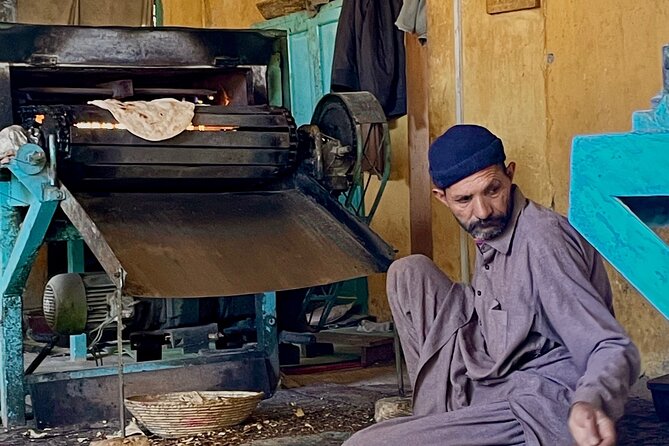
The tour starts at 7:00 am. That early timing can be helpful because you’re moving through the day with fewer “wait and sweat” moments, and you’re more likely to enjoy quieter stops.
You’ll travel in an air-conditioned vehicle, which is a big plus in any city with long drives between areas. The tour also includes pickup offered, and there’s pickup & dropoff (airport) same day, so you’re not scrambling to arrange transport if your timing is tight.
You’ll get an English-speaking guide and a mobile ticket, plus all fees and taxes (with admissions handled at many stops). If you want a straightforward plan without juggling cash or ticket lines, this setup is built for that.
Stop 1: Shah Allah Ditta Caves and the older shelter story

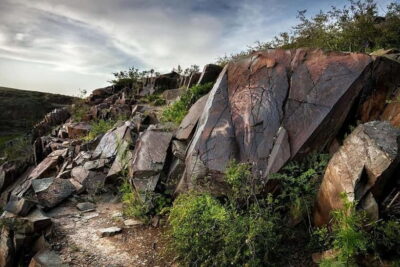
Your first major stop is Shah Allah Ditta Caves for about 50 minutes. The caves have a story tied to the time of Buddhism—when White Huns attacked Buddhist people, people took shelter under the caves. Even if you only catch a summary, it helps the place feel more than a dramatic rock entrance. It’s a reminder that these hills mattered for survival long before today’s sightseeing.
Why I think this stop works early: caves and hill sites are a lot easier when your energy is fresh. Also, it’s a good tonal shift. You go from modern Islamabad into a setting where the “why” of the place connects to how people lived.
Possible drawback: caves can mean stairs and uneven footing. Wear shoes you trust, and don’t rush the steps.
Stop 2: Aabpara market for real shopping energy (and cheaper basics)
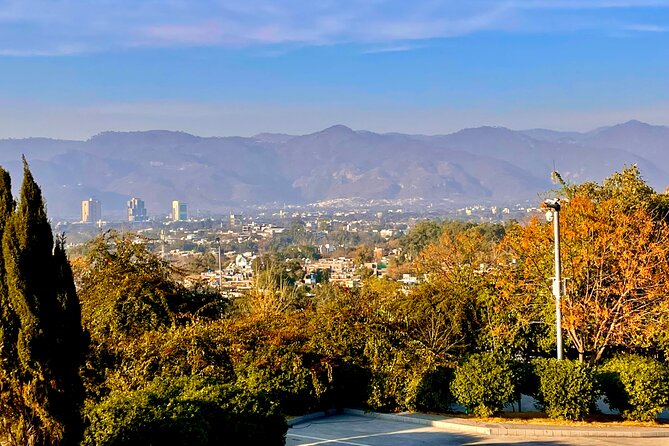
Next is Aabpara, about 40 minutes. This is described as a local market in the first and oldest sector of Islamabad, and it’s known for cheaper rates compared with newer shopping areas.
I like markets like this because you can learn how locals actually spend an hour: browsing, bargaining lightly, comparing, and checking quality in a way that’s hard to recreate in a mall. It’s also useful if you’re the type who wants to take home something practical—snacks, small gifts, everyday items—without spending like you’re in an airport shop.
What to expect: you’ll likely be moving through busy stalls. If you’re sensitive to crowds or have mobility limitations, keep that in mind and ask your guide to adjust your walk pace.
Stop 3: Faisal Mosque—1969 architecture with a clear first impression
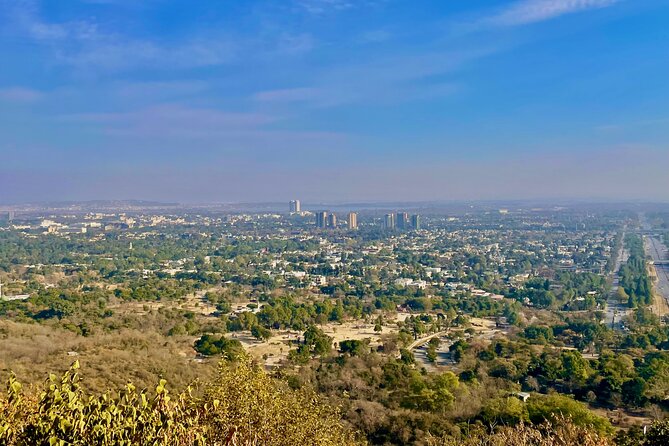
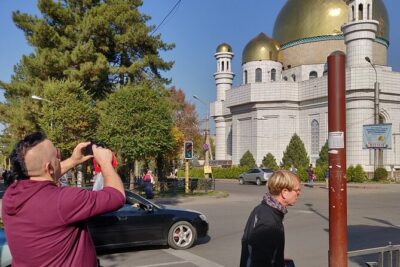
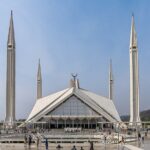
Your next iconic stop is Faisal Mosque for around 30 minutes. The mosque is presented here as a gift from King Shah Faisal in 1969, and it’s the kind of landmark people recognize instantly in photos for a reason: the angles and silhouette read strongly from many viewpoints.
This is the spot where your guide’s explanations can add a lot. You’re not only looking; you’re learning how the building fits into Islamabad’s identity as a modern capital with visible cultural roots. With a short time window, the goal is a clean introduction: get the main angles, take a few photos, and then move on before your patience wears out.
Admission is included, which helps you keep the day moving without ticket juggling.



Stop 4: Daman-e-Koh for a 270-degree capital view
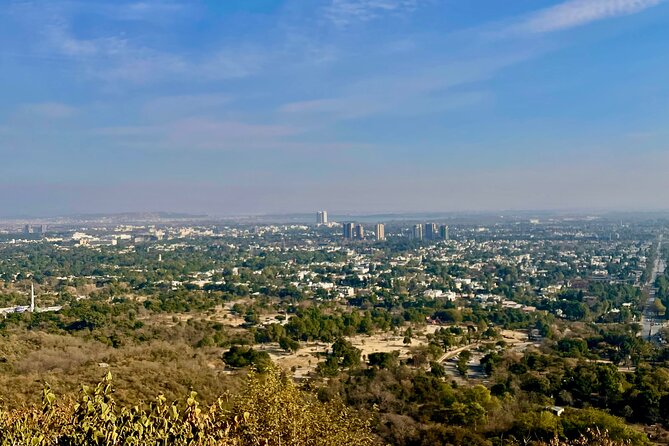
Then you’ll head to Daman-e-Koh, a viewpoint in the Margalla Hills area. You get about 30 minutes, and it’s described as having a garden side plus a 270-degree view over much of Islamabad.
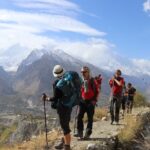
This is one of the best moments in the day because the city plan makes more sense from a height. You see how the capital spreads, where green pockets sit next to built areas, and how the hills shape daily life. If you only do one viewpoint, this is a strong candidate.
One practical note: you’ll want to take your time for photos, but don’t get stuck. This tour’s timing is built around packing in multiple areas, and the best way to keep it enjoyable is to let the guide keep you on a smooth rhythm.
Stops 5 and 6: Islamabad Museum, then the Pakistan Monument story
After viewpoints, the tour pivots to museums.
Islamabad Museum (about 1 hour)
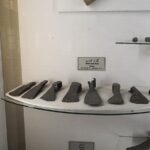
You’ll visit Islamabad Museum for roughly 1 hour, with admission listed as free. The museum covers a timeline from around the 5th century AD to the present, touching on Buddhism, culture, independence, and religion across Pakistan’s story.
Why I think this is valuable: it gives context. After you’ve seen a mosque and a national monument later, you’ll understand the “why” behind the symbols more quickly. Museums can feel like school if they’re poorly guided, but with a guide explaining how everything connects, it becomes orientation.
Pakistan Monument Museum (about 30 minutes)
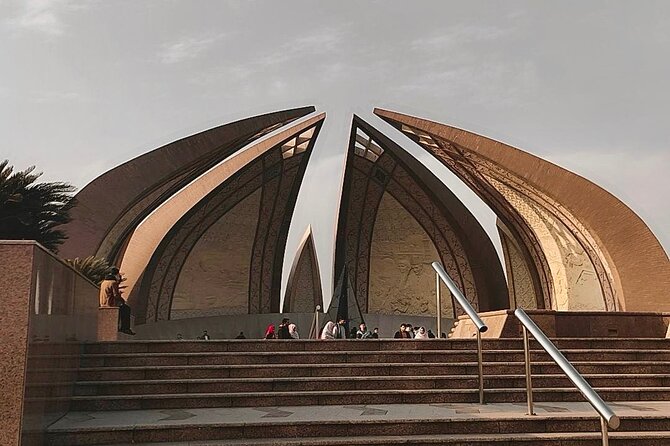
Next is Pakistan Monument Museum for about 30 minutes, with admission included. This stop focuses on independence from British and India in 1947, and the architecture is described with a founder-related design and an a-flower motif of iconic Pakistan sites.
Even in a short visit, you’ll likely walk away with a clearer sense of national identity expressed through public architecture. If you like monuments where design carries meaning, this one is worth the time.
Stop 7: The Centaurus Mall for a modern pause

For about 1 hour, you’ll visit The Centaurus Mall Islamabad. This is positioned as a newer, fancier symbol of Islamabad with plenty of facilities.
I treat mall time as a practical pause, not just sightseeing. It’s a place to cool down, use restrooms, and reset before the more outdoors-y stops continue. If you need to buy a snack or a bottle refill, this is one of those built-in chances.
Still, a mall won’t feel “local” in the same way as Aabpara. So if you want maximum cultural immersion, you might spend a bit less time here and use the rest to head out quickly to the next outdoor stop.
Stops 8 and 9: Lake View Park and Shakarparian Hill friendship gardens
Lake View Park (about 30 minutes)
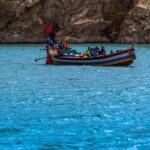
Next is Lake View Park, described as a lake turned into a dam area, with boats. You’ll get around 30 minutes.
This stop works because it shifts you from monuments and museums to a softer, slower kind of scenery. It’s a chance to take a breath and enjoy water views without needing a full hiking plan.
Shakarparian Hill (about 30 minutes)
Then comes Shakarparian Hill, about 30 minutes. It’s described as the International Friendship Garden, with trees from different country friends of Pakistan.
If you like symbolism, this is the kind of stop that makes sense. It’s not a single famous statue. It’s a living reminder of relationships—literally trees planted as gestures of friendship. It’s also a lighter walk than a hard trail day, which fits well into a 5 to 9 hour sightseeing schedule.
Stop 10: Saidpur Village for old streets and mountain backdrops
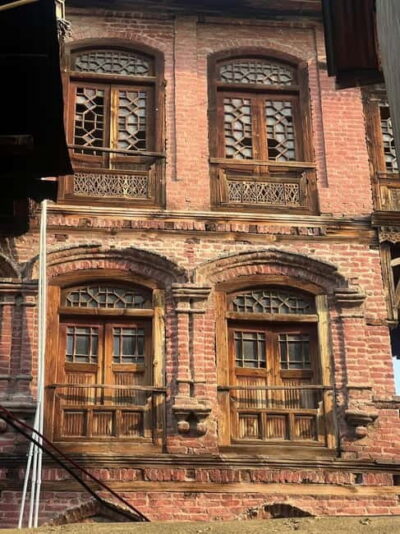
About 40 minutes are set aside for Saidpur Village. This village is described as having lively views of the village and mountains together, plus small streets that feel more like traditional times. It’s also presented as having some of the oldest knowledge in Islamabad’s history.
I like this stop because it gives you texture. Markets are transactional; museums are interpretive. A village setting gives you everyday-feeling scenes that help you picture how people lived before today’s high-rise capitals.
Possible drawback: it’s a village with streets—so expect more strolling and less “perfect pavement” than you’d find in a business district. Keep your pace comfortable and let the guide set the route.
Stops 11 and 12: Pak-China Friendship Center and Lok Virsa Museum
Pak China Friendship Center (about 5 minutes)
You’ll stop at the Pak China Friendship Center for about 5 minutes. It’s described as a building given by China as a gift celebrating friendship between Pakistan and China.
This is a quick photo-and-understand moment, not a long linger. It’s included because it ties into the broader theme of Islamabad as a city where international relationships show up in public spaces.
Lok Virsa Museum (about 1 hour)
Then you’ll visit Lok Virsa Museum for about 1 hour, with admission included. The museum focuses on Pakistani cultural history and also includes cultural elements from Iran, Saudi Arabia, Afghanistan, and India.
I’m a fan of this kind of museum stop when time is limited. It helps explain why the region’s cultures overlap and how influences traveled. With a guide, you won’t just be looking at objects—you’ll be hearing how to connect them.
Stop 13: Rose and Jasmine Garden for a quick spring-like calm
Finally, you’ll have a short stop at the Rose and Jasmine Garden for about 5 minutes. It’s described as a flower garden where you see beautiful flowers in spring, and it’s presented as a gift from the Japanese.
This is brief on purpose. It’s a reset button at the end: a few photos, a calm pause, and then you’re ready to head back without feeling like the last hour dragged.
If you’re visiting outside peak flower season, you still might enjoy the gardens’ layout, but your expectations should match the season you’re there for.
Price and value: what $129.99 really buys you
At $129.99 per person, the tour sits in the mid-to-upper range for a private city day. What makes it feel fair is the combination of:
- AC vehicle + pickup/dropoff support
- English-speaking guide
- Coffee/tea and bottled water
- All fees and taxes included
- Admission covered at many stops
In other words, you’re paying for a guided, managed day—not just transport. For Islamabad, where distances can add up, having a driver and a route built to minimize confusion is a real cost saver.
What’s not included matters too. Lunch isn’t included, and tips aren’t included. Also, meals and alcoholic beverages are listed as not included, so you’ll handle food yourself. If you plan a simple lunch stop, the day stays smooth.
Who should book this private Islamabad tour
This tour fits best if you want:
- A private day with flexible pacing
- A guide who explains culture and daily life, not just monuments
- A mix of major landmarks and more “local-feeling” stops like Aabpara and Saidpur Village
- A day that’s comfortable, thanks to air-conditioned transport and included drinks
You might think twice if you have severe breathing issues, since you’ll spend time outdoors at viewpoints and caves. Also, if you hate any walking at all, be aware that multiple stops involve strolling through sites and streets.
Should you book this one
If your goal is to get oriented fast and see Islamabad in a way that feels guided but not rushed, I’d book it. The included admissions, air-conditioned comfort, and the guide’s flexible, friendly approach make this a strong value for a private day.
If you’re the type who wants to fully control your own schedule, or you’re traveling with strict meal needs, you may feel the lack of lunch planning. Still, that’s easy to solve—just build in your own food plan and you’ll be fine.
FAQ
FAQ
How long is the Islamabad Offbeat private city tour?
It runs about 5 to 9 hours.
What time does the tour start?
The tour start time is 7:00 am.
Is pickup included, and does it include airport transfers?
The tour offers pickup and includes pickup & dropoff (airport) same day.
Is this tour private?
Yes. It is a private tour/activity, so only your group participates.
What does the tour cost?
The price is $129.99 per person.
What’s included in the price?
It includes an air-conditioned vehicle, all fees and taxes, coffee and/or tea, bottled water, an English-speaking guide, and pickup & dropoff (airport) same day. It also includes mobile ticket.
Is lunch included?
No. Lunch and meals are not included.
Are admission tickets included?
Many stops list admission as included, while some stops are free (for example Islamabad Museum and Pak China Friendship Center). The tour indicates admission tickets are handled for several key sights.
What’s the meeting point and where does the tour end?
It starts in Islamabad, Pakistan and ends back at the meeting point.
What if I need to cancel?
You can cancel for free up to 24 hours in advance for a full refund.
Does the tour accommodate people with health concerns?
The additional info notes that most travelers can participate, but it advises against participation if someone has severe breathing issues.