REVIEW · LAHORE
Rangeela Rickshaw Walled City Lahore Guided Tour
Book on Viator →Operated by Pakistan Guided Tours · Bookable on Viator
Old Lahore rewards slow attention. This private guided route turns big sights into a connected story, with private luxury A/C comfort and admission tickets included. I especially like how the tour balances major monuments with smaller “you-stop-here-for-a-reason” places in the Walled City. One thing to consider: it’s a mostly outdoor walking day, so you’ll want comfortable shoes and a steady pace.
The best part is that you’re not left to guess. Your guide sets the context for Mughal-era power, Sikh-era Lahore, and modern national pride, while the stops stay practical and timed (about 4 hours 30 minutes). The optional neighborhood visit by traditional rickshaw is a fun add-on if you want to feel how daily life moves around the historic gates.
There’s also a clear focus on Old Lahore: from Lahore Fort and Badshahi Mosque to Wazir Khan’s design details and the Freedom Tower area. If you want long museum time or lots of free wandering with zero structure, this may feel a bit scheduled—but for getting your bearings fast, it’s a solid plan.
In This Review
- Key highlights you’ll care about
- Why this Lahore old-city tour is such a practical win
- Price and value: where the $110 actually goes
- Meeting point at Delhi Gate: how to start clean and easy
- Lahore Fort: start with power, then look closer
- Badshahi Mosque and the Quran Gallery details
- Quick emotional stop: Muhammad Iqbal’s Tomb
- Hazuri Bagh: the in-between garden with big historical meaning
- Gali Surjan Singh: step into the Walled City’s working feel
- Masjid Wazir Khan: design you’ll actually be able to spot
- Shahi Hammam: the UNESCO-awarded royal baths moment
- Minar-e-Pakistan: modern identity with a physical story
- Delhi Gate and Masjid Shab Bhar: the gate route and a one-night story
- The optional traditional rickshaw neighborhood visit (the fun “Lahore feel”)
- Comfort, walking, and timing in real life
- Who this tour suits best
- Should you book the Rangeela Rickshaw Walled City Lahore tour?
- FAQ
- How long is the Rangeela Rickshaw Walled City Lahore guided tour?
- What is the price per person?
- Where does the tour start?
- What’s included in the ticket cost?
- Is hotel transfer included?
- Is the traditional rickshaw ride included?
- What transportation is provided?
- Are alcoholic beverages included?
- Who might not be able to participate?
- What are the typical operating hours?
Key highlights you’ll care about
- Private, luxury A/C vehicle keeps the day comfortable between sights.
- Tickets are included, so you spend less time negotiating and more time looking.
- A traditional rickshaw add-on gives you a local-feeling neighborhood view.
- Lahore Fort + Mughal art spaces help you understand what you’re seeing, not just where it is.
- UNESCO-awarded Shahi Hammam adds a “wow” stop beyond the headline mosques.
Why this Lahore old-city tour is such a practical win
Lahore can be a challenge to navigate on your own. The Walled City is dense, lanes can feel maze-like, and the monuments are scattered in a way that makes planning tiring. This tour solves that with a private setup: you get a guide, transport in a luxury A/C vehicle, and a route that hits the key emotional beats of Lahore—imperial Lahore, religious Lahore, and national Lahore.
I like that the approach is interpretive. You’re not just moving from photo spot to photo spot. Each stop is framed with context: who built it, why it matters, and what to notice when you’re standing inside. That turns “I saw a mosque” into “I know what that design detail is trying to say.”
The other value is time. You’re looking at a roughly half-day experience that still covers a lot of ground. That’s rare for a guided Old Lahore day, where indecision often eats hours.
You can also read our reviews of more tours and experiences in Lahore.


Price and value: where the $110 actually goes
At $110 per person for about 4.5 hours, the price works best if you plan to enter multiple major sites and you want a private guide rather than piecing things together yourself. The package includes guide charges and sightseeing tickets, plus fuel surcharge. Those are the parts that add up quickly when you’re booking entrances and transport separately.
It also helps that you’re not stuck doing everything with one slow option. The vehicle keeps you comfortable as you hop between clusters, then the guide directs walking parts where it matters.
What’s not included is simple: alcoholic beverages and tips. So you can budget normally without surprise add-ons.
Meeting point at Delhi Gate: how to start clean and easy
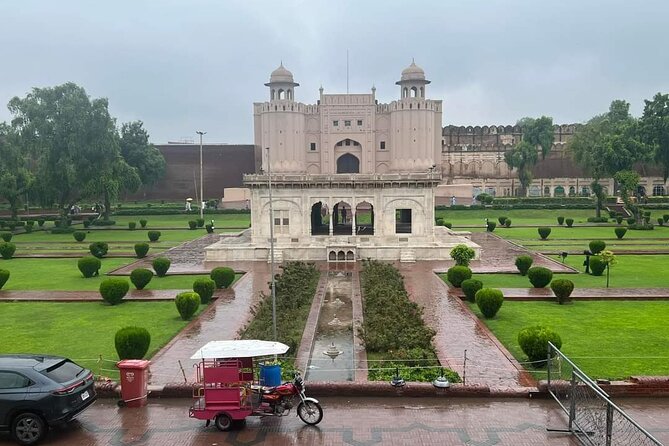
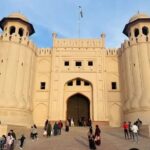
You start inside Delhi Gate, at Akbari Mandi Walled City of Lahore. That’s a smart choice. Delhi Gate sits right in the historic core, so you don’t waste your first hour traveling to the action.
The tour ends back at the same meeting point, which makes your day less stressful. You can plan your next move—grab food nearby, connect to other plans, or return to your base without juggling extra drop-offs.
The activity runs daily during wide opening hours (8:30 AM to 7:00 PM), so you have flexibility in timing. Still, I’d aim to start earlier if you can, because the day can warm up.
Lahore Fort: start with power, then look closer
Lahore Fort is the heavyweight opener—about 1 hour 30 minutes with an admission ticket included. You’ll see how the fort connects to Mughal authority, including details tied to Akbar’s era and later development.
What makes this stop worth it isn’t only the scale. It’s the variety of spaces inside: Mirror Palace, Moti Mosque, Royal Ladies’ Gardens, the Armour Museum, and Mughal Art Gallery areas. Even if you’re not a museum person, having those labels explained helps you focus your attention. You’ll know what you’re looking at instead of guessing.
A practical note: forts can be physically demanding, and there’s a lot to take in visually. The upside is that this is the perfect moment to set your mental map of Lahore’s different layers before the day becomes more religious and more intimate.
Badshahi Mosque and the Quran Gallery details
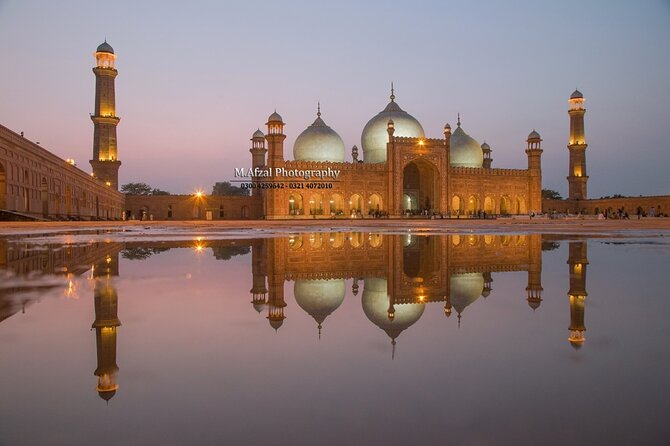
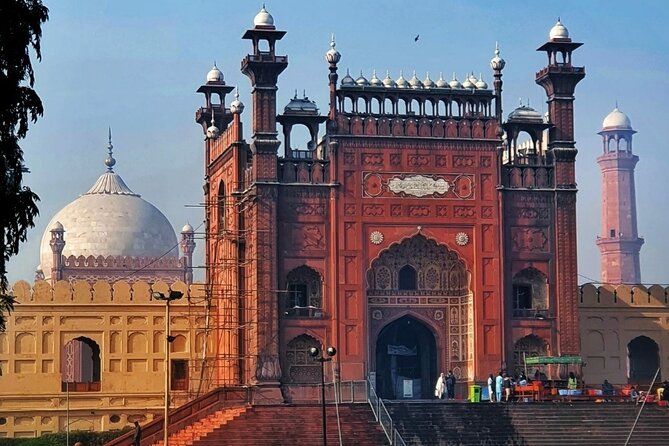
Next comes Badshahi Mosque for about 30 minutes, with admission included. This is one of Lahore’s most recognizable religious landmarks, and the guide’s job here is to help you notice what’s inside beyond the big exterior view.
Two standout items highlighted in the experience: the Quran Gallery, where an embroidered Quran is described as using gold and silver wires, and the Main principal hall. You also get a look at Relics of the Holy Prophet Mohammad (peace be upon him), which adds a deep layer of meaning to the visit.
If you come expecting mostly architecture, you’ll still be impressed. But the visit is more than visuals—it’s also about understanding why specific spaces matter to worship and memory.


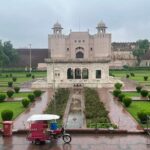
Quick emotional stop: Muhammad Iqbal’s Tomb
Then the pace briefly slows to a short visit—about 5 minutes—to the Tomb of Muhammad Iqbal. Iqbal is Pakistan’s national poet, and the tour frames his dates and birthplace context. You’re very close to the stairs of Badshahi Mosque, so it feels like a natural extension rather than a detour.
This stop is brief by design. It gives you a human anchor in the middle of big monuments, and it’s a nice reset before moving back into the historic ceremonial landscape between major sites.
Hazuri Bagh: the in-between garden with big historical meaning
Hazuri Bagh is a small stop—about 5 minutes—but it matters because it sits between Lahore Fort and Badshahi Mosque. The experience describes it as a garden laid out in 1818 by Maharaja Ranjeet Singh, part of the Sikh rule period in Lahore.
This is the kind of place where timing is everything. You can’t linger forever, but you also don’t want to rush through it. When it’s explained as a political and cultural “bridge,” the garden feels less like a pause and more like a statement about how rulers shaped public space.
Gali Surjan Singh: step into the Walled City’s working feel
After the major monuments, you move into the Walled City lanes, stopping at Gali Surjan Singh for about 10 minutes. This is where the tour stops feeling like a list and starts feeling like a place.
The tour frames Lahore as an important business hub today and underscores why the Walled City matters. You also get a look toward landmarks in the Royal trail route orbit—like Delhi Gate and other historic route points—so you can connect street-level movement to the city’s historical layout.
If you want a day that’s mostly photos only, you may feel this is short. But as a “get your bearings” moment, it’s a useful way to understand how monuments relate to the lanes around them.
Masjid Wazir Khan: design you’ll actually be able to spot
Masjid Wazir Khan is next for about 30 minutes, with admission included. The tour calls it one of the most beautiful mosques of the 17th century from the Mughal period, and it frames the mosque as a design-and-arts school of sorts.
This is the stop where your eyes should do the work. The guide’s explanations help you look for patterns and craftsmanship instead of just scanning for the biggest visual element. It’s also in Old Town (Androon Shehar), so you’re in the thicker historic fabric rather than a quieter perimeter area.
If you like details—tile work, inscriptions, and patterns—this is a key payoff stop.
Shahi Hammam: the UNESCO-awarded royal baths moment
Shahi Hammam comes with about 30 minutes and an admission ticket included. The experience describes it as royal baths built in 1635 during Shah Jahan’s time, attributed to Wazir Khan’s governorship.
The highlight here is how the tour sets it up. It’s not presented as a random old building—it’s presented as a purpose-built Mughal-era bathing complex, which makes it easier to appreciate the layout and craftsmanship. It also notes UNESCO recognition, which helps explain why this kind of “not the main postcard” stop is still a major one.
This is a strong choice for readers who like architecture but don’t want to spend all day in mosques. Hammams add a different layer of culture: daily life under empire.
Minar-e-Pakistan: modern identity with a physical story
Next is Minar-e-Pakistan for about 30 minutes, with admission included. The tour frames it as a Freedom Tower of Pakistan and ties it to the founder, Quaid-e-Azam Mohammad Ali Jinnah.
This is where Old Lahore turns into modern national identity. You’re not just looking at historic power anymore—you’re standing at a landmark built to represent freedom and nationhood.
Even if you know the basics already, the guide’s context can change how you read the monument. It becomes less like a stop on a route and more like a way to understand how a city remembers itself.
Delhi Gate and Masjid Shab Bhar: the gate route and a one-night story
You’ll return to Delhi Gate for about 15 minutes, with an admission ticket included. Since Delhi Gate is the start and the name of your meeting area, this second visit is a neat way to close the loop. You’ll also see it described as one of the 13 gates of the Walled City of Lahore, and it’s linked to the Royal trail route and important monuments along the way.
Then comes Masjid Shab Bhar for about 5 minutes, admission included. The tour explains it as the One Night Mosque, tying the story to a dispute of land between Muslims and Hindus and the claim that it was built in one night during the Colonial period.
That kind of story can sound like legend depending on your expectations. What’s valuable here is not debating the exactness of any tale; it’s that the guide gives you a framework for why people would build with urgency and why the mosque’s existence carries a message of community boundaries and time.
The optional traditional rickshaw neighborhood visit (the fun “Lahore feel”)
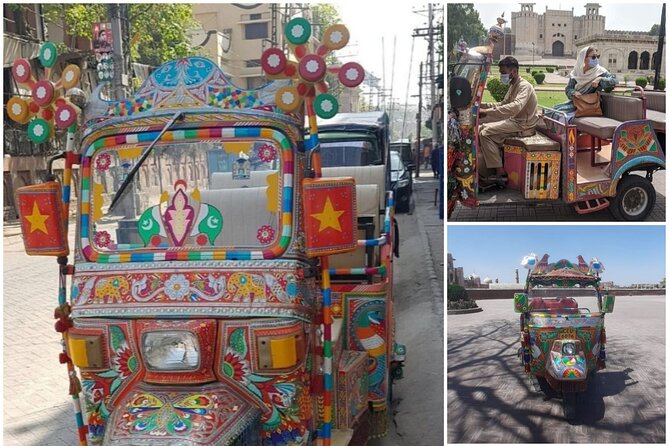
One of the tour’s standout extras is an optional neighborhood visit by traditional rickshaw. This is where the day becomes more personal. You’re still in the Walled City context, but the rickshaw adds a slower, more human pace.
The value isn’t only the novelty. It helps you see how the historic monuments sit inside living streets. Even a short ride can help you understand the city’s rhythm better than walking alone, especially in areas where lanes can feel narrow or confusing.
This is also a big reason the tour tends to satisfy people who want more than big building photos.
Comfort, walking, and timing in real life
The tour is built around a private A/C vehicle, which matters in Lahore. You’ll be able to reset between stops without overheating or losing time to finding transport. It’s private, so you’re not stuck waiting on a large mixed group.
Still, you should plan for walking inside historic sites and along corridors between them. The experience notes that it’s not for guests who can’t walk easily, including those who are paralyzed or have serious conditions that limit walking. If that might be relevant for you, this is worth checking before you book.
Bring modest clothing for mosque stops and expect security and respectful behavior. Even when you’re not told, it’s the right move in religious spaces.
Who this tour suits best
This guided experience fits best if you want:
- A structured Old Lahore day with a guide who explains what you’re seeing
- A mix of headline landmarks and “look closer” architecture
- A private setup with a comfortable A/C vehicle
- The option to add a traditional rickshaw ride for a more local feel
It’s also a great fit for first-timers to Lahore who want a plan that helps them get oriented quickly.
If you already have a strong grasp of Mughal and Sikh history and want long free time, you might find the pacing a bit tight. But for most visitors, it’s a smart balance.
Should you book the Rangeela Rickshaw Walled City Lahore tour?
I’d book this if you want your Old Lahore day to feel organized, meaningful, and well paced, with tickets handled and a guide doing the heavy lifting of context. The most persuasive reasons are the combination of major monuments (Lahore Fort, Badshahi Mosque, Minar-e-Pakistan) with design-focused stops (Masjid Wazir Khan, Shahi Hammam) plus the optional rickshaw neighborhood ride.
If your top priority is maximum freedom, lots of extra time at one place, or minimal walking, then you might prefer a lighter, more flexible plan. But if your goal is to see the essentials, understand why they matter, and still get that Lahore street-level feeling, this is a strong option.
FAQ
How long is the Rangeela Rickshaw Walled City Lahore guided tour?
It lasts about 4 hours 30 minutes.
What is the price per person?
The price is $110.00 per person.
Where does the tour start?
The meeting point is inside Delhi Gate at Akbari Mandi Walled City of Lahore.
What’s included in the ticket cost?
Admission tickets to all attractions visited are included.
Is hotel transfer included?
The tour description states that hotel transfers are included.
Is the traditional rickshaw ride included?
It’s described as optional. The tour includes an optional neighborhood visit by traditional rickshaw.
What transportation is provided?
You’ll travel in a private, luxury A/C vehicle.
Are alcoholic beverages included?
No, alcoholic beverages are not included.
Who might not be able to participate?
The experience notes that people who cannot walk easily, including those who are paralyzed or have serious conditions affecting walking, may not be able to join.
What are the typical operating hours?
The tour operates Monday through Sunday from 8:30 AM to 7:00 PM.