REVIEW · LAHORE
3-Days Guided Tour Of Multan, Bahawalpur, Uch Sharif & Derawar Fort (Cholistan)
Book on Viator →Operated by Pakistan Guided Tours · Bookable on Viator
Sufi shrines and a desert fort, tightly packed. This Multan–Uch Sharif–Bahawalpur tour is interesting because it strings together famous Sufi sites like Shah Rukn-e-Alam and Bahauddin Zakaria Multani, then switches gears to Derawar Fort in Cholistan with desert camel safari-style time. I love the focused shrine-to-shrine guiding, where the names you see have real stories behind them. I also love the contrast of city tombs followed by the stark desert setting. The main drawback to plan for is the schedule: there are long road stretches, including a near full half-day to reach Derawar Fort.
On top of that, you get practical comfort for the travel days, including AC private vehicle service and WiFi on board, plus a mobile ticket. This is a private group tour, so you’re not squeezed into someone else’s pace. And if your guide is Mr. Maqbool Ahmad (his name comes up often in feedback), you can expect a style that’s professional, honest, flexible, and even good for a laugh without turning the day into a circus.
One more thing to keep in mind: some sights are short stops, often around 20 minutes, so if you want slow looking time for every tomb or bazaar gate, you’ll need to stay ready to move.
In This Review
- Key highlights worth getting excited about
- Price and what you really get for $840 in South Punjab
- Day 1 in Multan: Sufi tombs, British-era traces, and Old Multan gates
- Shah Rukn-e-Alam, Bahauddin Zakaria Multani, Fort Kohna Qasim, and the British monument
- Short shrine stops: Shah Shams Sabzwari, Shah Yusuf Gardezi, Shah Ali Akbar
- Eidgah Mosque and Ahmad Saerd Shah Kazmi R.A.
- Hussain Agahi Bazar and the Old Town feel
- Uch Sharif: a shrine-heavy day that balances legends and real place
- Jalaluddin Surkh-Posh Bukhari
- Bibi Jawindi, Ustad Ladla, and Makhdoom Jahanian Jahan Gashat
- The transfer to Bahawalpur and a palace-city mindset
- Derawar Fort in Cholistan: the 9th-century fortress moment you remember
- Derawar Fort, framed through Raja Jajja Bhatti
- Noor Mahal and Sadiq Garh Palace on the return
- Why this route feels more meaningful than a checklist of monuments
- How the guides shape the day: professional, honest, flexible
- Comfort, pacing, and the “three road days” reality
- Who should book this Multan–Uch Sharif–Bahawalpur–Cholistan tour
- Should you book this tour
- FAQ
- What is the duration of the tour?
- Where does the tour start and when?
- Is pickup and private transportation included?
- Are sightseeing tickets included in the price?
- Does the tour include camel safari in the desert?
- What is included and what is not included?
- Can I cancel for a full refund?
Key highlights worth getting excited about
- Sufi site sequencing in Multan: Shah Rukn-e-Alam, Bahauddin Zakaria Multani, Shah Yusuf Gardezi, and more
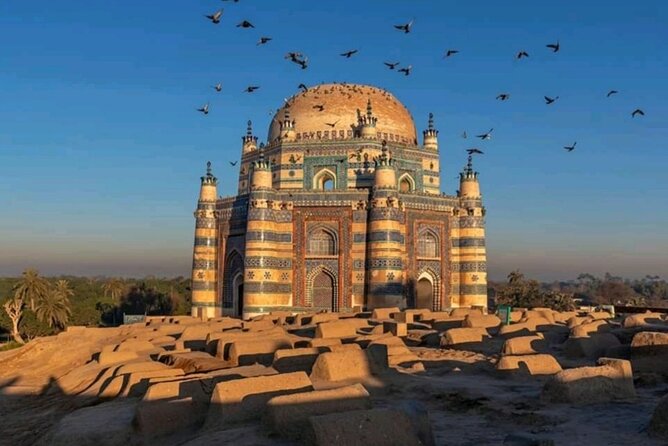
- Uch Sharif shrine clusters: Jalaluddin Surkh-Posh Bukhari, Bibi Jawindi, Ustad Ladla, and Makhdoom Jahanian Jahan Gashat
- Bahawalpur old-town walking: Fareed Gate, old town areas, and bazaars after lunch
- Derawar Fort plus Cholistan desert time: built by Raja Jajja Bhatti in the 9th century (framed as Dera Rawal originally), with camel safari-style desert moments
- Comfort and logistics that reduce stress: AC private vehicle, fuel, parking, tolls, and WiFi on board
- Guide quality that shows up repeatedly: Mr. Maqbool Ahmad and team are described as professional, polite, flexible, and funny in a good way
Price and what you really get for $840 in South Punjab
At $840 per person for about three days, you’re paying for a “guided circuit” rather than a DIY trip. The big value play here is that the price includes the stuff that usually turns a history trip into admin work: sightseeing tickets, an AC private vehicle, fuel, and road/toll costs with parking covered. A tour like this also includes a tour guide throughout, so you’re not trying to match dates and mausoleum names on your own while moving from Multan to Uch Sharif to Bahawalpur.
Two practical notes keep the value honest. First, tips for the driver and guide are not included, so that’s a cost you’ll need to plan for. Second, flights or train tickets are not included, which is typical but matters if you’re comparing “all-in” offers.
For timing, there’s also a real-world clue: the tour is commonly booked about a month in advance. If your dates are fixed, booking earlier can help you lock in your preferred start plan.
You can also read our reviews of more tours and experiences in Lahore.


Day 1 in Multan: Sufi tombs, British-era traces, and Old Multan gates
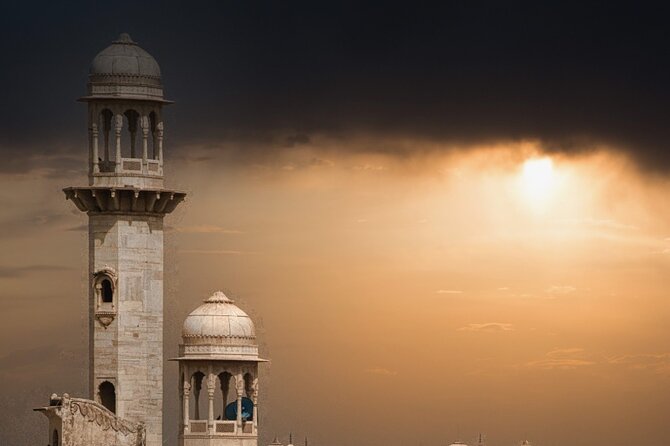
Multan is where the tone of the whole trip sets in. You start with major shrine complexes tied to the city’s Sufi identity, and you don’t just get one stop. You get a chain.
Shah Rukn-e-Alam, Bahauddin Zakaria Multani, Fort Kohna Qasim, and the British monument
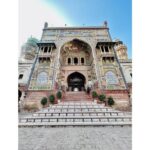
You’ll be taken to the Tomb of Shah Rukn-e-Alam and the Tomb of Bahauddin Zakaria Multani, along with Fort Kohna Qasim, a British monument, and a small museum. These are the kind of stops that make your guide’s job matter, because the value isn’t only in the architecture. It’s in understanding why these names are linked to Multan’s spiritual and historical identity, and how different eras leave physical marks in the same city.
You can also expect admission tickets to be part of this first stretch, and the time block is around two hours, so you’re not rushed through a blur of doorways.
Short shrine stops: Shah Shams Sabzwari, Shah Yusuf Gardezi, Shah Ali Akbar
After that, the pace becomes more “grab a key stop, then move.” You’ll visit:
- Shrine of Shah Shams Sabzwari Tabrez
- Shrine of Shah Yusuf Gardezi
- Tomb of Shah Ali Akbar (admission ticket listed as free)
These are often around 20 minutes each. That’s good for a first day because it keeps momentum. It can also be a drawback if you like to sit longer and read every detail; the rhythm here is more like a curated route than a slow museum visit.
Eidgah Mosque and Ahmad Saerd Shah Kazmi R.A.
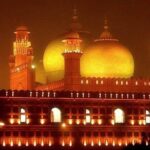
Next comes Eidgah Mosque and the shrine of Ahmad Saerd Shah Kazmi R.A. If you’re trying to understand why Multan earned the nickname city of Sufi saints, this kind of stop helps tie the spiritual calendar to physical places you can actually see.


Hussain Agahi Bazar and the Old Town feel
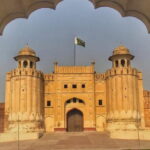
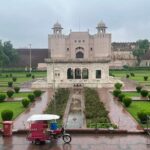
After lunch, you shift to street-level Multan. Hussain Agahi Bazar (plus areas like a Jain Temple, an old mosque, and old town gates) is where you get the city’s everyday texture. This is also a smart contrast day-1 move: you see monuments, then you see the living streets that still orbit around old landmarks.
The admission tickets are listed as included here too, which helps if you’re trying to keep costs predictable.
Uch Sharif: a shrine-heavy day that balances legends and real place
Day 2 starts with the move from Multan toward Uch Sharif, and the drive is around 80 to 100 minutes. Uch Sharif is presented as a town that dates back to Alexander the Great, which tells you the tour’s approach: it connects big-name legends and long-ago timelines to the shrines you’ll be seeing.
Jalaluddin Surkh-Posh Bukhari
You start at the shrine of Jalaluddin Surkh-Posh Bukhari, with an admission ticket included and a time block around 20 minutes. This is one of those anchor sites that makes the rest of the shrine cluster easier to understand.
Bibi Jawindi, Ustad Ladla, and Makhdoom Jahanian Jahan Gashat
Then the day expands into a longer shrine circuit with stops that include:
- Tomb of Bibi Jawindi (listed around 2 hours)
- Ustad Ladla
- Makhdoom Jahanian Jahan Gashat (described as the greatest traveller of the world)
This is the part of the trip that feels most like “place-based history.” The value is in seeing how multiple influential figures are kept in one sacred geography, and how your guide connects the dots between the people you’re seeing and the reputation they earned.
The transfer to Bahawalpur and a palace-city mindset
After Uch Sharif, you head to Bahawalpur for lunch and old-town exploring. Bahawalpur is described as a city of palaces and Nawabs, so your mental lens shifts from purely shrine architecture to power, gates, and urban layout.
You’ll visit Fareed Gate, old town areas, bazaars, and more local spots in that neighborhood zone. Tickets for this portion are listed as free, which is a nice cost-control element.
Derawar Fort in Cholistan: the 9th-century fortress moment you remember
Day 3 is where the tour changes altitude, at least in feel. You leave Bahawalpur for Derawar Fort in Cholistan, with a drive of about 4 hours. That’s a long transit, so you’ll want to treat it as the “journey day” that it is.
Derawar Fort, framed through Raja Jajja Bhatti
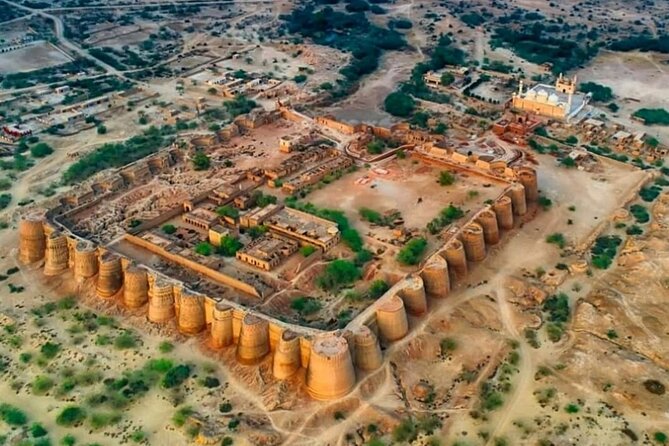
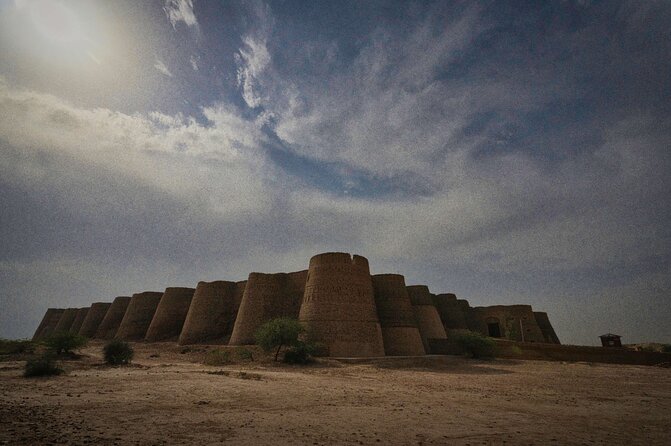
Derawar Fort is described as being built by Raja Jajja Bhatti in the 9th century, and it’s also noted that it was initially known as Dera Rawal. Those details matter because Derawar isn’t presented as a random ruin. It’s presented as a long-lived stronghold tied to a specific ruler and timeline.
Admission tickets are included, which saves you time once you’re there. And since the tour overview highlights camel safari time in the desert, you should expect some desert-focused moments as part of the Cholistan experience around the fort setting.
Noor Mahal and Sadiq Garh Palace on the return
On the way back, you visit palaces of the Nawabs, including Sadiq Garh Palace and Noor Mahal. There’s also a conditional bonus: if the museum is open that day, you can visit the museum and library. Since hours aren’t guaranteed in the data, count on the palace exterior and plan for the museum visit only if it’s available.
Admission tickets are listed as included for this stop too.
Why this route feels more meaningful than a checklist of monuments
This tour’s strength is not only what you see, but how the day structure uses contrasts.
In Multan, the shrine circuit is the spine, from Shah Rukn-e-Alam and Bahauddin Zakaria Multani to Shah Shams Sabzwari Tabrez and Shah Yusuf Gardezi. Those names are linked to Sufi tradition, and you’re shown multiple sites across the day so you can start to feel the city’s spiritual geography.
Then the route moves you to Uch Sharif, where the shrine cluster approach continues, but with different figures and a different sacred rhythm. Bibi Jawindi, Ustad Ladla, and Makhdoom Jahanian Jahan Gashat make it less about one big landmark and more about a whole ecosystem of remembrance.
Finally, Cholistan turns the focus from architecture to space. A fort in a desert setting does something your average city monument can’t. It makes the scale feel real, and it also makes the camel safari time feel less like an add-on and more like part of the geography you’re touring.
And you still get city texture with Hussain Agahi Bazar, plus old town gates and multiple places of worship woven into the same urban experience. It’s a good blend of the sacred and the everyday.
How the guides shape the day: professional, honest, flexible
The tour is built around guided interpretation, and the guide names matter because they’re tied to the tour operator’s reputation. Feedback repeatedly points to Mr. Maqbool Ahmad and his team as professional and honest, with a flexible style. That flexibility matters on a route with lots of short stops, because it gives your guide room to adjust pacing if a shrine area runs long or if you want extra time at one place.
A small but practical benefit: admission tickets are mostly handled as part of the stops, and your guide handles the sequencing. That removes a common travel headache, especially when you’re moving between sacred sites where you want to understand what you’re seeing before you’re already walking away.
If you’re the type who likes to ask questions, this kind of guide setup tends to reward you. If you prefer silent looking and minimal talk, you may still enjoy it, but you’ll want to communicate your preference early.
Comfort, pacing, and the “three road days” reality
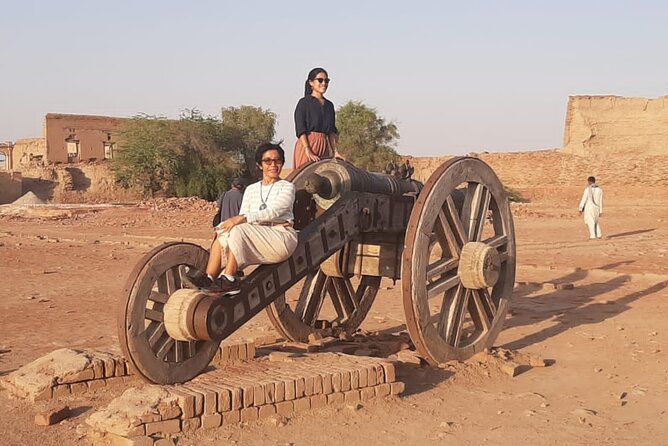
Even with a private group and AC vehicle, the geography of this tour is not subtle. You’re doing:
- Multan to Uch Sharif: about 80 to 100 minutes
- Bahawalpur to Derawar Fort: about 4 hours
That means you’ll likely spend real time on the road every day, even if the stops are short and structured. The good news is the tour includes comfort details that keep long drives from becoming miserable: AC private vehicle, fuel, parking, and WiFi on board. You’ll also start at 8:30 am, which is early enough to make the most of daylight at fort and bazaar stops.
The other pacing factor is the stop timing. Day 1 includes several shorter shrine visits around 20 minutes each. Day 2 has a mix of short anchors (around 20 minutes) and longer shrine circuit time (around two hours at Tomb of Bibi Jawindi). Day 3 includes a long drive plus fort time and then palaces on the return.
If you’re sensitive to fast transitions, consider how you usually travel best. This one suits people who like a guided route with variety rather than a slow, single-topic day.
Who should book this Multan–Uch Sharif–Bahawalpur–Cholistan tour
This is a strong fit if you:
- Love architecture tied to living tradition, especially Sufi shrine sites in Multan and Uch Sharif
- Want a guided approach that connects names like Shah Rukn-e-Alam, Bahauddin Zakaria Multani, and Jalaluddin Surkh-Posh Bukhari to physical places
- Like nature contrast, meaning you enjoy seeing how desert space changes what a fort experience feels like
- Prefer a private setup with AC comfort and tickets handled as part of the tour
It may be less ideal if you prefer mostly museum time, or if you get frustrated by multiple short stops. The design here is deliberate: it’s about coverage and flow across South Punjab rather than unhurried browsing.
Should you book this tour
If your goal is a well-organized South Punjab circuit that balances sacred monuments, old-town street energy, and a desert fort moment, I think it’s a good booking. The included value is clear: AC private vehicle, guide service, sightseeing tickets, and road/toll costs are all covered, which keeps your day-to-day planning simpler.
My caution is the pacing and travel distance. You’re committing to long road segments, especially the Bahawalpur to Derawar Fort leg, so choose this only if you’re okay with a travel-heavy schedule. Also, remember that the palace stop includes a museum/library only if it’s open, so treat that as a bonus, not a guarantee.
If those points fit your travel style, book it. If you’re unsure, send a message before confirming and ask how they plan to pace the desert time around Derawar Fort.
FAQ
What is the duration of the tour?
The tour runs for about 3 days.
Where does the tour start and when?
It starts in Lahore with a meeting time of 8:30 am.
Is pickup and private transportation included?
Pickup is offered, and the tour includes an AC private vehicle.
Are sightseeing tickets included in the price?
Yes. Sightseeing tickets are included (and parking fees are included too).
Does the tour include camel safari in the desert?
The tour description says it includes camel safari time in the desert as part of the Cholistan experience.
What is included and what is not included?
Included: AC private vehicle, fuel, sightseeing tickets, road and toll taxes, parking fees, and tour guide. Not included: driver and guide tips, and air/bus/train tickets, plus anything not listed in inclusions.
Can I cancel for a full refund?
Yes. Free cancellation is available up to 24 hours in advance for a full refund.