REVIEW · SHYMKENT
The Silk Road tour of Kazakhstan
Book on Viator →Operated by Turan Asia · Bookable on Viator
Silk Road ruins in Kazakhstan, in two days. This Silk Road tour of Kazakhstan links the archaeological sites of Otrar, Turkestan, and Sauran with real-life Shymkent stops, so you see how trade routes shaped daily life. You start in Shymkent, then work your way through the places that once pulled wealth and people from across the region.
What I like most is how practical it feels: accommodation and transport are included, along with airport and hotel transfers. It also runs with a small group (up to 12), and the guiding is strong, with clear English explanations that help you make sense of what you’re seeing.
One watch-out: you’ll cover a lot in just 2 days, so there isn’t much time to slow down or linger. If you like long, unhurried museum-style pacing, this schedule may feel a bit tight.
In This Review
- Key highlights worth marking on your map
- Why Shymkent is the smart start for a Silk Road route
- Shymkent city tour and Ayna Bazaar: the everyday side of the Silk Road
- Otrar’s archaeological site: where the trade route left physical fingerprints
- Turkestan excursion and the Khoja Ahmed Yasawi UNESCO complex
- Sauran ruins: stepping into a fortress city’s quiet power
- Day structure, pacing, and what “2 days” really means
- Price and value: what $347 covers (and why that matters)
- Getting the logistics right before you go
- Tour operator note: Turan Asia and the guide experience
- Who this Silk Road tour fits best
- Should you book this Silk Road tour of Kazakhstan?
- FAQ
- How long is the Silk Road tour of Kazakhstan?
- Where does the tour take place?
- What time does the tour start?
- What’s included in the price?
- Do I need to buy individual site tickets?
- Is airport or hotel pickup included?
- What group size should I expect?
- Can I cancel for free?
- What happens if weather is poor?
- Do I get a mobile ticket?
Key highlights worth marking on your map
- Otrar’s Silk Road role: an ancient commercial oasis tied to major centuries of trade
- Shymkent city tour plus Ayna Bazaar: history and shopping-street energy in the same day
- Khoja Ahmed Yasawi complex in Turkestan: the UNESCO world heritage site at the heart of the excursion
- Sauran fortress ruins: a former strategic trading city tied to the Ak Horde capital era
- Small group size (max 12): easier questions, less waiting around
- Entry fees included: fewer little payments and a smoother day
Why Shymkent is the smart start for a Silk Road route
Shymkent is Kazakhstan’s third largest city by population, and that matters. It’s big enough to feel like a real place with morning routines and market life, not just a waypoint on a checklist. Starting here also means you can do a city tour before heading out to the older Silk Road sites.
The city visit also gives you context for what comes next. When you later stand near the ruins at Otrar and Sauran, it’s easier to connect the past to the living present—trade didn’t just disappear; it changed shape over time.
And yes, you get market time. A stop at Ayna Bazaar is built in, so you’re not only looking at archaeology—you’re also seeing how people in Shymkent buy local goods and move through daily Southern market rhythms.
You can also read our reviews of more tours and experiences in Shymkent.
Shymkent city tour and Ayna Bazaar: the everyday side of the Silk Road
Your day begins in Shymkent with a guided city tour. You’ll get a sense of the city layout and major sights, which helps you get your bearings fast when you’re later out of town. It’s the kind of first-day orientation that makes the rest of the trip feel less hectic.
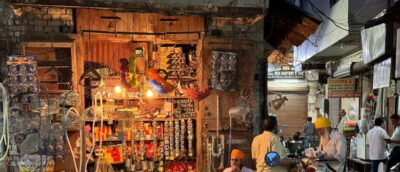
Then the route turns toward Ayna Bazaar, Shymkent’s well-known Southern market. This is one of those stops that can be more useful than it sounds. Even if you don’t plan to buy much, the market shows you what local life looks like when the Silk Road-era cities were far from “ruins” and were full of commerce.
Practical tip: bring small cash for snacks or quick purchases, even if most official costs are handled. You’ll also enjoy it more if you’re comfortable walking around lively indoor/outdoor market areas.
Otrar’s archaeological site: where the trade route left physical fingerprints
Otrar (also known as Farab) is one of the most important stops on the route. The site is tied to a very long timeline, listed from the 1st century BC through the 15th century AD, and it’s presented as an ancient commercial oasis. That’s the key idea here: Otrar wasn’t only a city—it was a trading engine.
What I like about this stop is that it’s not framed as a single monument. You’re looking at excavations and reconstructions, which helps you picture how a trading center worked rather than just viewing a few stones. On a day like this, reconstruction matters, because it gives your brain a structure to hang the facts on.
You’ll likely spend about 2 hours at Otrar, which is a solid window for guided walking plus time to absorb details. The tour includes the entry fee here, so you can focus on the site and not on tickets or extra payments.
How to get more out of Otrar: ask your guide to explain what made Otrar important as a trading hub. The most memorable moments tend to be when you understand the city’s role, not just its location.
Turkestan excursion and the Khoja Ahmed Yasawi UNESCO complex
On the second day, the route shifts to Turkestan. Your main sightseeing starts with the complex of Khoja Ahmed Yasawi, highlighted as Kazakhstan’s UNESCO world heritage site. If you want one location on this tour that feels “must-see,” this is the one.
This part of the experience is about more than architecture. It connects the Silk Road movement of people and ideas to a place that became a major spiritual and cultural landmark. Even if you’re not a hardcore architecture fan, the UNESCO label signals that you’re walking through something with major historical weight.
The Turkestan segment is scheduled for about 2 hours, with admission included. That’s long enough for a proper guided look, without dragging you from point to point all day. The pacing feels suited to a small group, where questions can actually land instead of being rushed.
Practical tip: dress respectfully for a religious heritage site. Even on a short excursion, covering shoulders and keeping hats/large bags under control tends to make things easier.
Sauran ruins: stepping into a fortress city’s quiet power
After Turkestan, you transfer to Sauran, an ancient city-fortress. The site description places Sauran’s strategic importance across the 12th through the 18th centuries, and it notes the city served as the capital of the Kazakh-mongol khanate Ak Horde from the 12th through the 16th centuries.
That framing changes how you look at ruins. You’re not just seeing “old walls.” You’re seeing a place with a job—strategic control and trading power. The time period matters too: a fortress city used as a capital has a different feel than a casual settlement.
You’ll spend about 1 hour here, and the entry is free as part of the tour inclusions. One hour can sound short, but it works well if the guide is helping you identify the story in what you see. If you like taking photos, bring a charged phone/camera battery and plan for a few stops where you’ll pause and look up.
A good way to enjoy Sauran: focus on how the fortress layout supports control. Even without detailed technical explanations, you’ll start to “read” the site as a defended trading center.
Day structure, pacing, and what “2 days” really means
The tour runs for about 2 days and starts at 10:00 am. That start time is helpful if you’re arriving the morning of Day 1, and it gives you breathing room before the city tour begins.
Day 1 is city-forward: Shymkent first, then Ayna Bazaar, then Otrar in the afternoon for the main archaeological block. Day 2 then concentrates on Turkestan’s UNESCO complex and follows with Sauran in the afternoon before returning to Shymkent for the city transfer.
If you’re the kind of traveler who likes to compare places back-to-back—market life, then caravan-era ruins, then UNESCO heritage—this format clicks. If you want lots of downtime for independent wandering, you may feel like the schedule is moving at a brisk clip.
Price and value: what $347 covers (and why that matters)
At $347 per person, the real value comes from what’s included. You’re not just buying sightseeing. The package includes accommodation and transport, plus airport and hotel transfers. It also lists all entry fees included, which can add up quickly on multi-site days.
It’s also a small-group tour (maximum 12 travelers). In practice, that usually means less time waiting and more time asking questions. When you’re dealing with archaeology—where context makes the difference—that kind of group size really helps.
Add mobile ticket support and pickup offered, and you get a trip that’s easier to manage than a DIY plan with multiple site tickets and transfer arrangements.
The only price-related consideration is time value. Two days is a fast format, so you’re paying for efficiency and structure. If you have extra days in Kazakhstan, you might want to slow down elsewhere after this tour. But for a focused Silk Road sampler, this is priced like a package built for convenience.
Getting the logistics right before you go
A few details from the tour setup will shape your experience.
- You’ll have airport and hotel transfers, which reduces stress on arrival and departure.
- The tour is described as having a free cancellation option, and it also depends on weather being suitable.
- The tour requires good weather, and if it’s canceled due to poor weather, you’ll be offered a different date or a full refund.
- Most travelers can participate, and the experience is near public transportation, which can be helpful in Shymkent.
What I’d do to be comfortable: pack layers. Even in short outings, archaeological sites and changing daily temperatures can make you want a light jacket. Comfortable shoes matter too. You’ll be walking and standing around site areas.
And bring patience for transfers. When you’re covering Otrar, Turkestan, and Sauran in a tight schedule, you’re spending real time on the road. That’s normal here, and it’s part of how the route connects the Silk Road map.
Tour operator note: Turan Asia and the guide experience
This experience is provided by Turan Asia, and the overall feel of the tour is that it’s designed to be guided and organized. The strongest indicator is the quality of communication from the guide, including clear English explanations and helpful support while you’re looking at sites.
That matters because archaeology can be visually confusing without guidance. When you understand what you’re seeing—what part is reconstruction, what part is excavation, what role the city played—you come away with more than “old place.” You leave with a story.
Who this Silk Road tour fits best
This tour is a great match if you want:
- A structured 2-day introduction to the Silk Road footprint in Kazakhstan
- A mix of city life and archaeological heritage (Shymkent + Otrar + Turkestan + Sauran)
- A guided route where you can ask questions and not worry about entry fees
It’s less ideal if you:
- Prefer a slow pace with lots of free time to wander on your own
- Get restless when a day includes transfers between multiple sites
- Want a deeply technical archaeology class. This is guided sightseeing, not a research seminar.
Should you book this Silk Road tour of Kazakhstan?
If you’re choosing between a strict DIY plan and an organized package, I’d lean toward booking this one—especially if you want Shymkent, Otrar, Turkestan (Khoja Ahmed Yasawi), and Sauran in one go. The inclusion of accommodation, transfers, and entry fees makes it easy to budget and easy to stay focused on the sites.
Book it if you like clear structure, small groups, and having someone explain what you’re looking at. Skip it only if you know you need lots of downtime and you hate tight scheduling.
FAQ
How long is the Silk Road tour of Kazakhstan?
The tour lasts 2 days (approximately).
Where does the tour take place?
It’s based in Shymkent, Kazakhstan, with day trips to Otrar and Turkestan/Sauran.
What time does the tour start?
The start time is 10:00 am.
What’s included in the price?
Accommodation and transport are included, along with airport and hotel transfers, and all entry fees.
Do I need to buy individual site tickets?
No. All entry fees are included in the tour price.
Is airport or hotel pickup included?
Yes. Airport and hotel transfers are included, and pickup is offered.
What group size should I expect?
The tour has a maximum of 12 travelers.
Can I cancel for free?
Yes. Free cancellation is available up to 24 hours in advance of the experience’s start time for a full refund.
What happens if weather is poor?
The experience requires good weather. If it’s canceled due to poor weather, you’ll be offered a different date or a full refund.
Do I get a mobile ticket?
Yes. The tour includes a mobile ticket.