REVIEW · ASTANA
Astana: Private Night City Tour with Certified Guide
Book on GetYourGuide →Operated by Astana Horizons · Bookable on GetYourGuide
Astana at night feels like a different city. I love the night-ready architecture—from domes to futuristic silhouettes—and the way you get photo stops plus real context for what you’re seeing. One possible drawback: it’s fast-moving in three hours, so expect short stops rather than lingering.
This is a private tour with hotel pickup in Nur-Sultan and an air-conditioned ride between major sights. I also like that guides can speak English or Russian, and I’ve seen names like Aitzhan, Nura, Kadyrbek, Bekzat, and Sultan praised for friendly explanations and solid local perspective.
The main thing to plan around is comfort. Dress for cold evenings, wear shoes you can walk in, and remember the tour isn’t suitable for wheelchair users.
In This Review
- Key things you’ll enjoy on this Astana night tour
- Why Astana Looks Different After Dark
- The private 3-hour pace: hotel pickup to a well-timed sweep
- Astana Grand Mosque and Peace Palace: the spiritual opening
- Assumption Cathedral to Atyrau Bridge: mixing faith with city engineering
- Khan Shatyr and Astana Opera: futuristic icons with real photo payoff
- Ak Orda Presidential Palace: a grand finish in 15 minutes
- What your guide adds: names you might hear, stories you’ll remember
- Price and value: what $47 covers for a night circuit
- What to bring (and how to stay comfortable outside)
- Should you book this Astana night city tour?
- FAQ
- How long is the Astana private night city tour?
- What is the price per person?
- Is this tour private, and do I get hotel pickup and drop-off?
- Which landmarks are included?
- What’s included, and is dinner covered?
- What languages does the guide speak?
- What should I bring for a night tour in Astana?
- Is the tour wheelchair accessible?
- Can I cancel and get a refund?
Key things you’ll enjoy on this Astana night tour
- A hotel-to-hotel private circuit that keeps the pace reasonable for a 3-hour evening outing
- Architecture plus meaning: modern capital planning and spiritual landmarks in one run
- Guaranteed photo time at major icons like Ak Orda Presidential Palace and Khan Shatyr
- Short, focused visits (often 10–30 minutes each) so you still see a lot without rushing your soul
- English or Russian live guide with firsthand city storytelling
- Snacks and water included, so you’re not starting the night hangry
Why Astana Looks Different After Dark
Astana is a planning city. By day, it can feel clean and geometric. At night, it turns theatrical—edges sharpen, columns glow, and distances seem smaller because the lights do the guiding for you.
That’s what makes this tour work well: you’re not just checking boxes. You’re seeing how the city wants to be experienced. The Grand Mosque, the Palace of Peace and Reconciliation, and the Assumption Cathedral bring a spiritual thread. Then the futuristic icons—especially Khan Shatyr—show the capital’s modern identity. Put together, it helps you understand why Astana feels like it has two timelines running at once.
And yes, your camera matters here. Several guides have a knack for getting you in the right spot for photos during the short photo stops, including at Ak Orda Presidential Palace, where the lighting makes the building look bigger than you remember from daylight.
The biggest “value” in doing it at night: you see more personality per hour. You also avoid midday heat and the glare that can flatten architecture photos.
You can also read our reviews of more tours and experiences in Astana.
The private 3-hour pace: hotel pickup to a well-timed sweep
You start with pickup from your hotel in Nur-Sultan. From there, you drive to the central sights and do a clean sequence of stops—mostly photo stops, plus brief guided walks or guided time where it makes sense.
Three hours is just enough time to:
- get oriented fast
- see the key illuminated landmarks
- still end the night back at your hotel
Because it’s private, you’re not stuck waiting for other people to decide whether the angle is worth it. Your guide can adjust the tempo a bit, but you should still expect a “see it, learn it, shoot it, move on” rhythm.
The air-conditioned vehicle is a real comfort factor in cold weather too. You’ll have short outdoor windows for photos, then warm up between stops.
One more practical point: the tour involves walking at least some stretch (including time at Atyrau Bridge), so comfortable shoes aren’t optional. If you hate walking in the dark, you’ll want to bring patience—and good footwear.
Astana Grand Mosque and Peace Palace: the spiritual opening
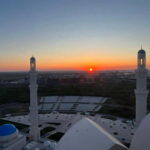
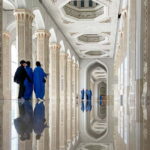
The night tour kicks off at the Astana Grand Mosque with a photo stop and guided time (about 20 minutes). This is a smart first stop because it sets the tone. You’re not starting with a futuristic building; you’re starting with a place that looks intentional and calm even when the city is lit around it.
Next comes the Palace of Peace and Reconciliation with a photo stop plus guided time (about 30 minutes). This is one of the tour’s best chances to understand Kazakhstan’s modern identity in a deeper way. It’s not just a pretty façade—it’s designed to represent dialogue and coexistence, and your guide’s explanations make the architecture feel less abstract.
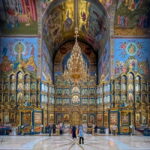
Then you move to the Assumption Cathedral, Astana (photo stop plus guided visit around 20 minutes). The value here is contrast. You see different forms of religious architecture, and your guide connects them to Kazakhstan’s story as it developed into a modern capital.
What to watch for at these stops: don’t treat them only as photo backgrounds. Take 30 seconds to look for how the building shapes the space around it—stairs, symmetry, and where the light hits the most detailed surfaces. That’s where the night effect is strongest.
Assumption Cathedral to Atyrau Bridge: mixing faith with city engineering
After the cathedral stop, you head to the Atyrau Bridge. Expect a photo stop, guided time, sightseeing, and a short walk (about 20 minutes total).
Bridges are where a city’s engineering gets emotional. On a night tour, they’re also practical: they give you a view corridor for city lights and make it easier to “read” the city’s layout.
The guided portion matters because it turns the view into information. Instead of only seeing reflections on water or dark sky, you’ll learn what you’re actually looking at and how it ties into Astana’s growth as a capital.
This is also one of the stops where you’ll feel the tour’s timing. It’s short, so you’ll want to plan:
- keep your camera ready
- move at a steady pace
- save your longest stare for when you’re at the best viewpoint
If you’re cold, this is the moment to keep moving rather than standing still too long. The lights look fantastic, but you’ll enjoy them more if your hands aren’t freezing.
Khan Shatyr and Astana Opera: futuristic icons with real photo payoff
Now the tour shifts hard into the modern look of Astana.
At Khan Shatyr, you get a photo stop and guided visit (about 15 minutes). The building is famous for its futuristic design, and at night it practically glows by itself. This is the kind of stop where you’ll understand why people remember Astana as a city of bold architecture.
Right after that, you hit the Astana Opera for a quick photo stop (about 10 minutes). Even if you don’t go inside, the exterior at night gives you a strong sense of scale and symmetry. It also breaks up the route so you’re not only seeing one type of landmark.
You’ll also have an additional stop that includes a photo stop and a short visit (around 20 minutes). The exact location can vary by route timing, but the purpose is consistent: add another signature viewpoint before you finish with the major government landmark.
Practical tip for these modern stops: take your photos first, then listen. With quick photo windows, you’ll get better pictures if you don’t spend those minutes still trying to orient yourself.
If you want the best mix of architecture styles—religious to futuristic—this is where the tour hits its stride.
Ak Orda Presidential Palace: a grand finish in 15 minutes
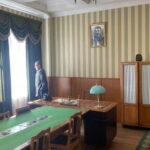
The final highlight is the Ak Orda Presidential Palace, where you’ll have a photo stop and sightseeing for about 15 minutes.
This is one of those stops where the light makes the building feel more monumental than it does during the day. The value of the short timing is that you’re not exhausted. You’re ending with one of the biggest images from the evening, and that’s perfect for people doing Astana as a “greatest hits” stop.
If your camera battery is low, recharge earlier in the day. The palace stop is your last big photo moment—so treat it like your finale.
What your guide adds: names you might hear, stories you’ll remember
The tour is led by a live guide (English or Russian), and the difference between a good photo stop and a great one is what the guide tells you while you’re there.
In past tours, guides like Nura, Aitzhan, Adilzhan, Kadyrbek, Bekzat, Kadyr, Sultan, and Bayesian have been described as friendly and attentive, with explanations that connect landmarks to Kazakhstan’s modern development and spiritual background.
One fun detail I’ve seen mentioned: some guides have even played local Kazakh music on a dombra during the ride. You shouldn’t count on that as your plan, but it shows the broader idea—this tour isn’t just reading off signs. It’s about giving you a feel for the place.
A guide also helps you make quick decisions. With multiple short stops, you’ll spend less time wondering where to stand and more time seeing what matters.
Price and value: what $47 covers for a night circuit
At $47 per person for about 3 hours, you’re paying for a guided, private, night-focused route that includes:
- pickup and drop-off from your hotel
- an air-conditioned vehicle
- water and snacks
- guided time at major landmarks
- photo stops with help finding the right angles
Dinner is not included, so build your evening around that. If you want a full meal after the tour, plan to head somewhere close to your hotel.
Is $47 “cheap”? It’s not bargain-basement. But for a private night tour with pickup, a guide, and multiple stops across different landmark types, it can feel like good value—especially if you’d otherwise pay for taxis between distant sites and still want someone to explain what you’re looking at.
In plain terms: this price buys convenience plus context. And in a city like Astana, context is half the experience.
What to bring (and how to stay comfortable outside)
For night Astana, your comfort gear matters more than you think.
Bring:
- comfortable shoes for the walking portions
- warm clothing (it’s a night tour, and you’ll be outdoors during photo stops)
- a camera (or phone with good night mode)
Layers are your friend. Even if the vehicle is warm, you’ll have enough time outside to feel the cold if you show up underdressed.
Also note: the tour is not suitable for wheelchair users, so if accessibility is a factor, you’ll need a different plan.
Should you book this Astana night city tour?
Book it if you:
- want a fast, organized way to see Astana’s top landmarks after dark
- care about meaning, not just pictures
- prefer a private guide with English or Russian support
- have limited time and don’t want to piece together a night route on your own
Skip it (or consider alternatives) if you:
- hate walking in cold weather, even briefly
- want long indoor visits or extended time at each monument
- need wheelchair accessibility
If you’re doing Astana for the first time, this tour is a strong option. It’s designed to give you a clear first impression of the capital’s modern architecture and spiritual landmarks—without turning your evening into a logistics puzzle.
FAQ
How long is the Astana private night city tour?
It lasts about 3 hours.
What is the price per person?
The price is $47 per person.
Is this tour private, and do I get hotel pickup and drop-off?
Yes, it’s a private tour. You get pickup from your hotel in Nur-Sultan and return with drop-off back at your hotel.
Which landmarks are included?
You’ll have photo stops and guided time at the Grand Mosque, the Palace of Peace and Reconciliation, the Assumption Cathedral, Atyrau Bridge, Khan Shatyr, Astana Opera, and Ak Orda Presidential Palace. There is also an additional photo stop with a short visit during the route.
What’s included, and is dinner covered?
Included are pickup/drop-off, water, snacks, an air-conditioned vehicle, and a live guide with guided time at landmarks and photo stops. Dinner is not included.
What languages does the guide speak?
The live tour guide speaks English and Russian.
What should I bring for a night tour in Astana?
Wear comfortable shoes and warm clothing, and bring a camera (or a phone you’re comfortable using for night photos).
Is the tour wheelchair accessible?
No. It’s not suitable for wheelchair users.
Can I cancel and get a refund?
Yes. You can cancel up to 24 hours in advance for a full refund.