REVIEW · SRINAGAR
The Best Monsoon Trek: Kashmir Great Lakes
Book on Viator →Operated by Himalaya Shelter · Bookable on Viator
Lakes and passes feel close here. I like how the trek can catch snow on higher ground while lower meadows are already blooming in early July, so the scenery feels like two seasons at once. You also walk a classic circuit of Nichinai, Gadsar, and Zaj passes, with big lake days that reward steady hiking.
I also like the practical, human side: a BMC-certified guide, a First Aid kit, and camp support that keeps things running even when weather turns. The food gets real praise too, including trout dishes served on the mountain. One thing to consider: this is an active, high-altitude trek with a long, demanding day (up to around 10 hours) and late-season rain that can show up fast.
In This Review
- Key things I’d plan around
- When snow is still around and flowers are already up: best timing for Kashmir Great Lakes
- Srinagar to Sonamarg: the easy start that sets your pace
- Day 1 night in camp style: tents that matter after long hiking
- Nichinai Stream and the maple meadow day: Day 2 to Shitkadi to Nichinai
- Nichinai Pass (~4,100m) and Vishansar Lake: Day 3’s altitude test
- Gadsar Lake and Gadsar Pass (~4,210m): the hardest-feeling day
- Tarsar Lake (the comparatively easier day): why it still counts
- Zaj Pass and Gangabal Lake: cooler air, longer effort (Day 6)
- The steep descent to Naranag and back to Srinagar by evening: Day 7
- What the camp support and meals do for your real experience
- Price and logistics: does $481 feel fair for 7 days?
- Who should pick this trek, and who should skip it
- Should you book the Kashmir Great Lakes trek?
- FAQ
- How long is the Kashmir Great Lakes trek?
- Where does the trek start and end?
- What time does the activity start?
- What’s included in the trek package?
- What trekking gear comfort is provided for camping?
- How many people are in a group?
- Are service animals allowed and is the meeting point near public transportation?
Key things I’d plan around
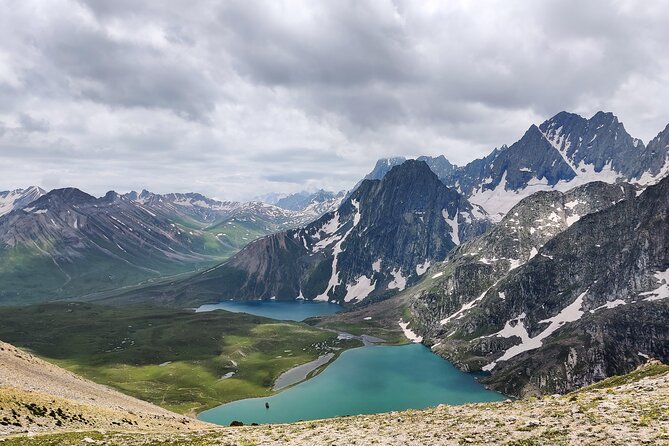
- Early July vs late July snow timing: early July still has snow on higher reaches; late July brings fuller meadow bloom.
- Big pass days are real work: Nichinai Pass (~4,100m), Gadsar Pass (~4,210m), and Zaj Pass (about 13,280 ft).
- A noticeably long hiking day: the Vishansar to Gadsar push can run up to about 10 hours.
- Food is part of the experience: hot meals at camp, with notable focus on trout dishes and comfort soups.
- Small groups help: capped at 11 travelers, with some departures feeling closer to 10.
When snow is still around and flowers are already up: best timing for Kashmir Great Lakes
This trek’s timing is not a detail. It changes what you see every day.
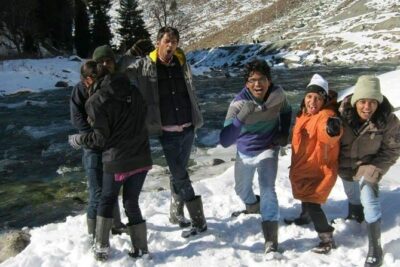
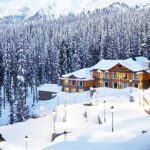
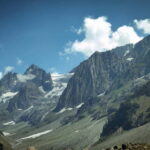
In early July, snow can still be present higher up, while meadows are in their fresh bloom. That combo matters because it gives you contrast: pale-white snowfields above, and green-and-color plant growth below. If you want that look, aim for the first half of July.
By end of July, the snow largely melts away. The meadows get into full bloom, and days feel warmer at camp at night, which makes sleeping feel more like camping than survival.
By late August, temperatures start to drop again. Flowers begin to wither as colder weather pushes in, and you also have to expect abrupt rainfall more than you’d hope for. The trek can still run into the second week of September, but higher reaches start to feel winter coming back.
My practical advice: pick your season based on what you want most—snow contrast (early July) or full meadow colors (late July). If you’re not excited about wet, chilly hiking, avoid the late-August rain window.
You can also read our reviews of more tours and experiences in Srinagar.
Srinagar to Sonamarg: the easy start that sets your pace
You leave Srinagar around 1:00 pm and reach Sonamarg by about 4:30 pm. Most people underestimate how valuable a travel day is on a trek like this. It’s not just moving locations—it’s getting your body used to altitude prep and your mind used to the rhythm of the trip.
The drive follows the Sind River, with a crossing at the Wayil bridge (about 25 km ahead of Srinagar on that route). You also pass by the Anchar Lake on the way. Even if you don’t plan this as sightseeing, these stops help break up the day and make the trek feel like a gradual shift from road travel to trail time.
By the time you settle near Sonamarg, you’ll be ready for day two’s start rather than feeling like you have to “warm up forever.”
Day 1 night in camp style: tents that matter after long hiking
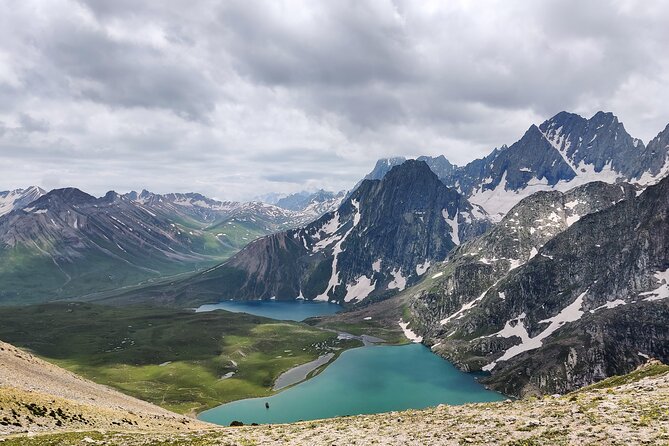
Your trip includes standard tent stays for 6 nights with double occupancy, plus the camp setup that includes dining and toilet tents. You’ll have sleeping mats and clean sleeping bags provided, and there’s also kitchen support.
Why this matters: on high-altitude treks, comfort isn’t luxury. It’s recovery. When your body has to work hard on steep days, a predictable camp setup helps you wake up functional. Reviews also highlight how supportive the team feels and how camp food stays hot despite mountain conditions.
One small consideration: if you hate basic camping life, this trek will feel rustic. But if you’re okay with tents, hot meals, and a team handling the heavy lifting, it’s a nice setup for the price range.
Nichinai Stream and the maple meadow day: Day 2 to Shitkadi to Nichinai
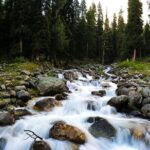
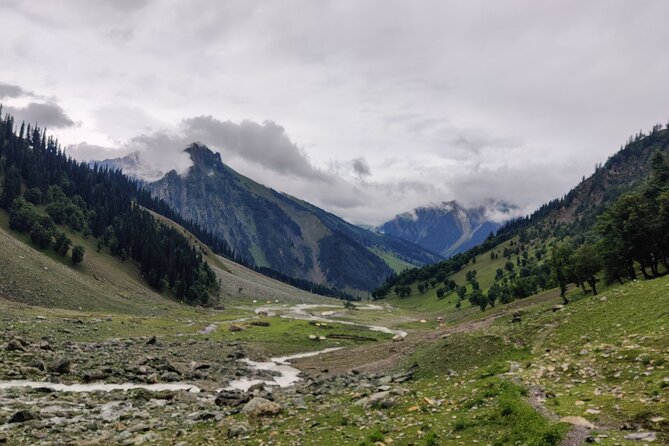
Day two starts from the camp at Shitkadi and you trek toward Nichinai camp. You follow the Nichinai stream, which stays to your right for much of the day. That’s a classic trekking advantage: the sound and presence of water helps you stay oriented, and the route has a natural “guide.”
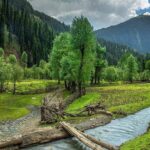
After hiking upstream for about 1.5 km, you reach a meadow area with maple trees scattered around. This is one of those days where you get a calmer feel compared with the higher passes later on. It helps you “learn” your pace before the altitude pressure arrives.
The hiking time is around 5 hours, which is long enough to build trekking legs but not so long that day two becomes misery. Still, you’ll want to hydrate early because day three starts with real climbing.
Nichinai Pass (~4,100m) and Vishansar Lake: Day 3’s altitude test
From Nichinai camp, you begin with a climb toward Nichinai Pass, around 4,100 meters. The ascent takes a couple of hours at a moderate pace, which is exactly what you want on a day like this: not a sprint, not a slow shuffle.
Once you cross, you transition into the downhill-and-meadow phase that characterizes many Great Lakes days. The goal is Vishansar Lake, which is the kind of destination that makes the effort feel worth it.
Duration is about 4 hours total for this day’s section. That may sound short on paper, but at altitude, time moves differently. If you’ve ever felt fine at sea level and then suddenly winded on a hill, you know why pacing matters here.
Practical tip: keep your breathing steady on climbs. Save big bursts of energy for flatter stretches, not for the pass.
Gadsar Lake and Gadsar Pass (~4,210m): the hardest-feeling day
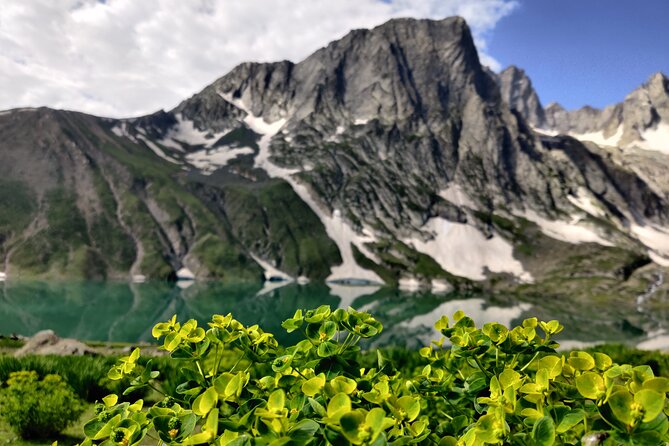
This is the day you should respect.
The trek from Vishansar to Gadsar is described as beautiful but demanding, including the route across the Gadsar Pass. This pass is the highest point on the whole trek, at around 4,210 meters.
You’re looking at a long day too, around 10 hours. That’s the most likely day to make you feel the altitude, the uneven footing, and the fact that you’re not just walking—you’re working.
What helps: the Great Lakes terrain tends to shift—some stretches feel like “steady effort,” others feel like “hold on, it’s steep.” That variety can actually prevent the worst mental fatigue because you’re not stuck in one kind of slope the whole time. Still, pack mentally for effort.
If you’re choosing between early and late season, note that weather can change your perception fast. Cold rain or wind on a pass day can turn a difficult hike into an exhausting one. This trek’s strength is that the guide team is set up for safety and adjustments when conditions change.
Tarsar Lake (the comparatively easier day): why it still counts
Day five from Gadsar toward Tarsar Lake is relatively easier compared with the hardest pass days. It begins with a steep hike that takes just over an hour. After that, the trail becomes more gradual and mostly level plain.
This day is a chance to regain confidence. Your legs may be tired, but you’re not constantly forcing uphill. Those calmer stretches are also where you’ll notice the weather: if skies are clear, you’ll get long sightlines toward higher reaches; if clouds move in, the air can cool quickly.
Duration is around 6 hours, and the overall feel is that this day helps you recover without letting you forget you’re still doing a mountain trek. I’d use it to slow down a bit, eat well at breaks, and keep your feet happy—because day six is another pass day.
Zaj Pass and Gangabal Lake: cooler air, longer effort (Day 6)
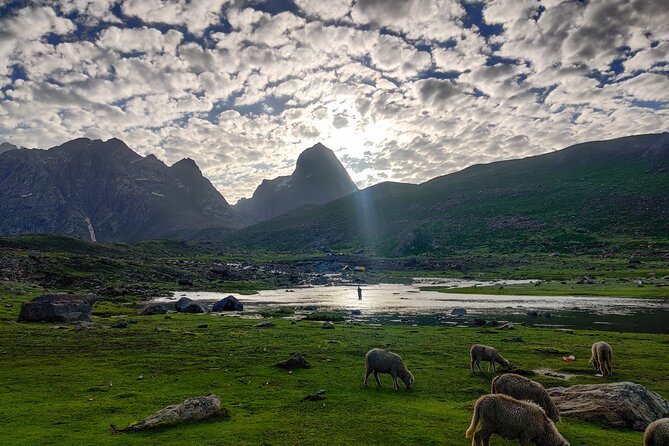
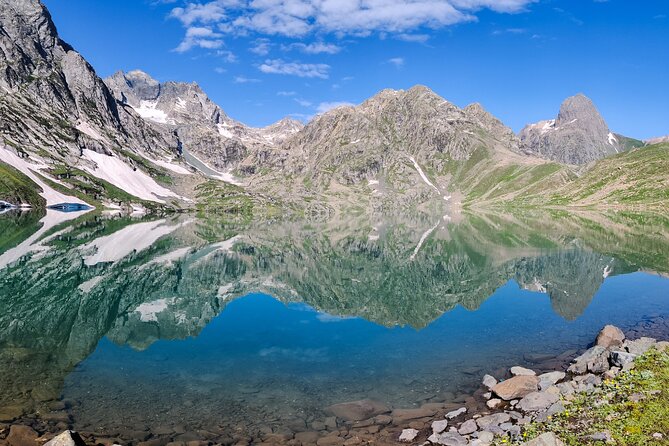
Day six starts with an ascent to the Zaj Pass, described as comparatively lower than the earlier passes. It’s still high: about 13,280 feet. The climb takes around 2 hours.
That means you should not treat it like an easy stroll. Instead, it’s more like a second “big day” where you rely on pacing again. Once you cross, you move toward Gangabal Lake, which adds a final major lake payoff before the last-day descent.
The total time is around 6 hours. Timing here is important because you want energy left for the final day’s downhill push.
Practical advice: start day six with a calm mindset. If you go out too fast on the pass climb, you’ll feel it later on the way toward the lake.
The steep descent to Naranag and back to Srinagar by evening: Day 7
On the last trekking day, the trail alternates between smaller ascents and descents for about half the route. Then it turns into a steep descent all the way to Naranag.
This is one of those days where the workout is still real even if you think you’re “just going downhill.” Downhills can be hard on knees and ankles, and they can make you feel slower than you expect.
You arrive back in Srinagar between 5 and 7 pm, depending on your start time from Gangabal. That timing is helpful because it gives you a full evening buffer if you want dinner, plan gear cleaning, or just sit down somewhere warm and dry.
What the camp support and meals do for your real experience
The most praised part of this trek isn’t only the scenery. It’s the day-to-day support.
The trip includes:
- Qualified trek guide who is BMC certified, plus a First Aid kit
- Group camping setup with an A-shape tent, plus kitchen, dining, and toilet tent
- Cooking and meal support so you’re not scrambling for food logistics on the trail
From reviews, food quality comes up again and again, including hot, filling meals and comfort items like soups, dals, rajma, and pasta. A standout mention is trout dishes served on the mountain. I take that to mean camp meals are not an afterthought here, and that your energy management will feel easier.
Also, camp locations are described as excellent in at least one review. That matters because “good spot” on a trek is about more than views. It’s about getting a usable place to set up, cook, and sleep.
One more point from reviews: when weather turned bad on the KGL trek, the guide and support team helped get everyone down safely. That’s the kind of competence you want when late-season rain shows up.
Price and logistics: does $481 feel fair for 7 days?
At about $481 for a 7-day trek from Srinagar, you’re paying for more than footsteps. You’re paying for:
- 6 nights of tent camping setup (including dining and toilet tent infrastructure)
- meals (6 breakfasts, 6 dinners, 5 lunches)
- a professional guide with First Aid support
- permits/fees and taxes handled
- transport support starting from Srinagar onwards
Is it “cheap”? No. But for a guided, high-altitude trek with gear setup and consistent meals, it lands in the fair-to-good-value zone.
Where it can get more expensive: porter service is extra if you choose it. The trek notes an INR 500 per bag (<12) charge per day for carrying personal luggage. If you plan to travel light, you may avoid that. If you’re traveling with extra layers, a sleeping bag liner, or bulky items, a porter can save your back.
Also, like most mountain experiences, weather can force changes. One review noted a situation where permits were felt to affect trek timing, resulting in one fewer day. That’s not something you can control, but you can plan with flexibility in mind.
Who should pick this trek, and who should skip it
This trek is aimed at people with moderate physical fitness. You’ll be hiking multiple days with big pass climbs and at least one long, tough day.
You’ll love it most if:
- you want a proper Great Lakes circuit with major passes like Gadsar Pass and Zaj Pass
- you enjoy lake rewards and don’t mind chilly camping at altitude
- you want a guide-led experience with safety support, not DIY hiking
You might want to choose a different option if:
- you have knee or ankle issues and downhill days feel risky
- you’re not comfortable with possible rain and fast weather changes in late July through August
- you hate tents and want more hotel-style comfort
Should you book the Kashmir Great Lakes trek?
I’d book this if you want an organized trek where the day-to-day basics are taken care of: BMC-certified guiding, First Aid readiness, real meals (including trout dishes), and small group hiking (max 11 travelers). The early-July timing option is also a big plus if you specifically want snow plus blooming meadows.
I’d think twice if you’re hard-pressed for a fixed, perfect weather experience. Conditions can change, and the trek includes high passes and a long day that demands steady effort.
If you’re the kind of traveler who likes working your way to a payoff, and you want comfort handled so you can focus on the trail, this one makes a lot of sense.
FAQ
How long is the Kashmir Great Lakes trek?
The duration is about 7 days.
Where does the trek start and end?
It starts in Srinagar and ends back at the meeting point in Srinagar.
What time does the activity start?
The listed start time is 11:00 am.
What’s included in the trek package?
You get 6 nights in standard tent stays with double occupancy, transport support on Srinagar onwards, all fees and taxes, and a BMC certified professional trek guide with a First Aid kit. Meals included are 6 breakfasts, 5 lunches, and 6 dinners.
What trekking gear comfort is provided for camping?
You’ll have clean sleeping bags and mats, plus tent setup including a kitchen, dining tent, and toilet tent with portable seats and camping stools.
How many people are in a group?
The trek has a maximum of 11 travelers.
Are service animals allowed and is the meeting point near public transportation?
Service animals are allowed, and the meeting point is described as near public transportation.