REVIEW · ALMATY
Kazakh Ethno-Village Tour
Book on Viator →Operated by Kazakhstan Guided Tours · Bookable on Viator
A day in a Kazakh ethno-village beats sitting in traffic. This tour takes you to an ethnographic village at the foot of the Trans-Ili Alatau mountains, where you get a real nomad-life style program with a yurt focus, hands-on food prep, and performance elements built into the schedule. I particularly like how it mixes practical skills (like cooking and archery) with show-time moments, so you do not just watch history—you act your way through parts of it.
The big plus for me is the variety packed into a fairly short stretch: a baursaks cooking master class, wool work demonstrations, a horse show plus a short horseback ride, then archery instruction and lunch with national dishes. One thing to consider: this experience is weather-dependent, so if conditions are poor you may need to switch dates or get a refund.
In This Review
- Key Points You Should Know Before You Go
- First Stop: The Ethno-Village Welcome With Warriors and Shashu
- Baursaks Cooking Master Class: Food You Can Actually Take Home (In a Way)
- Yurt Life and Nomad Traditions: What You See, What You Understand
- Wool Craft Demonstrations and Practical Skills
- Horse Show and Short Ride: Fun, But Watch Your Comfort Level
- Lunch of National Kazakh Dishes: A Real Meal, Not a Snack
- Archery Master Class: Finishing With a Nomad Skill
- Free Time and Departure: Don’t Rush Your Last Minutes
- Price and Value: Is $170 Worth It?
- Who This Tour Fits Best (And Who Might Skip It)
- Booking and Day-of Reality: Make It Easy on Yourself
- Should You Book the Kazakh Ethno-Village Tour?
- FAQ
- How long is the Kazakh Ethno-Village Tour?
- Where is the tour located?
- What does the tour include?
- Is hotel pickup and drop-off included?
- How many people are in a group?
- Is there horseback riding and archery?
- What time does the tour start?
- Where does the tour start and end?
- What happens if the weather is bad?
Key Points You Should Know Before You Go
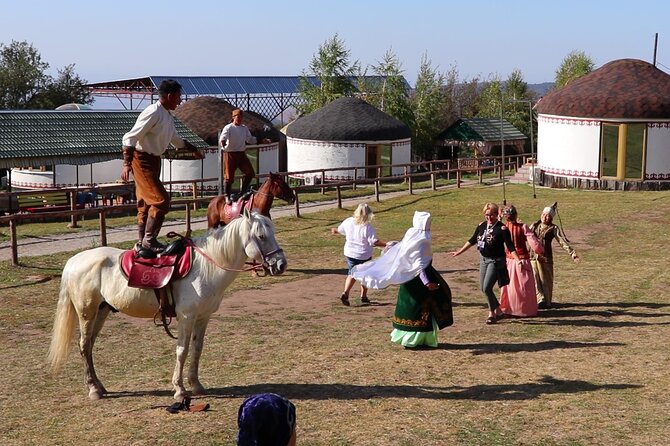
- Nomad-style program in an ethnographic village at the Trans-Ili Alatau mountain foothills
- Hands-on baursaks cooking master class plus other practical cultural demos
- Horse show and horseback riding built into the day, not just a performance
- Archery master class to finish with a classic nomadic skill
- Small group size (max 15) for a more personal pace
- Hotel pickup and drop-off and a mobile ticket to keep logistics simple
First Stop: The Ethno-Village Welcome With Warriors and Shashu
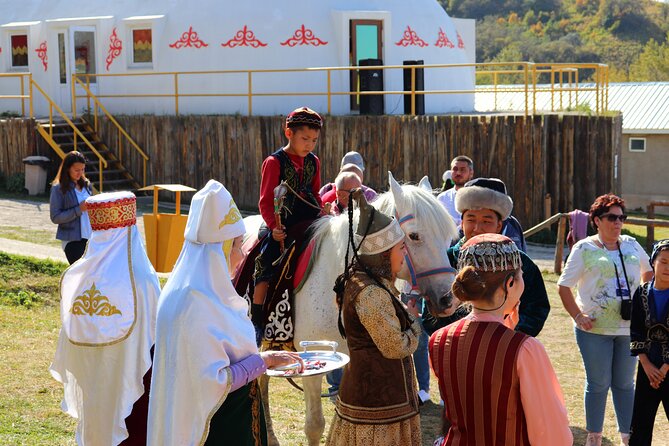
You will start with hotel pickup in Almaty, then head out to Gunny Ethnic Village, arriving around late morning. The day is designed as a gradual handoff from city time into village rhythm, and that matters. You are not just being transported to a venue—you are being routed into the program like it has chapters.
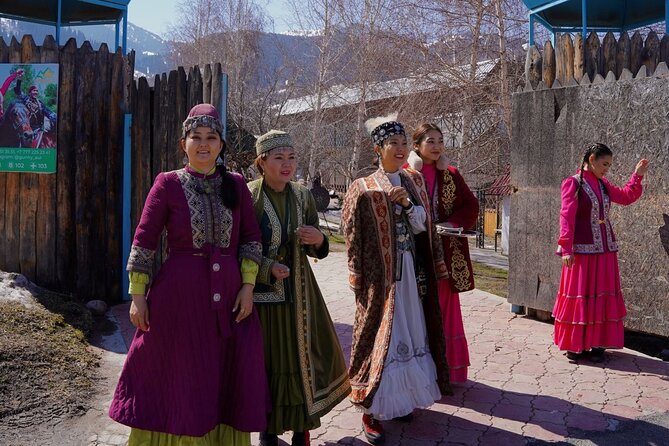
When you arrive, the welcome includes a meeting ritual called Shashu, plus performers in battle armor. It is theatrical, yes, but it also sets the tone for how the staff interpret Kazakh customs on-site. If you like cultural shows that explain themselves as they go, this opening works well.
Tip for your visit: show up ready to move. Even if you do not speak the language, you can follow the structure because the day keeps transitioning between activities. That makes it easier to stay present instead of just waiting for the next thing.
You can also read our reviews of more tours and experiences in Almaty.
Baursaks Cooking Master Class: Food You Can Actually Take Home (In a Way)
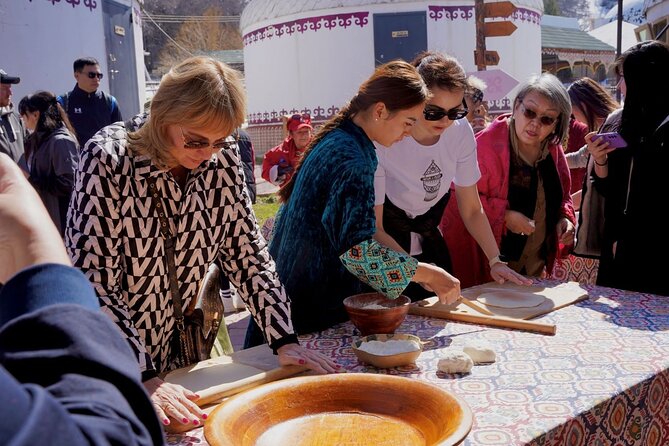
One of the best parts of this tour is that it does not stop at tasting. You get a baursaks cooking master class, focused on a traditional flour-based Kazakh treat. It is the kind of activity that keeps you engaged because you are learning a technique rather than just hearing about a recipe.
Baursaks are a great cultural anchor. They are familiar enough to most visitors that you can relate to them quickly, yet specific enough to Kazakh traditions that it feels meaningful. You also get to see how the village structures learning as part of daily life—like cooking is not a museum display, it is something you do.
You should expect to participate and watch instruction as the group shifts from lesson mode to meal mode. And yes, the schedule later includes lunch, so the food theme stays consistent.
Yurt Life and Nomad Traditions: What You See, What You Understand
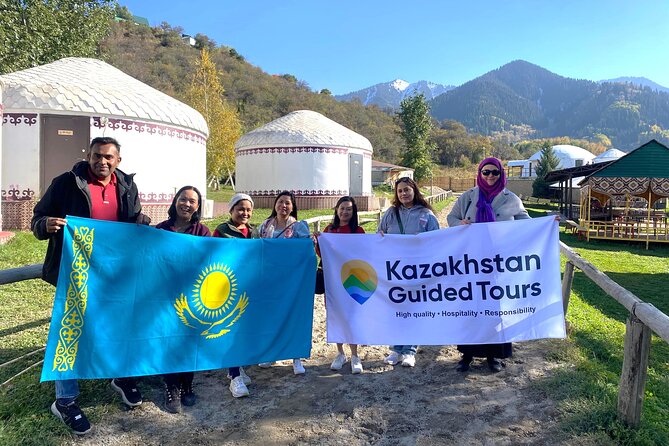
The tour’s heart is the nomad-life theme, centered around the yurt. You will spend time getting acquainted with daily life concepts tied to Kazakh nomadic traditions, and the yurt element is the visual anchor. This is where the experience moves from performance toward understanding.
A yurt is not just a cool photo spot. It is a design shaped by mobility and practicality, and the tour format helps you treat it that way. You are led through the idea of how people lived—what mattered, how spaces functioned, and what the setup represents culturally.
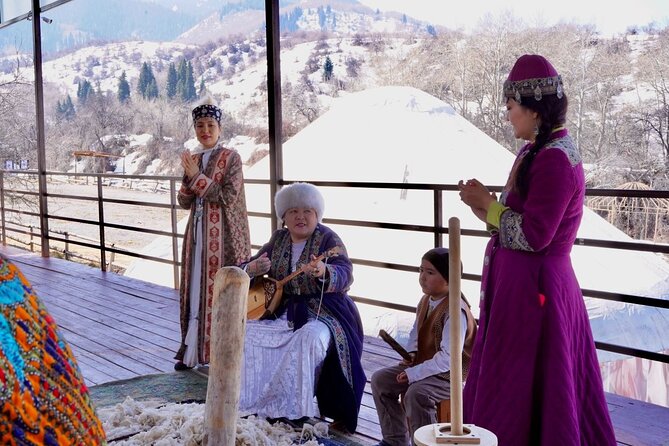
You will also see other cultural demonstrations, including wool cleaning and whipping. These are the kinds of tasks that can sound abstract until you see them as working steps tied to clothing, craft, and everyday survival in a nomadic setting. It helps if you are the type of traveler who likes to connect skills to culture.
Wool Craft Demonstrations and Practical Skills
Along with the yurt learning, the program includes demonstrations linked to traditional material work, including cleaning and whipping wool. This is one of those sections that many visitors end up enjoying more than expected, because it is hands-on in spirit even when you are mostly watching.
Why it is worth your attention: crafts like this explain how people prepared materials for clothing and shelter needs. You are not just being shown finished results—you get a glimpse into the process.
If you tend to zone out during lectures, focus on the visuals here. Tools, motion, and cause-and-effect are the language of the activity. Even if you do not catch every detail, you will come away with a clearer mental picture.
Horse Show and Short Ride: Fun, But Watch Your Comfort Level
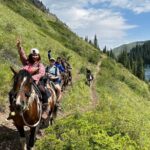
This tour includes a show with horses and then horseback riding as part of the program. The horse segment is often the highlight because it is energetic and easy to read, even if you are not fluent in the local language.
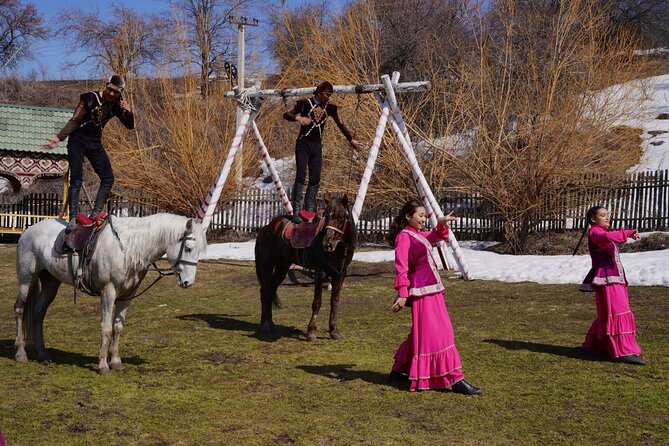
The village also stages acrobatic-style horse performance elements, and you get the chance to try riding afterward for a short segment. That mix—watch first, then participate—helps you gauge comfort. If you are nervous, you can at least learn the vibe from how the show is handled before you climb on.
Practical note: horseback riding is physical. Wear shoes you can trust on uneven ground, and dress for outdoor time. If you have any mobility concerns, you should still be able to participate in most parts, but the riding portion is the one element you should think about most.


Lunch of National Kazakh Dishes: A Real Meal, Not a Snack
By early afternoon, you will get a buffet lunch of national Kazakh dishes. Meat is cooked and served separately, which is a helpful detail because it suggests the meal is not just a big self-serve spread—it is structured.
Lunch timing matters on a day like this. It prevents the “nonstop show” fatigue that can happen when activities run back-to-back. Here, the meal also acts as a reset, and you can slow your pace before the later archery class.
What to do: eat normally but do not overpack. You will still have activities afterward, so plan to feel good, not stuffed. Also, use lunch as your moment to try flavors you might not know. If you are curious about Kazakh cuisine, this is a straightforward way to sample it without planning your own restaurant night.
Archery Master Class: Finishing With a Nomad Skill
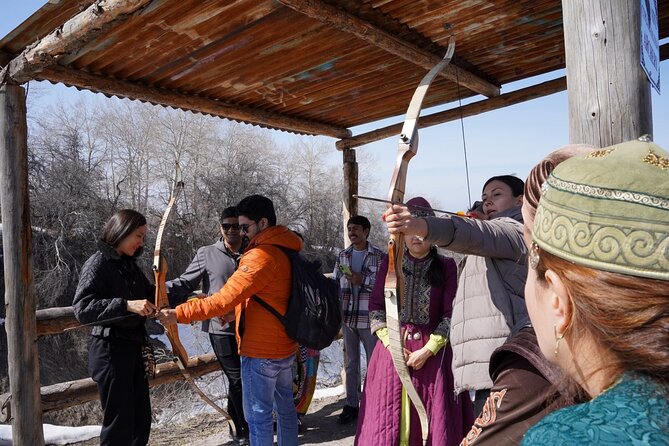
Near mid-afternoon, the program shifts to an archery master class. This is a classic nomadic skill and it makes a strong ending because it is active, skill-based, and focused.
Archery is not just about the final shot—it is about technique, stance, and guidance. For many visitors, this becomes memorable because you can compare your result to what you see in the earlier horse and yurt segments. The tour is basically a chain of skills: food prep, craft mindset, riding culture, then archery.
If you like structured instruction, this portion is especially worth your attention. And if you are more of a watcher than a doer, you may still find yourself wanting one more attempt.
Free Time and Departure: Don’t Rush Your Last Minutes
After the archery class, you will have free time before returning to Almaty. This is useful in case you want extra photos, revisit a favorite area, or simply breathe after a fast-paced cultural program.
Then you depart back to the city and arrive later in the afternoon, with hotel drop-off included. The total duration is about 6 to 7 hours, so you are not committing an entire day if you are balancing other Almaty sights.
Price and Value: Is $170 Worth It?
At $170 per person, this tour is not a budget impulse buy—but it also is not just a ticket to watch a show. You are paying for a full, guided, multi-activity day that includes:
- admission and entry into the ethno-village experience
- a baursaks cooking master class
- horse show plus a short horseback ride
- lunch with national dishes
- an archery master class
- wool/culture demonstrations and yurt learning
- hotel pickup and drop-off
- group discounts and a mobile ticket
- a maximum group size of 15 travelers
For value, the big deal is that the day covers several “anchor” experiences: food + animal activity + a traditional skill, with a yurt and nomad custom theme holding it together. If you were to try to DIY even two of these—getting transport out of the city and finding a guided program—you would likely spend time and money that stacks up fast.
My rule of thumb: if you want a structured cultural day where you do more than photograph, this price starts to make sense.
Who This Tour Fits Best (And Who Might Skip It)
This is a strong choice if you:
- want a cultural day with hands-on activities, not just observation
- like horses and want more than one horse moment (show + riding)
- enjoy food experiences tied to culture, especially baursaks
- prefer small group tours (max 15) with guided transitions
It might be less ideal if you:
- dislike outdoor activities in uncertain weather
- want a deep, quiet, museum-style pace (this is a performance-and-action format)
- have concerns about horseback riding comfort
One more practical point: the tour uses guides and drivers who help the day run smoothly. You may hear English is strong with guides like Luba, and punctual, attentive service is part of the positive experience—people also highlight Aman, Sherzhan, Serj, and Iman for friendly, clear guidance. A good guide makes a huge difference on tours like this because they help you interpret what you are seeing as you go.
Booking and Day-of Reality: Make It Easy on Yourself
This tour is typically booked about 26 days in advance, and it has limited group size. If you are traveling in peak season, booking earlier helps lock your preferred date.
Confirmation comes within 48 hours of booking, subject to availability. You will also have a mobile ticket, which keeps things quick at check-in.
Weather is a real factor. If poor conditions cause cancellation, you will be offered a different date or a full refund. Plan to keep your schedule flexible if you can.
Should You Book the Kazakh Ethno-Village Tour?
Book this tour if you want an Almaty cultural experience with action built in: yurt life, baursaks cooking, horse show and riding, lunch, and archery instruction—all in about 6 to 7 hours. It is a good way to get a concentrated taste of Kazakh traditions without spending days arranging logistics.
Skip it or think carefully if you are not comfortable with outdoor riding elements or you are very weather-sensitive. Also, if you prefer quiet, self-paced sightseeing, this structured format may feel a bit busy.
If you like learning through doing—plus getting a fun performance layer—this is one of the more satisfying cultural outings in the Almaty area.
FAQ
How long is the Kazakh Ethno-Village Tour?
The tour runs about 6 to 7 hours.
Where is the tour located?
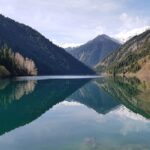
It’s in Almaty, Kazakhstan, with the ethno-village located at the foot of the Trans-Ili Alatau mountains.
What does the tour include?
The tour includes an admission ticket, a theatrical program in the ethnographic village, baursaks cooking master class, a show with horses and horseback riding, lunch of national Kazakh dishes, an archery master class, and free time at the village.
Is hotel pickup and drop-off included?
Yes. Pickup and drop-off are included from hotels in Almaty.
How many people are in a group?
The tour has a maximum of 15 travelers.
Is there horseback riding and archery?
Yes. You can try horseback riding for a short ride, and you also get an archery master class.
What time does the tour start?
It starts around 10:00 am, with hotel pickup and departure scheduled in the morning and arrival at the ethno-village around 11:00 am.
Where does the tour start and end?
The meeting point is Shevchenko St 28, Almaty 050010, and it ends back at the same meeting point.
What happens if the weather is bad?
The experience requires good weather. If it’s canceled due to poor weather, you’ll be offered a different date or a full refund.