REVIEW · ALMATY
Guided Walking City Tour in Almaty
Book on Viator →Operated by TJ Travel · Bookable on Viator
If Almaty feels like it has layers, this tour explains why. You’ll get a professional, humor-friendly guide and see the city move through imperial roots, Soviet growth, and independent-modern times—not as trivia, but as a story of how the place changed. I like that the route isn’t just pretty buildings; it connects architecture to real-world problems like infrastructure and even how the city coped with regional disasters.
The other thing I like: the tour uses specific places to teach you how people lived. You’ll hear why certain homes and façades look the way they do, including surprising details like how the city handled running water issues in the 20th century and where far-traveled “sea shell” materials ended up on buildings decades later. One possible drawback: if you want a deep dive into museums, food, or big-name monuments only, you may find the emphasis on architecture and urban form a bit heavy.
In This Review
- Key highlights worth your attention
- A 3-hour walk that turns Almaty into a timeline
- Zhibek Zholy station: where the timeline starts
- Panfilova Street: telegraph web and the opera mix
- Kunaev street and Stalin-era living blocks
- 28 Panfilovcev Park: surviving 1911 plus WWII memory
- Zeleny Bazar: market energy or a bathhouse detour
- Price and value: what $60 buys you in real sightseeing time
- Logistics that matter: meeting point, timing, and tickets
- Who this guided walk is best for (and who should rethink)
- Should you book this Almaty walking tour?
- FAQ
- What time does the Guided Walking City Tour in Almaty start?
- How much does the tour cost?
- Where is the tour meeting point?
- What’s included in the price?
- Is bottled water included?
- What is the cancellation policy?
Key highlights worth your attention
- Zhibek Zholy metro start: Each station has its own story, tied to the Great Silk Way theme.
- Panfilova Street + unusual Soviet design: A central telegraph building that visually feels like a net.
- “Stalin-era” blocks with surviving school culture: You’ll spot remnants of pre-revolution high schools.
- 28 Panfilovcev Park essentials: An earthquake-surviving cathedral plus classic Russian officer-club style.
- Optional Zeleny Bazar or Arasan baths detour: You can end with a market feel or a traditional bathhouse stop.
- A 3-hour rhythm that fits sightseeing: Short stops, clear segments, and an easy return to the starting point.
A 3-hour walk that turns Almaty into a timeline
This is the kind of tour that makes the city make sense fast. Almaty is big enough to feel modern, but old enough to be full of earlier ideas—empire, Soviet planning, and then independence—stacked in the same streets. The guide’s job here is to help you read that stack. You’ll walk, stop, and then get an explanation for what you’re looking at and why it exists.
The route is also built for pacing. It’s about three hours, broken into segments with stop time built in. That matters because you’re not sprinting for photos. You get time to notice details—shapes, materials, and “why this looks different”—before moving on.
Finally, you should like city storytelling. The tour description leans into how Almaty solved practical problems, from water access to strange-looking decorative materials, and how the region’s nature catastrophes shaped survival over time. If that kind of context sounds interesting, you’ll get a lot out of it.
You can also read our reviews of more tours and experiences in Almaty.



Zhibek Zholy station: where the timeline starts
You begin at Zhibek Zholy—a smart choice because it sets the tone immediately. The tour starts at the train station and includes admission for the metro ticket. Even if you’re not a metro person, this is worth treating as the first “chapter,” because each station is said to have its own story.
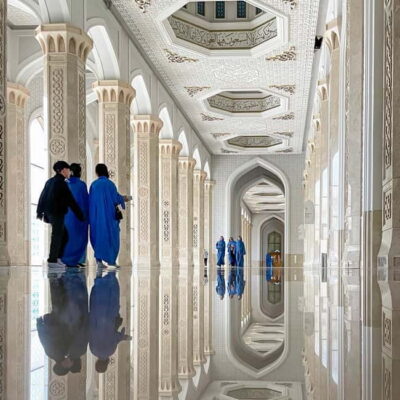
What makes this stop feel more than just transport is the design theme. Zhibek Zholy logically points you to very ancient history—linked to the Great Silk Way—and the station decoration reflects that. So you’re not just arriving at a subway platform. You’re being oriented to the land’s longer journey, which then pays off later when you see Soviet-era architecture and older-surviving landmarks.
Practical note: metro and indoor station time can mean cooler temperatures than the street. If it’s warm outside, bring something light you can layer.
Panfilova Street: telegraph web and the opera mix
Next comes Ulitsa Panfilova, a pedestrian-friendly stretch lined with cafés and restaurants. That’s useful because you can look at the buildings without dodging traffic, and you also get a feel for everyday city life between the grand stops.
The star building here is the central telegraph, described as having an unusual architectural style that looks like a shopping net. That comparison isn’t random: it signals that Soviet architecture wasn’t always bland. Some buildings aimed for a visual identity and used structure and pattern to make a point.
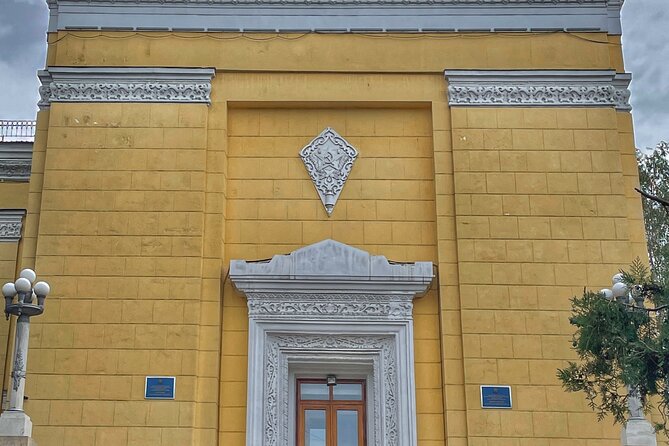
Then you’ll get a view of the Kazakh opera and ballet theater, praised for combining Asian motives with European classicism. Even if you’re not a theater buff, this kind of mixed design is exactly what helps explain Almaty’s “between worlds” character—part of it wants to look westward, part of it wants to keep local forms.
If you’re the type who likes to notice façade rhythms—symmetry, ornament patterns, the way windows repeat—this stop will keep you busy.
Kunaev street and Stalin-era living blocks
The walk continues into Kunaev’s area and through a stretch of buildings that reflect Stalin architecture and 1940–60s living areas. This is where the tour starts to feel like an urban geography lesson: you learn how whole neighborhoods were shaped by the political and social priorities of their time.
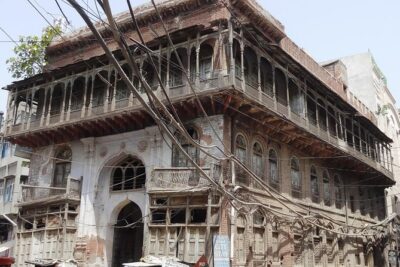
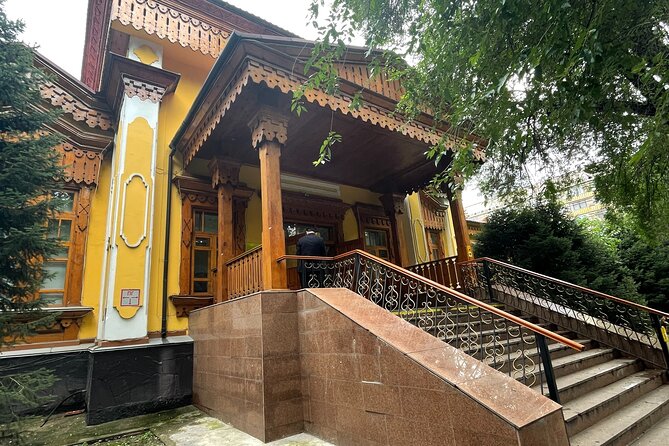
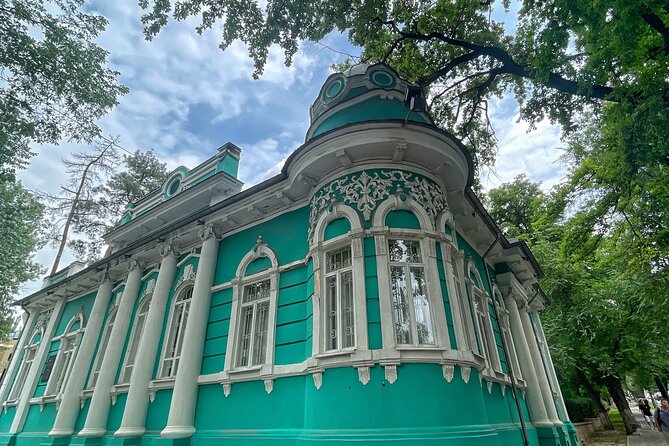
One of the most interesting practical details here is how the guide frames education and old institutions. You’ll pass what’s called a Gymnasium block, where buildings of pre-revolution high schools survived. The key idea is that modern Almaty didn’t erase everything that came before. Some structures outlasted governments, which means the city now has physical leftovers from the royal Russian period mixed into later Soviet planning.
Here’s how to get value from this section: don’t only look at the big façades. Watch for transitions—places where old school-like proportions blend into later residential designs. That contrast helps you “read” the city as a timeline, not as isolated landmarks.
28 Panfilovcev Park: surviving 1911 plus WWII memory
The tour’s longest feeling stop is in the Park of 28 Panfilovcev, one of Almaty’s oldest parks. If you want a breather, this is that moment. You’ll get time—about 45 minutes—to absorb the setting and not just race between photos.
Inside the park, you’ll see an older cathedral that survived the devastation of the 1911 earthquake. That fact gives the whole scene weight. Buildings in this area are not just decorative; they’re anchors that stayed standing when the region had to rebuild.
You’ll also spot a wooden old Russian-style officer club building. That’s a strong reminder that even in a place known for Soviet stone, there’s room for older wooden forms. It can be a quick stop for photos, but the guide’s context makes it more meaningful.
Finally, there’s the ambitious WWII victory monument, put up in Soviet times. Memorials like this are often easiest to understand when you know the political intention behind them. Expect the guide to connect it to Soviet-era messaging and the way public space was used for remembrance.
If you come hungry for “big feelings,” this stop will deliver. It’s not dramatic only because it looks grand—it’s dramatic because it carries survival and memory.



Zeleny Bazar: market energy or a bathhouse detour
The last scheduled major segment heads toward Zeleny Bazar, described as the local farmers market. This part is optional in one important way: the tour can continue toward the bazar, or you can head back to the starting point on the way that includes the Arasan bath house.
That choice matters because it changes what kind of city you end with. The bazar side is about local daily life and food-market atmosphere. The bathhouse side is a traditional culture angle—an “old routine” stop that helps you understand how city life worked beyond streets and monuments.
The Arasan bath house complex is described as significant and built in the 1980s. Even without extra details, the concept is clear: late Soviet-era construction of traditional-style bathing spaces. For a lot of travelers, this type of stop becomes the most memorable because it shifts from architecture-reading to lived culture-reading.
If you’re only going to choose one option at the end, match it to your mood:
- If you want hands-on sensory city time, go toward Zeleny Bazar.
- If you want a culture-focused finish that pairs well with the tour’s “how people lived” theme, take the Arasan bath house route.
Price and value: what $60 buys you in real sightseeing time
At $60 per person, this tour sits in a mid-range band for guided walking experiences. Here’s why that price can be fair: you get a professional guide, a route designed for a tight 3-hour window, and a metro ticket included for the Zhibek Zholy start.
Also, the tour is private for your group (only your group participates), which usually improves the experience compared with large mixed groups. You can ask questions without feeling lost in a crowd. And pickup is offered, which can save time if you’re not starting right at the station.
What’s not included is simple: bottled water. That’s not a deal-breaker, but it’s one more reason to plan to carry a small bottle or buy one before you meet.
The bigger value question isn’t only price—it’s fit. If you’re the kind of traveler who loves buildings but wants historical meaning stitched onto them, you’ll feel like your money is buying interpretation, not just standing and pointing. If your goal is food, crafts, or indoor museum time, this can feel like a mismatch because the emphasis stays on architecture and city planning stories.
Logistics that matter: meeting point, timing, and tickets
You meet at Zhibek Zholy and the tour ends back at the same point. Start time is 11:00 am, and the tour runs about three hours. That makes it easy to plan the rest of your day without too much guessing.
You’ll also want to know the tour uses a mobile ticket and offers pickup. So if you’re traveling with limited time or arriving from somewhere else, ask ahead about the pickup details and how you’ll receive the ticket.
Confirmation happens within 48 hours of booking, subject to availability. For most plans, that’s fine. But if you’re booking last-minute, it’s worth keeping some flexibility.
One more small but practical note: service animals are allowed, and most travelers can participate. The walk is guided and structured, but it’s still walking—so wear shoes you’re comfortable in for street-level time.
Who this guided walk is best for (and who should rethink)
This tour is a good match for you if:
- You like history but prefer it anchored to real streets and real buildings.
- You enjoy architectural storytelling, not just architecture photos.
- You want an efficient timeline of Almaty across different eras in a single session.
It’s also a strong fit if you’re traveling with someone who wants “meaning” from sightseeing. The guide’s humor and the variety of stops make it easier to stay engaged.
You might rethink booking if you’re specifically looking for:
- a museum-heavy day
- lots of food tasting
- a wide range of non-architecture activities
because the tour description and overall shape are very much about reading the city through its built environment.
Given the experience rating of 3.8 across a small set of reviews, it looks like the tour works best when your expectations already lean toward architecture and city-story interpretation.
Should you book this Almaty walking tour?
I’d book it if you want a focused, guided “timeline tour” and you enjoy learning why places look the way they do. The combination of metro start, Soviet architecture stops, and the serious 28 Panfilovcev Park landmarks is a smart route design for first-timers.
Skip it if your top priority is variety beyond streets and buildings. This one stays mostly in the visual language of architecture and city design. The optional ending—Zeleny Bazar or Arasan bath house—helps, but it won’t turn the day into a food or museum marathon.
If you’re on the fence, use this rule: if you’d enjoy a guide who can explain running water problems, far-traveled decorative materials, and how disasters shaped survival—all through what you see on the street—then this tour is likely your kind of afternoon.
FAQ
What time does the Guided Walking City Tour in Almaty start?
It starts at 11:00 am and lasts about 3 hours.
How much does the tour cost?
The price is $60.00 per person.
Where is the tour meeting point?
The tour starts at Zhibek Zholy, Kazakhstan, and it ends back at the same meeting point.
What’s included in the price?
The tour includes the professional guide services and the metro ticket at the Zhibek Zholy start.
Is bottled water included?
No, bottled water is not included.
What is the cancellation policy?
You can cancel for a full refund up to 24 hours before the experience’s start time. If you cancel less than 24 hours before, the amount paid is not refunded.