REVIEW · ALMATY
Tour in Central Asia Five Stan’s
Book on Viator →Operated by MinzifaTravel · Bookable on Viator
Five Stans in 23 days is a sprint. The route links Kazakhstan, Kyrgyzstan, Uzbekistan, Tajikistan, and Turkmenistan with a smart mix of city touring, mountain drives, and big cultural stops on the Silk Road. I love that the plan uses both ground travel and timed flights so you’re not spending every day stuck in a van.
The itinerary also gives you hands-on culture moments, like learning how felt carpets are produced with a local family in Kochkor, and then following the old trade routes in places like Samarkand, Bukhara, and Khiva.
One thing to consider: you’ll deal with long travel days and multiple border crossings, so this only feels good if you’re okay with a bit of waiting and changing plans.
Below are the parts of the trip that matter most for your planning, not just the highlights on a list.
In This Review
- Key things to know before you go
- Almaty: your easy landing, then real city time
- Charyn Canyon and the Huns Ethno Village: the first big nature hit
- Kaindy and Kolsai Lakes near Saty: short hikes, big altitude, and misty rewards
- Fly to Bishkek: a city break with history stops before the mountains
- Jeti-Oguz and Karakol: Dungan culture in the middle of canyon days
- Moldo-Ashu Pass and Son Kul: felt carpets, family time, and open sky
- 33 Parrots Pass to Osh: the road’s best talking points
- Border-crossing rhythm: Dustlik and Patar, with Tajikistan planning in the background
- Dushanbe’s Hissar Fortress and Iskanderkul: history and a named-by-legend lake
- Sarazm near Panjakent and then Samarkand: from early trade culture to its big finale
- Samarkand to Bukhara by train: a calmer route with a big-city payoff
- From Bukhara to Ashgabat: Farap border crossing and the Turkmen showpiece days
- Shavat to Khiva: crossing into Uzbekistan again and walking Ichan Kala
- Price and logistics: does $3,290 make sense for what you get?
- Pace, fitness, and what to pack mentally
- Who should book this Five Stans route
- Should you book this tour?
- FAQ
- How long is the Five Stans tour and what does it cost?
- Where does the tour start and end?
- Is pickup offered?
- How many people are in a group?
- Does the itinerary include flights and a train?
- Is the tour physically demanding?
Key things to know before you go
- Small group size (up to 12): easier pacing and more room for questions.
- Multiple transport modes: drives, plus flights and even a train between Samarkand and Bukhara.
- Real altitude and pass days: think higher passes like Moldo-Ashu and 33 Parrots.
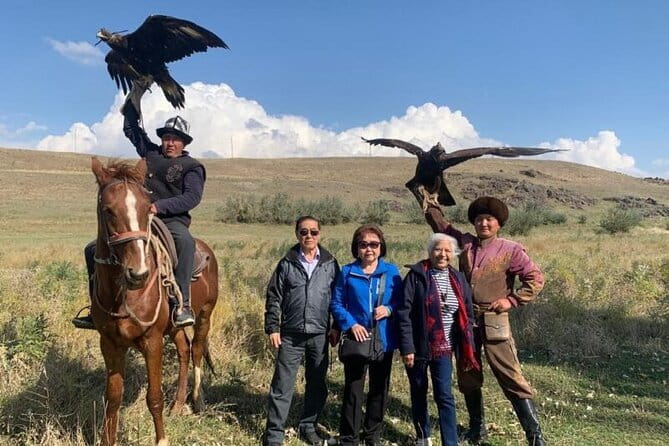
- Cultural stops beyond monuments: felt-carpet making and village-style visits.
- Silk Road city “triple play”: Samarkand, Bukhara, and Khiva each get a full guided day.
- Turkmenistan adds a jaw-drop stop: Darvaza gas crater is part of the standard route.
Almaty: your easy landing, then real city time

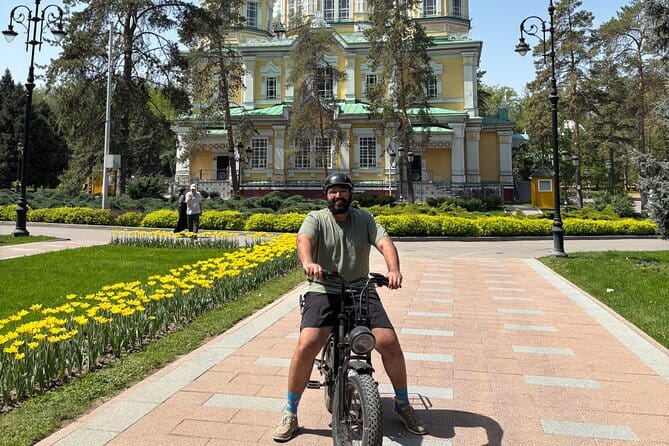
Most tours start with “meet and transfer.” This one starts with a driver at Almaty International Airport using a sign for Minzifa Travel. That matters because Almaty can feel busy and confusing when you’re fresh off a flight. From there, you check in, rest, and then actually get to see the city.
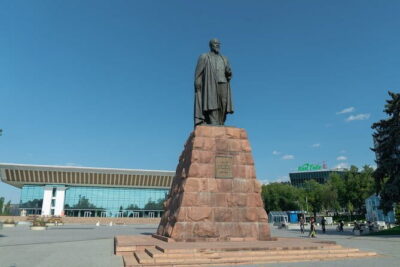
On day two, you get a 5-hour Almaty sightseeing tour. It’s not just old buildings for the sake of it. Almaty has a real identity because it was the capital of independent Kazakhstan from 1991 to 1997—then the capital moved to Nur-Sultan. That shift still helps explain why Almaty feels like a major cultural hub even today.
What you’ll likely appreciate here is the balance. You’re not thrown into a day of mountain driving immediately. You get a proper start and time to orient before the road trip begins.
Possible drawback: Almaty is a city first. If you only want wilderness, you might feel this day is a warm-up rather than the main event.
You can also read our reviews of more tours and experiences in Almaty.
Charyn Canyon and the Huns Ethno Village: the first big nature hit
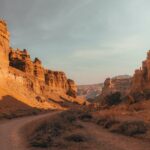
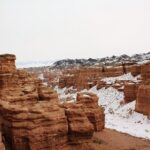
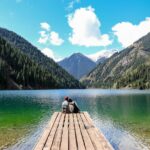
Day three pushes you out of town toward Charyn Canyon National Park, and it’s paired with a stop at the Huns Ethno village. That combination is smart. You get some context for local life before you see the dramatic geology.
Charyn Canyon is the kind of place where photos help, but the real impact is the scale. You’ll be driving to the canyon area and then continuing toward Saty village for the next phase of the trip. It’s a good setup for day four, when the scenery turns from canyon walls to lakes.
Why this works: the park day isn’t just a quick stop at a viewpoint. The plan is built like a mini journey, where you’re moving through regions and ending in the village area so you can experience the next natural stop with less backtracking.
Kaindy and Kolsai Lakes near Saty: short hikes, big altitude, and misty rewards
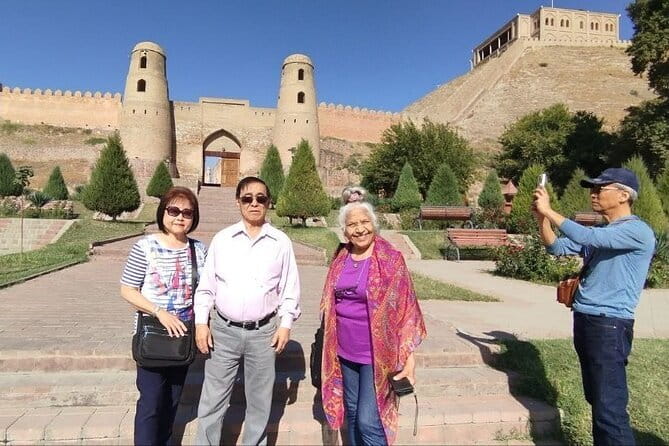
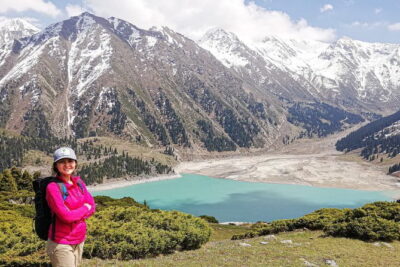
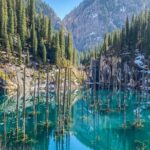
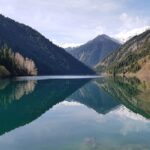
Day four is all about the lakes: Lake Kaindy and Lake Kolsai, starting with a short drive to Kaindy. The tour notes Kaindy as being among pine forest and at around 2,000 meters above sea level. That altitude detail is not trivia—it affects how you feel.
You’ll want layers. Even in warmer months, higher areas can feel cooler, and walking on uneven ground is easier when you’re comfortable.
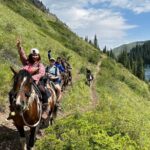
This day is also where you’ll likely notice the tour’s style: it’s active, but not extreme. You’re not signing up for mountaineering. You’re doing scenery plus manageable time outdoors, then returning to Saty village.
Fly to Bishkek: a city break with history stops before the mountains
On day five, you switch from Kazakhstan’s road travel to Kyrgyzstan’s rhythm. You drive from Saty back to Almaty, then fly to Bishkek. That flight is doing real work in the itinerary. Instead of turning this into a 2-day detour, it keeps the trip moving toward Kyrgyzstan’s mountain culture.
Bishkek gets a short but focused city tour on day six, including Pobeda Square (Victory Square) and Duboviy Park (Oak Park). You also visit the Burana Tower area—one of the most famous archaeology-linked stops in the region. This is where your “Silk Road” story starts to show up in the landscape of older Central Asia civilizations.
Then you continue toward Issyk-Kul Lake’s northern shore and on to Karakol’s side of the itinerary (the route continues from there).
Jeti-Oguz and Karakol: Dungan culture in the middle of canyon days

Day seven moves to Jeti-Oguz (Seven Bulls Rocks) and includes time around Issyk-Kul’s southern shore, plus a stop in or near Kochkor village afterward.
Before the big canyon, you visit Karakol and the Dungan mosque. It’s described as Chinese-style, built without using metal nails. That kind of detail makes the stop more than a box-check. It’s a small, memorable contrast inside a trip that otherwise runs on steppe and mountain scenery.
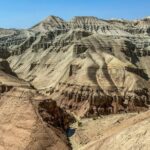
Jeti-Oguz is the “walk and look” portion of the day—canyon views, rock formations, and lots of opportunities for short photo stops. The key is pacing. This tour keeps moving, but it doesn’t load you with endless hikes every day.


Moldo-Ashu Pass and Son Kul: felt carpets, family time, and open sky
Day eight takes you to Moldo-Ashu Pass and then toward Son Kul Lake. Before you reach the pass and the lake area, you spend time in Kochkor village, including meeting a family that shows you how felt carpets are produced.
That’s the kind of cultural interaction I like on longer tours: it doesn’t feel like a stage show, and it gives you a practical view of a craft Central Asia is famous for. Even if you don’t knit or weave, you’ll understand the skill and effort behind it.
Then the tour heads for the Son Kul area, and day nine brings the 33 Parrots Pass before reaching Bishkek and then flying to Osh.
33 Parrots Pass to Osh: the road’s best talking points
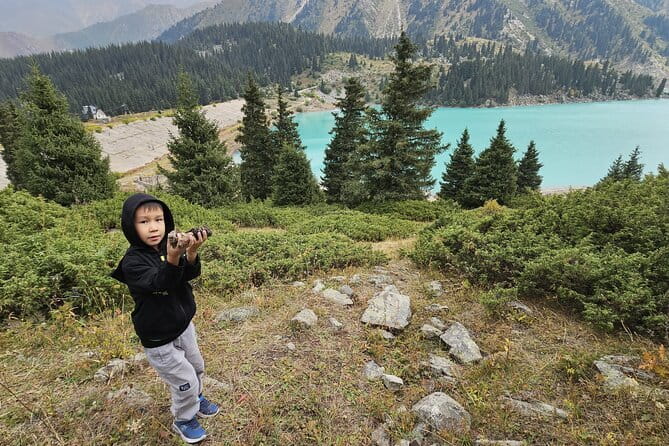
Day nine is a classic “high pass day” plus travel. You depart Son Kul and go over 33 parrots pass (the route notes a long mountain pass and that it’s a major road moment). You then reach Bishkek and fly to Osh.
In a tour like this, the pass days are where the memories stick because they’re shared fatigue plus sudden views. If you’re okay with a long day and don’t mind being a little tired, you’ll probably enjoy this segment a lot.
If you hate being in a vehicle for hours, this is the kind of day you’ll want to mentally prepare for.
Border-crossing rhythm: Dustlik and Patar, with Tajikistan planning in the background
After Osh, day ten continues overland into Uzbekistan via BP Dustlik for a Kyrgyzstan–Uzbekistan border crossing. Day eleven then includes an Uzbekistan–Tajikistan crossing at BP Patar, followed by Dushanbe.
Multiple border crossings can sound scary if you’ve only done easy European crossings. Here’s the realistic way to think about it: the tour builds these crossings into your schedule. You’re not left guessing what happens next.
Also, the planning support matters. One of the things I see highlighted in the feedback for Minzifa Travel is how staff help iron out tough parts like Tajikistan visa paperwork. In one case, Karina was credited for managing the overall plan, and Kamilla was specifically mentioned for visa help. That kind of support doesn’t change the borders—but it can reduce stress before you reach them.
Dushanbe’s Hissar Fortress and Iskanderkul: history and a named-by-legend lake
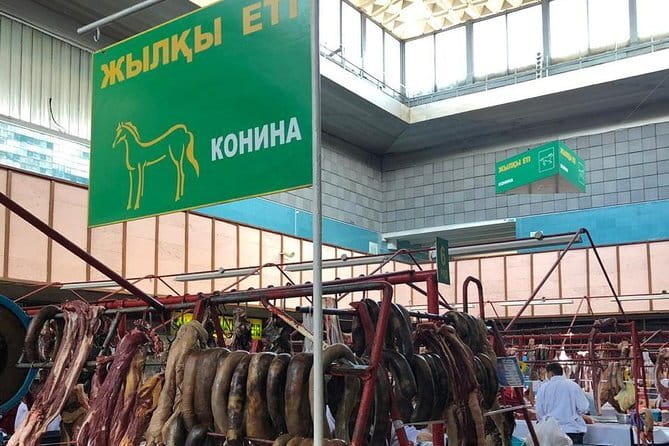
Day twelve stays in Dushanbe and adds Hissar Fortress (about 35 km from the city, with a short drive time). It’s a straightforward cultural/history day with lunch built in.
Then day thirteen moves to Iskanderkul Lake, described as known as Alexander the Great’s lake. You drive around 140 km (listed as about 3 to 3.5 hours) and the day is structured like an excursion rather than a rushed stop.
This area can feel like a reset day compared with the busier city stops. You get a change of tempo: less “tourist maze,” more open scenery and local quiet.
Sarazm near Panjakent and then Samarkand: from early trade culture to its big finale
Day fourteen shifts you from village walking to Panjakent and then to the Proto-urban site of Sarazm, before continuing to Samarkand. The plan includes a short village walk in the morning and then visiting Panjakent. For readers who like history with a timeline, this is useful: Sarazm is earlier-stage context before you hit the heavyweight Silk Road fame of Samarkand.
Samarkand gets a full day tour on day fifteen. You’ll cover the highlights people dream about before they even buy the tickets:
- Gur-Emir Mausoleum
- Registan Square
- plus other guided stops in the city’s core area
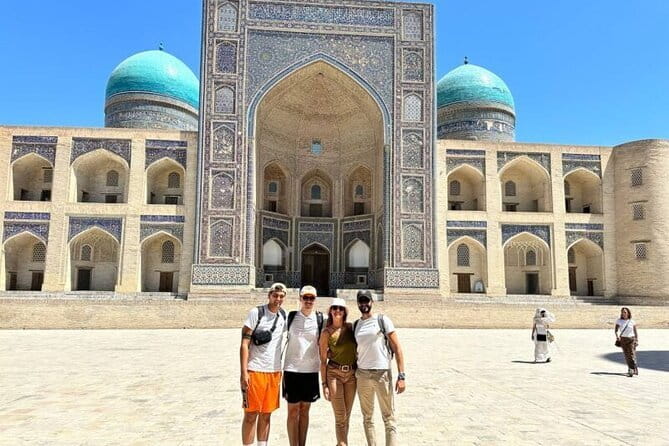
Day fifteen is the day where you’ll likely feel the “this is why people travel” moment. Not because it’s perfect—but because it’s coherent. The architecture and urban planning were built to impress across centuries.
One practical note: Samarkand touring takes energy. Even if the walking is manageable, the emotional intensity is high. Bring patience for photo crowds at major monuments.
Samarkand to Bukhara by train: a calmer route with a big-city payoff
Day sixteen takes you to Bukhara by train. That train segment is one of those small itinerary choices that makes the long trip feel less like nonstop transit.
In Bukhara, day sixteen starts with an excursion about 30 km from Samarkand, including a visit connected to ancient paper-making from mulberry trees (listed as Cunha Meros). Then day seventeen brings the deeper Bukhara sightseeing: Ismail Samani Mausoleum, Chashma Ayub (the Well of Job), and Bolo House.
Bukhara’s tour rhythm is classic: mausoleums, courts, wells, and ceremonial architecture. If you’re the type who enjoys details, you’ll like how the guided day ties the places together.
From Bukhara to Ashgabat: Farap border crossing and the Turkmen showpiece days
Day eighteen is a long move. You drive toward the Uzbekistan–Turkmenistan border at BP Farap, cross into Turkmenistan, then continue to Mary and finally to Ashgabat by plane.
In Ashgabat, the tour hits major civic/religious icons:
- Independence Park
- Neutrality Arch
- Turkmenbashi mosque-mausoleum
Then day nineteen includes the drive to Darwaza gas crater. The route also mentions stops along the way at mud and water craters, then arrival in the Darwaza area (including camp style breakfast is noted on the following day too).
Darvaza is one of those stops that feels almost otherworldly. It’s not a museum. It’s a live environment, and it tends to stick in memory because it feels strange in a good way.
Shavat to Khiva: crossing into Uzbekistan again and walking Ichan Kala
Day twenty continues the Turkmenistan-to-Uzbekistan shift at BP Shavat (noted as a border crossing), and you end up in the Khiva area.
Day twenty-one is a guided Khiva day focused on Ichan Kala, the UNESCO-listed inner city. You get a structured city tour of Khiva’s old quarters.
Day twenty-two then transfers you toward Urgench airport and a flight to Tashkent. From there, you get a sightseeing program in Tashkent and time to leave your luggage—so you’re not arriving and immediately running on empty.
Day twenty-three ends with a transfer to Tashkent International Airport for departure.
Price and logistics: does $3,290 make sense for what you get?
For $3,290 over about 23 days, you’re paying for two big things: distance and coordination. This isn’t “one country with day trips.” It’s five countries with changing borders, plus a mix of driving and flights.
The itinerary also lists admission tickets for multiple stops as free or included. That can make the total experience feel more predictable than a trip where every entrance becomes a surprise fee.
Add in the group size—max 12 travelers—and you get a better shot at smoother pacing and less crowd chaos in guided moments.
Where the value might feel weaker is if you personally don’t like long travel days. This plan includes multiple long segments and pass crossings. If you prefer a slow, mostly-walkable vacation with fewer borders, you may feel the effort more than the payoff.
Pace, fitness, and what to pack mentally
The tour asks for moderate physical fitness. That usually means you’ll be walking for sightseeing, dealing with uneven paths sometimes, and being comfortable with long days. It also means altitude can catch you if you ignore the basics.
Here’s what I suggest you plan for:
- layers for higher elevations (Son Kul / passes / forested lake zones)
- shoes that handle uneven ground
- a flexible mindset for border days
- hydration and snacks when timing gets tight
You also should know this is a trip where your patience is a travel tool. When the plan includes border formalities, your best superpower is staying calm.
Who should book this Five Stans route
This tour fits best if you want:
- a multi-country Silk Road arc with guided stops in major cities
- a mix of architecture + nature + culture meetings
- a structured group journey where someone else handles transfers and timing
It may not fit as well if:
- you dislike border crossings and long driving days
- you want lots of free time in each city to wander without a schedule
- you’re sensitive to altitude and long days in passes
Still, if you’re ready for a true “together we move through Central Asia” trip, it can feel like one big story with chapters.
Should you book this tour?
If your dream is five countries, the Silk Road in full color, and a route that doesn’t waste days on slow detours, this is a strong pick. The mix of Almaty and lakes, Kyrgyz mountain culture, Samarkand–Bukhara–Khiva guidance, and the standout Darwaza stop creates a balanced adventure.
If you’re on the fence, make sure you’re the kind of person who can enjoy “in transit” time as part of the journey. This trip delivers best when you treat it like a road story, not a series of short checklists.
FAQ
How long is the Five Stans tour and what does it cost?
The tour runs for about 23 days and the listed price is $3,290.
Where does the tour start and end?
It starts with pickup/meeting at Almaty International Airport and ends after sightseeing in Tashkent, with transfer to Tashkent International Airport for departure.
Is pickup offered?
Yes, pickup is offered.
How many people are in a group?
The tour has a maximum group size of 12 travelers.
Does the itinerary include flights and a train?
Yes. The route includes flights (for example between Almaty and Bishkek, and later between Bishkek and Osh, and Urgench and Tashkent) and also includes a train segment from Samarkand to Bukhara.
Is the tour physically demanding?
It’s aimed at travelers with moderate physical fitness. You should expect sightseeing walking and some longer travel days, including pass drives.